

Editor Urges Journalists to Promote their Stories on Social Media
Uncensored News editor and Paballo-ea-Bophelo secretary-general, Pascalinah Kabi, has urged SADC science journalists to intentionally promote their stories on social media and actively engage with audiences to make science more accessible.
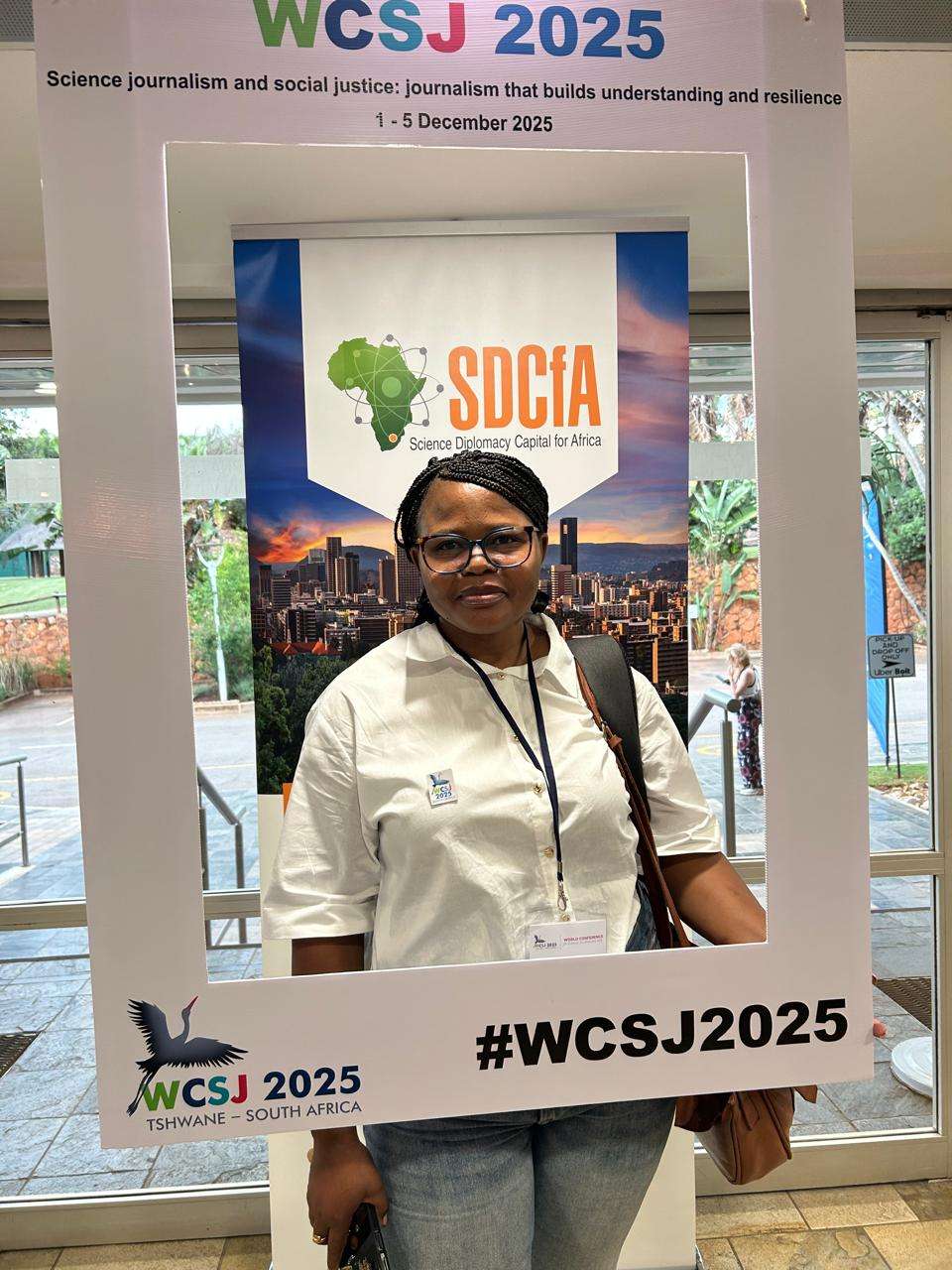
SADC science journalism workshop is part of a five-day long World Conference for Science Journalists, held in Africa for the first time this year. Lesotho is represented by Kabi, Uncensored News Senior Health Journalist Limpho Sello, and Newsday journalist Thoboloko Ntsonyane.
Speaking at the 4th SADC Science Journalism Workshop in Pretoria, South Africa, Kabi reflected on the evolving role of journalists in a digital era. She noted that the belief that publishing a story is enough no longer holds. Kabi said journalists must now go the extra mile to engage audiences and champion their own work.
“If we are brave enough to get our stories published, we should be brave enough to defend them — to engage the audience with the facts we have written,” she said.
She added that when stories are science-based and evidence-driven, journalists must confidently assert what is factual and challenge misinformation. Kabi also announced that Paballo-ea-Bophelo is recruiting five young reporters with no media background to train in basic journalism and mobile storytelling. The young reporters will produce TikTok and Facebook reels on vaccines targeting young mothers. The initiative aims to develop a new cohort of content creators equipped with strong knowledge, practical skills, and the ability to use digital tools, including mobile phones.
Kabi further highlighted the work of two Lesotho science journalists — Liapeng Raliengoane and Ntsoaki Motaung — praising them for integrating community voices with scientific expertise and for promoting their stories on Facebook, which remains highly influential in Lesotho.
Instead of merely sharing links, the pair sometimes run competitions offering small prizes — such as M50 airtime or vouchers — for correctly summarising or explaining a story. According to Kabi, this approach boosts engagement and helps communities better understand science reporting. By promoting their work, she noted, they have become “their own influencers.”
Kabi also pointed to progress made by Paballo-ea-Bophelo which supports journalists and currently working with seven reporters on vaccine-related stories. She recalled that during Lesotho’s Measles and Rubella (MR) campaign, anti-vaccine content spiked on social media, making it essential to share verified scientific information. In one incident, misinformation claimed that children in the United States did not receive MR vaccines. The NGO’s representative publicly corrected the claim and provided factual context.Kabi is currently serving as a moderator and panelist at the World Conference of Science Journalists.
