

His Quiet Nod Spoke Volumes: Inside Lesotho’s New Hope Against HIV

In Lesotho, health officials are working to rewrite the country’s HIV story using a new prevention technology: lenacapavir.
13 April 2026 by Limpho Sello
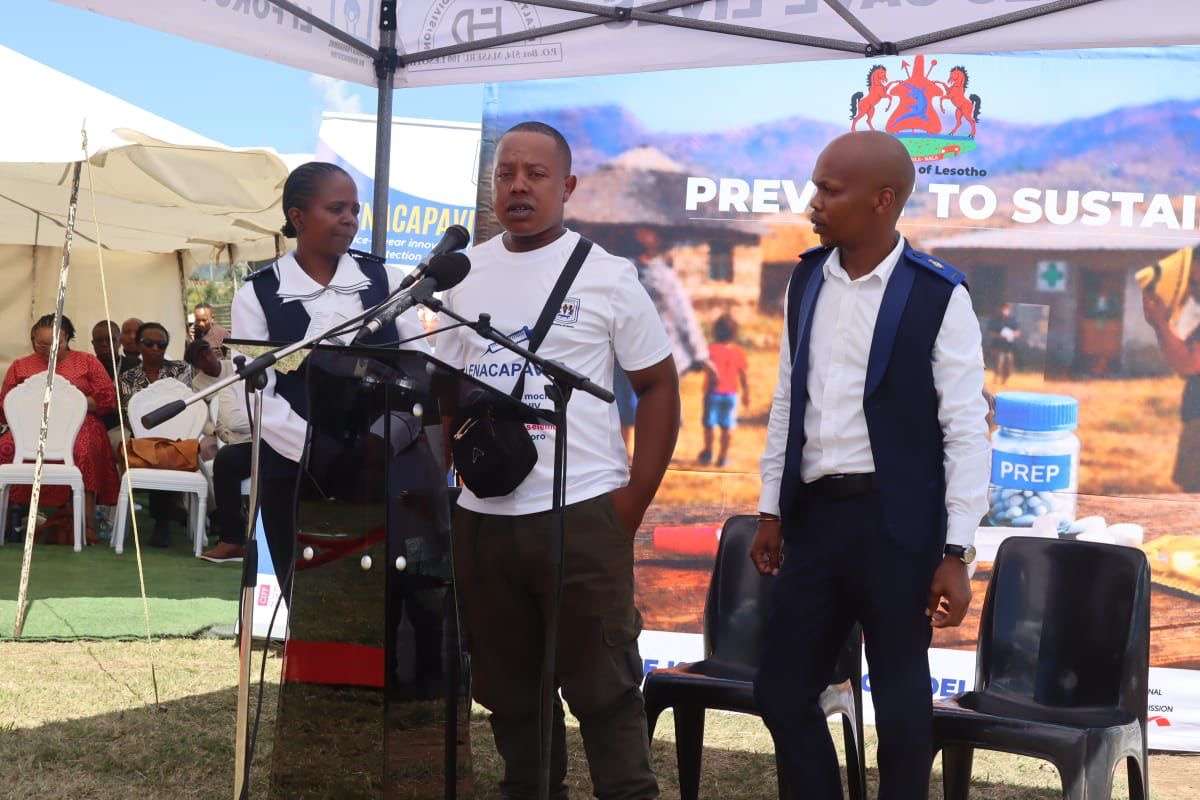
A serious face. A soft grip on a spotty hat. Then, a steady, quiet nod—silent, but too loud to ignore.
Thirty-one-year-old Mokheseng Habasisi stands tall, unshaken.
Less than two minutes ago, he privately pulled up his shirt and showed his lower abdomen to a nurse in a small blue-and-white tent, set up among larger and smaller tents providing shade for health officials and special guests in Botha-Bothe, Lesotho.
Habasisi has just made history by becoming the first Lesotho national to receive lenacapavir (LEN)—a ground-breaking long-term HIV prevention injection administered to an HIV-negative person every six months.
“I wanted to inspire men more because they do not like to go and get health services,”
said a man in a long-distance marriage who works as a lay counsellor.
He tells the media that his decision was more than personal health—it was about leadership.
“I wanted men to see that you can get this six-month injection, and only come back half a year later. We are the ones who can carry infections and drive them; it is vital we take this bold step.”
Lesotho launches LEN
It is 30 March 2026.In a busy urban grounds near St Strong Makenete Hospital in Botha-Bothe district, unfamiliar sounds stir the air—loud music, car engines, footsteps, laughter—building into a hum that carries toward a podium, where official statements echo a vision of a future free of HIV in Lesotho.
Minister of Health, Selibe Mochoboroane, stands before the crowd, moved by an edutainment drama from the Mantsopa Institute that tracked the country’s long, often tragic journey with the virus.
As the performance fades, Mochoboroane takes the audience back to 1986—the year Lesotho recorded its first HIV case. He spoke of the dark years between 1986 and 2004, a time before widespread treatment when a population census saw the nation’s numbers plummet from 2 million to 1.8 million partly due to AIDS-related deaths.
“This meant we lost friends, siblings, and parents,” Mochoboroane remarked, adding: “We must remember where we come from so that we do not forget where we want to go.”
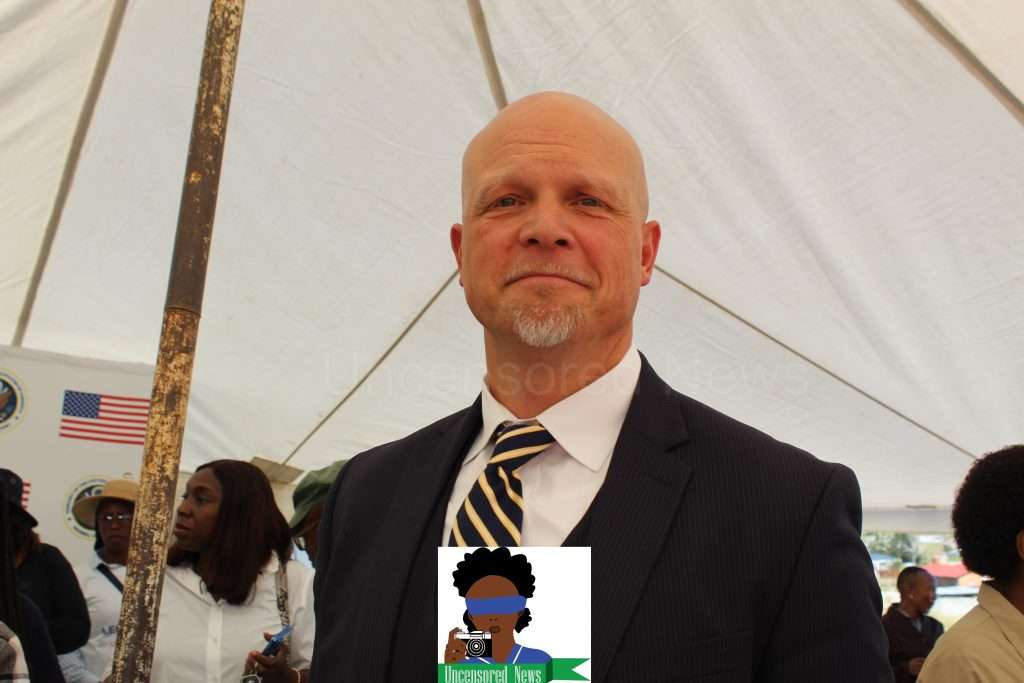
Where Lesotho wants to go is a future with zero new HIV infections. Since 2007, the U.S. has invested over M17 billion into Lesotho’s health sector—a relationship that U.S. Embassy Chargé d’Affaires Tobias Bradford described as a “new chapter powered by innovation and hope.”
Bradford said LEN is a “capsid inhibitor,” a sophisticated piece of American medical engineering by Gilead Sciences. Gilead Sciences has been under fire for shutting out sub-Saharan manufacturers on LEN licensing— even after the region played a crucial role in the drug’s clinical trials.
In Botha-Bothe, Bradford explained that unlike daily Pre-Exposure Prophylaxis (PrEP) pills, which can be forgotten or carry a social stigma, LEN is discreet. “It means a textile worker who cannot miss work for regular refills does not get HIV,” Bradford explained.
“It means a young person who fears the judgment of carrying pill bottles stays protected. It provides choice, dignity, and empowerment.”
However, Mochoboroane issued a stern reminder: LEN injection is not a license for recklessness. “Lenacapavir prevents HIV, but it does not prevent STIs or unintended pregnancies,” Mochoboroane warned.
He added that the recent data from the 2024 Lesotho Demographic Health Survey shows a worrying trend: condom use is declining, and multiple concurrent partnerships are rising among both men and women.
“If remaining faithful is difficult, use condoms. Where condoms aren’t possible, lenacapavir is your alternative—but only after you know your status.”
The bittersweet Lesotho–US relationship
Lesotho and the U.S. have a bittersweet relationship following the January 2025 decision by American President Donald Trump to stop the U.S. President’s Emergency Plan for AIDS Relief (PEPFAR). Following this, Lesotho experienced a major disruption in health services.
This is because, for two decades, PEPFAR had underwritten nearly every layer of Lesotho’s HIV response—from salaries and laboratory testing to antiretroviral treatment and mobile outreach. At M1.3 billion a year, PEPFAR accounted for 66.5 percent of the M1.9 billion health budget for 2024/25, according to Lesotho’s Ministry of Health. This is significant in a country where one in five people is living with HIV.
Barely eleven months after the foreign budget cuts by the U.S. president, the Americans returned with a new partnership—a controversial M6.2 billion health deal that has made it possible for Lesotho to roll out LEN. The first batch of 6, 000 LEN doses arrived in the country on 27 February 2025.
People eligible for this drug are HIV-negative individuals at high risk of contracting HIV, such as sex workers and men who have sex with other men, as well as people in multiple sexual relationships. They are targeted to receive LEN for free across the ten districts of Lesotho.
Meanwhile, this new deal between Lesotho and the U.S aims to support HIV/AIDS response efforts, strengthen the health workforce, improve data systems, enhance disease surveillance, and promote innovations such as internet connectivity for clinics and advanced medical logistics.
In December 2025, Newsday revealed that the deal contained clauses requiring Lesotho to provide its citizens’ biological samples and highly sensitive national health data to the United States government for up to 25 years, binding the country until 2050.
Defending the deal in Parliament, minister Mochoboroane said Lesotho had successfully renegotiated the terms—from 25 years of supplying biological samples to a five-year partnership period. Following his presentation in Parliament, the National Assembly approved the deal on 27 March 2026.
Closing the gap
Meanwhile, Mochoboroane explained during the 30 March 2026 LEN launch that, as Lesotho enters this five-year agreement with the U.S. to eliminate new infections, the story of the epidemic is shifting. He indicated that it is moving away from the massive AIDS-related funerals and toward a future where a twice-a-year injection keeps families whole.
He also indicated that this new HIV innovation is likely to close the gap in the fight against HIV and the road to zero new infections. He explained that despite Lesotho’s remarkable achievement of surpassing the 95-95-95 targets—where 97 percent of the population know their status and 99 percent of those on treatment are virally suppressed—cracks remain in the foundation.
2025 estimates show that men and children are still lagging behind. While 95 percent of men know their status, only 88 percent are on treatment.
This is precisely the gap Mokheseng Habasisi aims to close. As a lay counsellor, he knows that “telling” is not as effective as “showing.”
"I have learned that when we just encourage people to do something without them relating, it becomes a struggle," Habasisi said after nodding that he was perfectly fine following the injection.He said he plans to use his experience and hopes that most people have already seen it on social media and in the mainstream media when he took this bold step on March 30, 2026. He planned to use his decision to prove to his peers that the injection and the process is safe and side-effect-free.
His next mission? A conversation at home. “The next step will be to tell my wife about lenacapavir when she comes home. If she wants to get it, that would be great.”
