

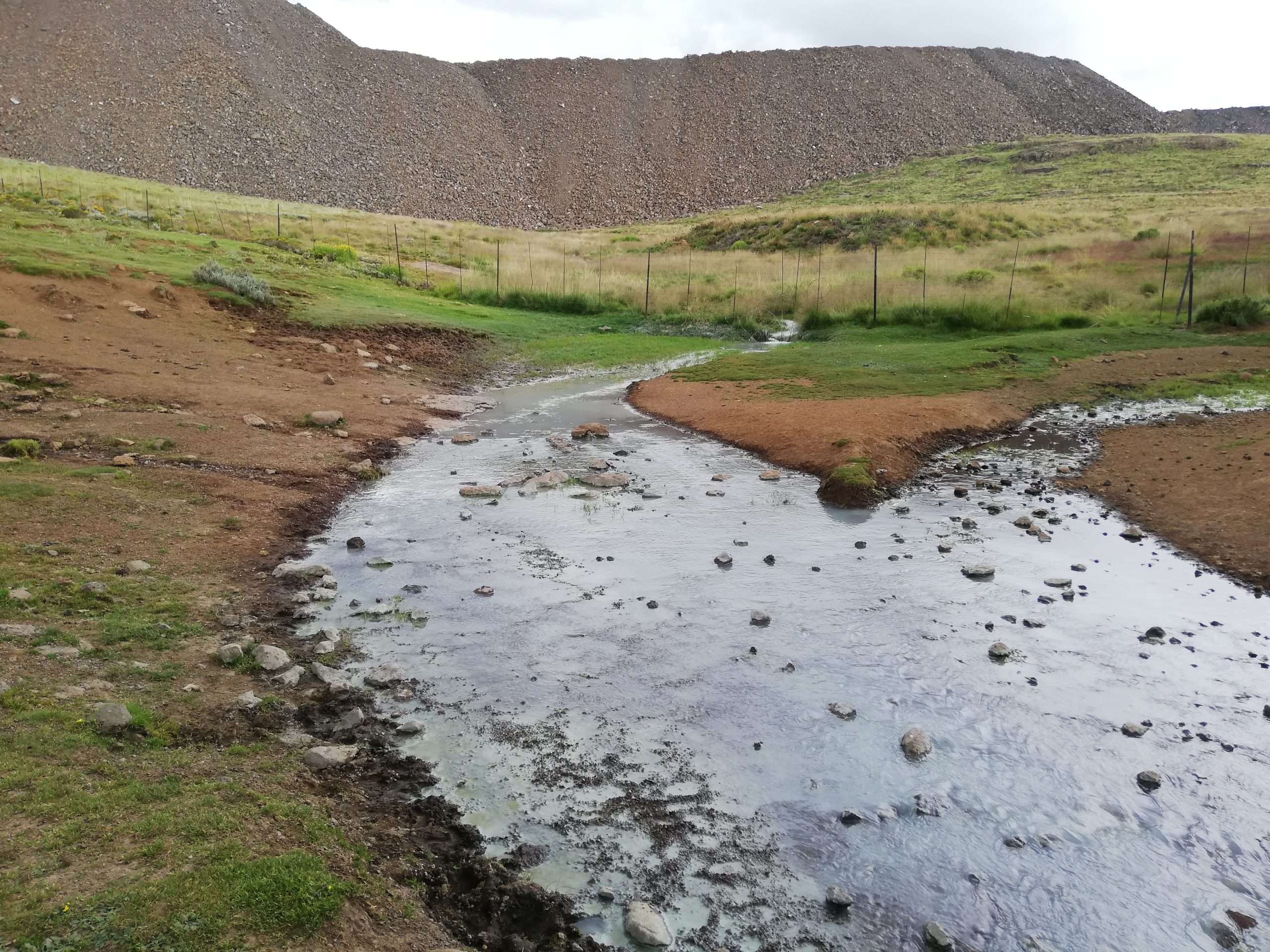
People in Letšeng and Kao Are Eating Sorghum Contaminated with Heavy Metals – NUL Researcher
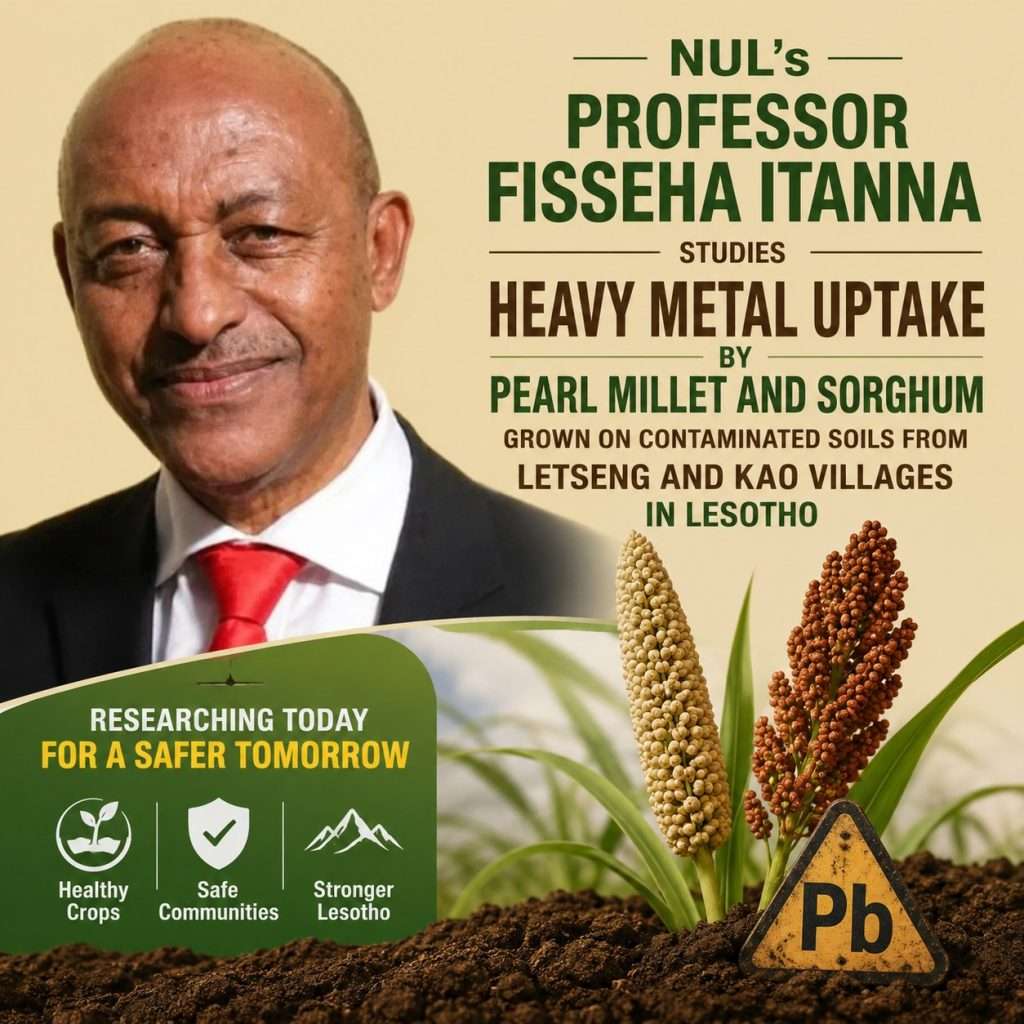
Poster designed by NUL Research and Innovation Hub.
18 May 2026 by Pascalinah Kabi
Communities living around the Letšeng and Kao mines are at risk of serious health effects after sorghum and pearl millet — a drought-resistant grain crop — grown in contaminated soil samples collected near the two mining operations tested positive for heavy metals.
“Results of this study indicate that the heavy metal risk around the mining sites is alarming and hence appropriate measures need to be taken to rectify the situation,” read a 2025 study by soil scientist Motsamai Tjakata and Fisseha Itanna – a professor at the National University of Lesotho.
Tjakata and Professor Itanna said this puts people who consume the sorghum produced from areas around the two mining areas at risk.
“Sorghum absorbs more heavy metals than Pearl millet in all study sites from pot experiments in glass houses, indicating that the health of humans and animals in the community is at risk,” read the report.
The study indicated that irrigating Pearl millet with contaminated water increases the heavy metal concentration in the plants mostly when applied directly, and the effects on the crop could be easily seen.
The new findings came nearly three years after journalism investigations supported by Bertha Foundation and Pulitzer Centre for Crisis Reporting revealed Letšeng and Kao mines’ operations were contaminating water sources that marginalised communities rely on for their daily livelihoods. The reporting drew on confidential reports from Letšeng Diamonds Mine, the Lesotho Highlands Development Authority, and the Lesotho Department of Water.
The latest scientific study now provides laboratory-based evidence showing how such environmental contamination translates into heavy metal uptake in key staple crops.
Also read: Water polluted by Letšeng mine poses deadly risk to infants, probe uncovers
Sample collection
The study, published on ResearchGate in February 2025, aimed to understand how contaminants from mining areas affect farmland and the wider environment.
To do this, Tjakata and professor Itanna collected soil samples from areas suspected to be contaminated along wastewater drainage channels near the Letšeng and Kao mines. They also collected soil from the Mokhotlong Agricultural Research Station, which was used as a clean comparison site.
Soil from the mining areas was taken from places where wastewater flows out of the mines into surrounding land. According to the study, Kao village is affected by wastewater from a kimberlite diamond mine, while Letšeng is the largest mining site in Lesotho, located in a high-altitude area with a cold climate and frequent snowfall.
After collecting the samples, the researchers conducted a controlled “pot experiment” in a glass house at the National University of Lesotho to see how plants respond to the different soils.
They planted sorghum and pearl millet in pots filled with soils from the three sites. Each crop was grown in several repetitions to ensure reliable results. Soil from the Mokhotlong Research Station was used as the control (clean soil), while soils from Letšeng and Kao represented contaminated conditions.
The plants were watered regularly to keep soil moisture consistent, and the researchers monitored them daily, observing changes in leaf colour, growth, and overall plant health.
Testing
After the pot experiment, samples of sorghum and pearl millet were taken to the Soil Science Laboratory at NUL for testing. The aim was to measure how much heavy metal had been absorbed by the plants.
First, the plant material was dried and ground into a fine powder using a grinding machine. A small measured amount of this powder (0.5 grams) was then placed into special glass containers for testing.
To break down the plant material and release the minerals inside it, scientists added a mixture of chemical solutions, including sulphuric acid (H₂SO₄), hydrochloric acid (HCl), and hydrogen peroxide (H₂O₂).
The samples were then heated on a hot plate at high temperature (about 320°C) so that the plant material fully dissolved and any unwanted contamination from the air or containers was reduced. After heating, the samples were allowed to cool down to room temperature.
Finally, clean distilled water was added to prepare the samples for analysis. The levels of heavy metals in the plant tissues were then measured using a laboratory instrument known as an AAS 500 (Atomic Absorption Spectrometer).
Analysis
The data was analysed using SPSS statistical software. The researchers used a method called linear regression to examine the relationship between the amount of heavy metals found in the soil and the amount absorbed by sorghum and pearl millet plants.
They also compared results from the contaminated mining sites with those from the clean control site to see if there were meaningful differences.
A standard measure of significance was used to interpret the results. Differences were considered statistically important if the probability of error was less than 5% (p < 0.05). In simple terms, this means the researchers were at least 95% confident that the differences they observed were real and not due to chance.
Results
The results show mixed levels of different heavy metals in the sorghum and pearl millet samples from the study sites.
Copper levels in all plant samples were below the allowed safety limits, meaning the crops were not contaminated with copper. Zinc levels were also below the allowable limits, and in some cases were so low that they may not be enough for healthy plant growth.
Iron levels in all the crop samples were very low, suggesting that the soils at all study sites do not contain enough iron for optimal plant nutrition. However, lead levels in the crops were above the recommended safety limits, indicating contamination. High levels of chromium were also detected in the plant samples across the sites.
Cobalt levels remained within safe limits (below 50 mg/kg), meaning there was no cobalt contamination in the crops. Cadmium showed a clear difference between sites: it was found in high amounts in crops grown on contaminated soils near the mines, while it was not detected at all in plants grown at the Mokhotlong Agricultural Research Station, which served as the clean control site.
Toxicity
The results show that sorghum and pearl millet grown in the pot experiment contained lead levels above the World Health Organisation (WHO) safety limit of 2 mg/kg. This means the plants had more lead than what is considered safe. The study also found that soils from the Letšeng area already had lead levels above the acceptable limit, which likely contributed to the contamination in the crops.
The researchers explain that lead is easily taken up by plants, and this can strongly affect how they grow. In simple terms, lead can enter plant tissues easily and interfere with normal development. Plants try to defend themselves by strengthening their cell walls to limit how much lead enters their cells.
Chromium levels were also found to be high in soils from both Kao and Letšeng villages, and the same pattern was seen in the plants. This shows that the crops were absorbing chromium from the soil. Chromium is considered highly harmful because it can damage or even kill plants and can also affect seed germination, preventing seeds from growing properly.
Cadmium was another major concern. Both sorghum and pearl millet contained cadmium levels far above the safe limit of 0.02 mg/kg. Unlike the other metals, cadmium was consistently found at dangerous levels across the crops studied.
The study explains that cadmium can reduce a plant’s ability to absorb water and nutrients, disrupt normal growth processes, and damage plant cells. Because cadmium dissolves easily in water, it can spread quickly in the environment and affect plants even at low concentrations.
Visible effects of cadmium toxicity were also observed in the experiments, especially in plants from Kao village. These included stunted growth and yellowing of leaves (chlorosis), which happen when plants cannot take up enough nutrients through their roots due to damage caused by cadmium.
Conclusion
The study found that both sorghum and pearl millet absorbed significant amounts of heavy metals from contaminated soils through their roots.
Kao village showed high levels of contamination, particularly with chromium, cadmium, and lead. Plants grown in these soils also showed clear signs of stress, including stunted growth and yellowing of leaves (chlorosis).
In Letšeng Village, the levels of heavy metals in sorghum and pearl millet were also elevated. The metals were found in the following order of concentration: lead was the highest, followed by chromium, cadmium, nickel, iron, manganese, copper, cobalt, and zinc.
At Kao Village, three metals were especially concerning because they reached toxic levels: cadmium was the highest, followed by lead and chromium.
Overall, the study found that sorghum absorbed more heavy metals than pearl millet across all study sites in the greenhouse experiments. The researchers conclude that people and animals consuming sorghum grown in these areas may be at risk of exposure to harmful levels of heavy metals.
