

10 600 Basotho Ex-Miners Receive M1 billion from Tshiamiso Trust
26 June 2026 by Limpho Sello
10, 600 Basotho ex-miners and their families have received over M1 billion in compensation from Tshiamiso Trust, a South African organisation established to compensate former mineworkers who contracted silicosis and tuberculosis from dust exposure in qualifying gold mines.
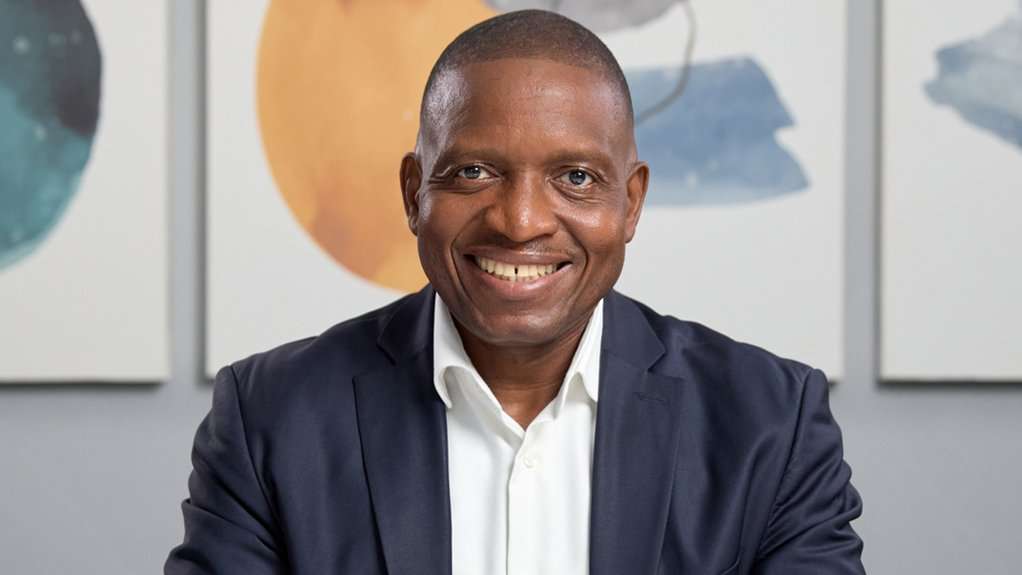
The figure was announced by the Trust’s Chief Executive Officer, Dr. Munyadziwa Kwinda, during a media briefing in Maseru on 25 June 2026.
“I am happy to announce that we have reached M1 billion paid to eligible Basotho former mine workers and their dependents,” Dr. Kwinda said.
Your contributions to Uncensored News Public Interest Journalism Fund help us bring you fresh, evidence-based stories. We welcome contributions on Nedbank Lesotho: 11990336867, Mpesa 51683 and Ecocach 120668. Thank you for your support.
He had began the announcement by illustrating the journey behind the payment, saying that on 24 June 2026 night, his team had been a sleepless night, going through a blur of spreadsheets and verification protocols.
But as the dawn broke, the ledger finally balanced.He said the milestone marked a critical turning point in the ongoing southern African regional efforts to provide financial redress to those who spent their youth working deep within the South African mines.
“When we slept last night, the numbers were not adding up,” Dr. Kwinda announced on 25 June 2026.
“But this morning, the numbers added up.”
The announcement was met with a collective intake of breath. The sum represented financial redress for 10,600 claimants—men who had traveled to South African gold mines perfectly healthy, only to return with lungs permanently scarred by silicosis and tuberculosis.
“This milestone represents more than a financial figure,” Dr. Kwinda emphasised. “It represents recognition, compassion, and support for thousands of families who have waited many years.”
Dr. Kwinda expressed deep gratitude to local partners, particularly acknowledging the Social Cluster Committee under the leadership of Mokhothu Makhalanyane. He highlighted the expansion of outreach, from seven in-country lodgement centers to mobile units designed to penetrate remote, underserved mountainsides.
Yet, the CEO’s tone quickly turned pragmatic. The work was far from complete. The Trust was actively battling systemic delays caused by documentation issues, especially regarding deceased miners. A wave of fraudulent death certificates in Lesotho had forced the Trust to heavily tighten its criteria to meet strict medical and legal standards.To offset these burdens,
Dr. Kwinda shared what he viewed as a vital concession: Amendment Number 9. Under this new rule, if a miner who died after January 1, 2008, had X-rays proving silicosis but lacked lung function test results, the Trust could now use alternative medical evidence of known complications to certify the claim. He added that it was meant to ensure widows and children were not unfairly locked out.
“Furthermore, because older ODMWA certificates did not align with current diagnostic criteria, all living claimants were now required to undergo a specialized Benefit Medical Examination (BME) to ensure fair assessment,” he said.
For advertising rates and partnership deals, contact Uncensored News on uncensored.news.lesotho@gmail.com or +26663782619 or +26657451863. Alternatively, you can contact Limpho Sello on +26663360521 or Pascalinah Kabi on +26663503672.
Following Dr. Kwinda, Makhalanyane took the floor to welcome the announcement on behalf of Parliament. For Makhalanyane, the regional stakeholder approach was crucial, but the human element was staggering.
“We should not forget that the widows and the children of the lost fathers, men who cannot breathe now, are still trying to continue their lives,” Makhalanyane said, his voice echoing through the hall.
“This money means school fees. It means medication. It means livelihoods. It restores some dignity to many of our people.”
He pointed out that while other countries might have only a handful of paid claimants, Lesotho’s staggering volume of over 10,000 verified cases proved just how resilient the Basotho had been, working the deepest shafts for 40 to 45 years. Makhalanyane recalled a previous press conference where they had hoped the Trust would distribute up to M50 million by December.
To see that figure bypassed, soaring to roughly M200 million within a single seasonal block, was highly encouraging.
“The money is there,” Makhalanyane spoke directly to the community, urging patience but confirming that the wheels of justice were turning, even as Parliament continued to meet with other entities like the miners’ provident funds to accelerate the process.
The shadow of bureaucracy
Yet, on the other side of the hall, the atmosphere was far from celebratory. Members of the Merafong Mine Workers Council of Lesotho set at the second row of the table, their faces hardened by years of unfulfilled promises.
Turning to a journalist from Uncensored News after the presser, Motake Marake, a representative of the council, spoke with raw candor. To these men, the highly praised “Amendment Number 9” and the tightening of bureaucratic strings felt less like an administrative safety check and more like a moving goalpost.
“We strongly state that Amendment Number 9 is wrong,” Marake said defiantly.
“They say they will no longer accept documents from foreign doctors. Yet, we possess those very documents from when we left the mines—issued when a worker was declared medically unfit and discharged. This kind of amendment does not speak well.”
Marake argued that a miner’s medical history should be traced continuously from the moment they first stepped onto the mine complex, in line with international standards. He spoke of the deep psychological toll exacted on aging, sick men by the Trust’s stringent verification processes.
“Take local certificates here in Lesotho,” Marake explained, gesturing to the men around him.
“When these people are given certificates confirming they suffered or passed away from TB, the Trust rejects them. A local doctor certifies it, but the Trust counters it upon arrival, claiming the person was killed by something else entirely. How do they know exactly which disease eventually killed that person?”
Marake’s grievances cut to the core of the miners’ reality. They had left Lesotho as healthy young men, their lungs subsequently ravaged not just by dust, but by the very heavy medications prescribed to treat them.
He claimed that the system was deliberately sidelining international benchmarks—where conditions like asthma are readily compensated—simply to save money.Worse still was the emotional rollercoaster caused by administrative errors.
Marake described instances where miners received a text message confirming they qualified for a payout, only to receive a second notification shortly after, canceling the first.
“What does that kind of treatment do to a person’s psychological state?” he asked.
The final straw for the council was the perceived erasure of prior medical classifications. Many miners held certified papers from the Compensation Commissioner for Occupational Diseases (CCOD) recognizing them as having “second-degree” (severe) impairments.
Yet, when evaluated by Tshiamiso’s diagnostic machines, they were suddenly classified as entirely healthy.
“When first and second-degree impairments combine, it shows a person is already heavily damaged internally.
“It is baffling that they still insist the person is fine. On what grounds? That is why we, as a council, must constantly seek a second opinion to find the actual truth.”
The briefing ended with a stark juxtaposition: a historic billion-Maloti breakthrough celebrated at the podium, existing in the very same room as a fierce, unfolding battle over the bureaucratic small print that dictated who lived to see their share of it.
