

Over 300 Mafeteng Girls Aged 15–19 Become Mothers in 2025 Alone
26 June 2026 by Limpho Sello
Mafeteng district recorded 389 births among girls aged between 15 and 19 in 2025 alone.
The district also recorded 531 births among young women aged 20 to 24 during the same period. At the same time, 1,328 young people were receiving antiretroviral therapy (ART).
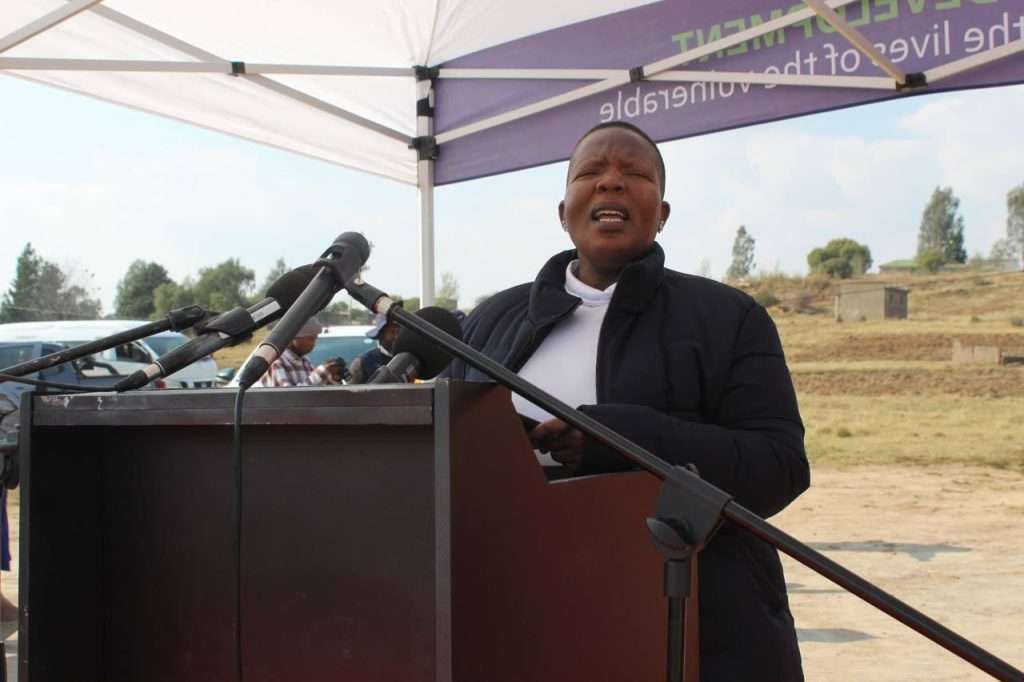
According to Lerato Challa, a Sexual and Reproductive Health Mentor at the Mafeteng District Health Management Team (DHMT), the high number of teenage pregnancies points to deeper social and economic challenges, including limited access to menstrual health products.
“When young girls cannot access basic personal care supplies, the consequences stretch far beyond missing school,” Challa said.
She explained that period poverty exposes girls to a range of vulnerabilities, including school absenteeism, gender-based violence, early pregnancies, and increased risk of HIV infection.
“The district registered 1,328 young people on lifelong HIV treatment in 2025, indicating that HIV transmission among young people remains a serious concern,” she said.
Challa added: “Furthermore, the 2025 data on teenage pregnancies revealed that there were four deliveries from youth aged 15 and below, 389 deliveries among those aged 15 to 19, and 531 deliveries among young women aged 20 to 24.”
Challa also revealed that miscarriages and abortions affected 83 young girls in the same year.
Your contributions to Uncensored News Public Interest Journalism Fund help us bring you fresh, evidence-based stories. We welcome contributions on Nedbank Lesotho: 11990336867, Mpesa 51683 and Ecocach 120668. Thank you for your support.
Cycle of vulnerability
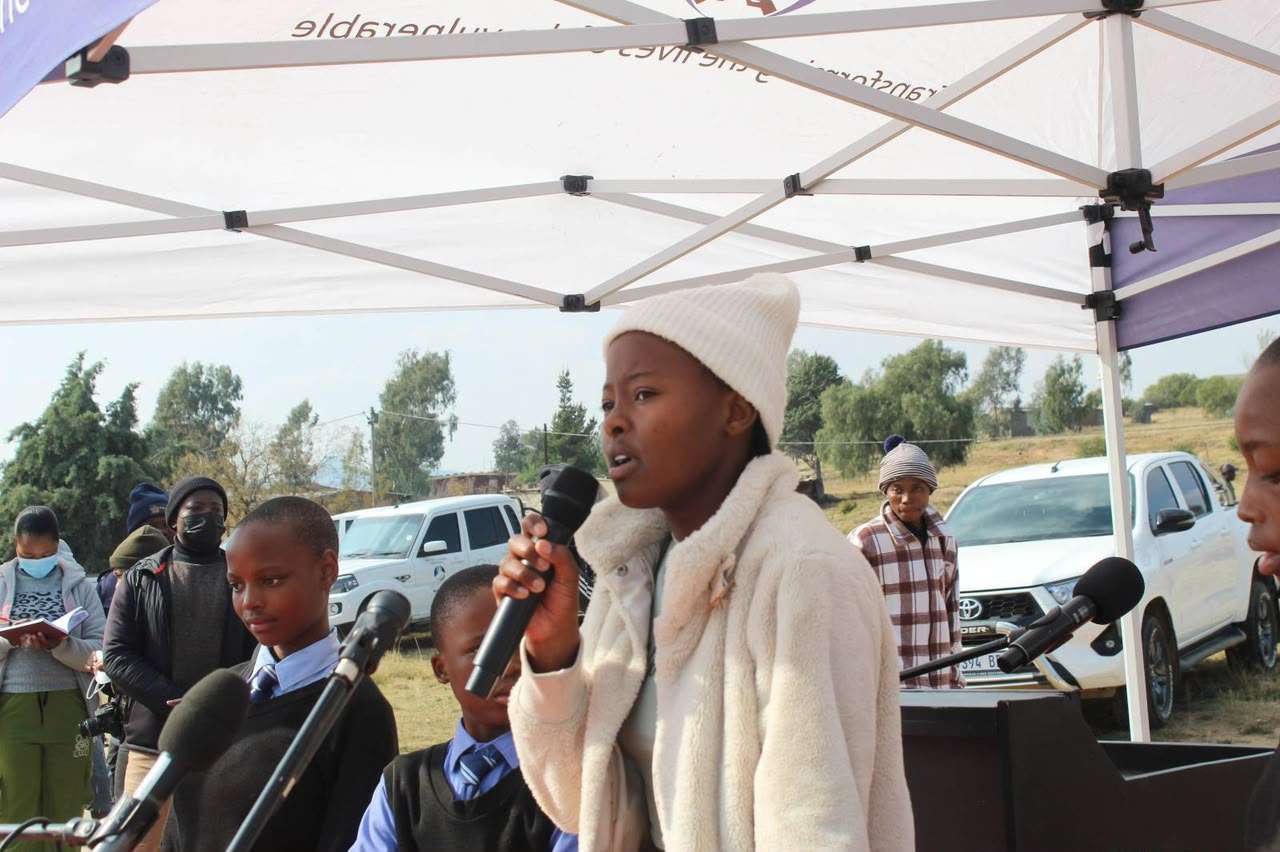
Challa was speaking during the Menstrual Health and Hygiene Model event held at Ha-Ralintsi in Mafeteng on June 19, 2026.
The event, attended by teenagers from across the district, aimed to raise awareness about menstrual health and hygiene while challenging stigma and misconceptions surrounding menstruation.
During the event, girls and boys carried placards bearing positive messages about menstruation. One message read, “Menstruation is not a taboo,” while another encouraged girls to be proud of their menstruation.
However, for many girls, daily realities make it difficult to embrace such messages.
According to Challa, the challenges associated with menstruation are often part of a broader cycle of vulnerability linked to abuse.
“When this female person does not get her basic needs, who is she in a life full of hardships?” Challa questioned, pointing out that girls frequently use improper materials or face severe sexual abuse.
She noted that in 2025, the district registered seven cases of sexual abuse among children between the ages of 10 and 14, 19 cases between the ages of 15 and 19, and five cases between the ages of 20 to 24.
“Education needs to spread so that fathers and brothers know we must protect underage girls and young women,” Challa said.
For advertising rates and partnership deals, contact Uncensored News on uncensored.news.lesotho@gmail.com or +26663782619 or +26657451863. Alternatively, you can contact Limpho Sello on +26663360521 or Pascalinah Kabi on +26663503672.
M20 in exchange for pads
Imagine a world where a basic biological process forces a young girl to choose between her health, her education, or her safety. In the rural corners of Lesotho, this isn’t a hypothetical crisis—it is a daily reality.
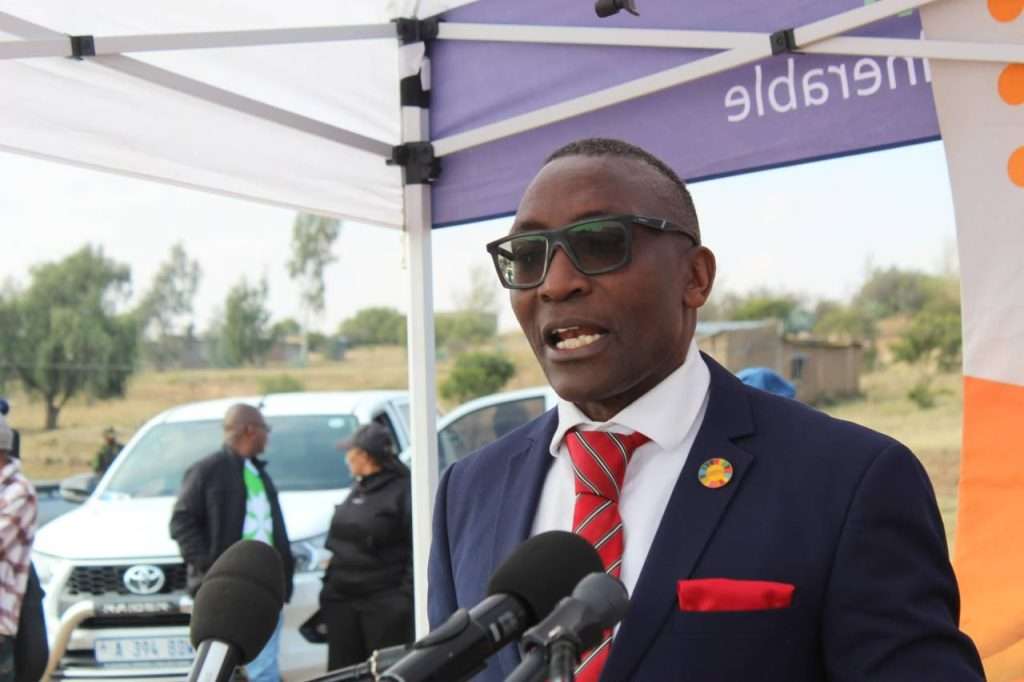
During the launch of the Menstrua lHealthand Hygiene Model, John Kennedy Mosoti, the United Nations Population Fund (UNFPA) Country Representative, shared a chilling account from a recent community visit in Mokhotlong.
A young girl confessed that she felt compelled to trade sex for just M20 to buy a pack of sanitary pads.
“If we as parents do not support that girl, then we have failed our girls,” Mosoti stated bluntly.
“Without a period, none of us would be here. And therefore, we have to do all we have to do to make sure that life continues and to ensure that we support that girl to have that dignity, to have that respect, and to continue in school.”
Meanwhile, young male scholar who spoke on behalf of beneficiaries, Kamohelo Mosola, alluded to how his school has taken a step in the right direction to observe Menstrual Health and Hygiene.
Mosola’s remarks showed how under the 2026 global theme, “Together for a Period-Friendly World,”local schools and youth leaders are actively working to dismantle the ancient stigmas surrounding menstruation. And how inclusive school environment looks like.
“At my school we are already creating a period-friendly world because we have that special teacher who talks to girls about their body changes, gives them sanitary towels, and makes sure that they are cared for,” Mosola shared.
“The school has established a private, specialised room within the girls’ toilets for changing sanitary products safely and comfortably.
“From Grade 4 to Grade 7, boys are actively taught about physical development to foster an environment of support rather than bullying.
“To all boys, brothers, and fathers, together let’s support them,” Mosola urged.
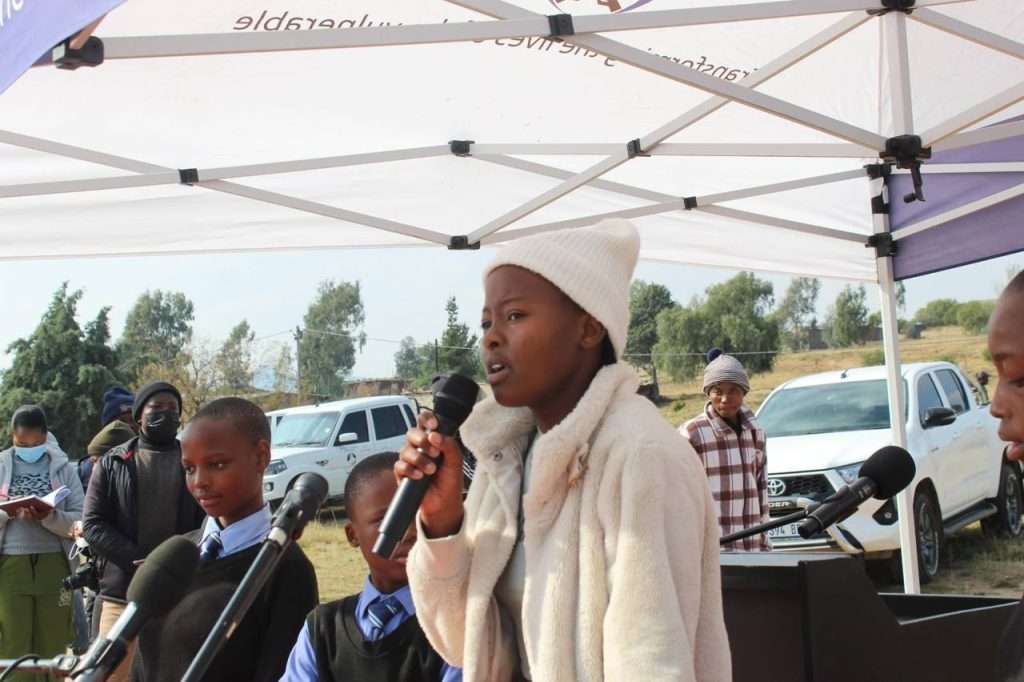
Polo Letsie, speaking on behalf of the youth of Qibing, echoed the profound emotional impact of receiving hygiene products.
“It may seem like a simple gift, but for many of us, it means dignity. It means comfort. It means peace of mind, it gives us peace of mind. Your support reminds us that we are not alone. We are seen.”
Science and culture clash
The Minister of Finance and Qalabane Constituency Legislator, Dr. Retšelisitsoe Matlanyane, emphasised that government intervention in schools must be mirrored by a mental shift at home.
“Sometimes a child leaves school having been taught very well there, but when they get home, they encounter cultural traditions or attitudes that undo the education they just received,” Dr. Matlanyane observed.
She called on parents and traditional leaders to discard outdated mindsets.
“Nowadays, what continues to hold us back are old taboos that are no longer useful in this modern era. Life has changed, and we must change with the times so that we can protect and support our children properly.”
Dr. Matlanyane also made a direct plea for schools to prioritise infrastructure.
“Clean water and clean toilets must be available so that when a child needs to change, they find the proper facilities that offer the dignity and privacy necessary to allow them to continue with their studies without fear or shame.”
The day also resembled the power of A Strategic Partnership for the Future,
The massive distribution drive is a joint effort between the Government of Lesotho, the UNFPA, and corporate allies like the Vodacom Lesotho Foundation.
Representing Vodacom Foundation
Tšepo Ntaopane, didn’t mince words regarding why the corporate sector must step up, framing their involvement as both a moral duty and a long-term investment.
He warned young girls not to be swayed by older men promising luxury items like “an iPhone 17” in exchange for their youth.
“The expectation is that tomorrow, you too will grow up to become Deputy Prime Ministers, and you too will grow up to be the Ministers of Finance.
“If you find yourselves dropping out of school because you are disadvantaged, or because you become pregnant and can no longer work, it means that at the end of the day, for those of us who sell to you, there will be no one left to buy.
“So, in the main, it’s a self-preservation strategy for us as Vodacom Lesotho. Secondary to that, we want every single Mosotho child not to be left behind,” Ntaopane added.
Meanwhile, Mosoti also added that this program ensures that girls are kept in school.
“The initiative is already yielding massive, tangible support across the country, ensuring that qualifying girls receive free sanitary towels for the entirety of 2026 and well into next year,”
With plans already underway to expand the program to other districts like Thaba-Tseka, Lesotho is moving step by step toward a future where a natural cycle will never again compromise a young girl’s education, safety, or basic human dignity.
109,201 total sanitary towels have been successfully distributed across three key districts: Mokhotlong, Maseru, and Mafeteng.
30,100 packets of sanitary towels were allocated specifically to Mafeteng on June 19,2026.
Accoding to Minister of Gender, Youth and Sports, Pitso Lesaoana, the supply is set to directly benefit over 3,000 learners, out-of-school girls, women, and females living with disabilities across the five community councils of Qalabane.
