

Maqhaka Poultry Farmer Losses 28 Chicks Overnight
17 August 2026 by Pascalinah Kabi
The 61 two-week-old chicks were huddled tightly together, their tiny bodies pressed against one another as they cried for warmth. Still too young to regulate their body temperatures effectively, they appeared to be fighting the cold with the only means they had — clustering together and calling out.
As the cold grew stronger into the night, their cries got weaker, with some chicks becaming increasingly lethargic, barely moving, while others remained buried beneath the cluster, seeking whatever warmth they could find. Eventually, the movement and cries of 28 chicks stopped. The 28 chicks died from the cold, just two weeks into their lives.
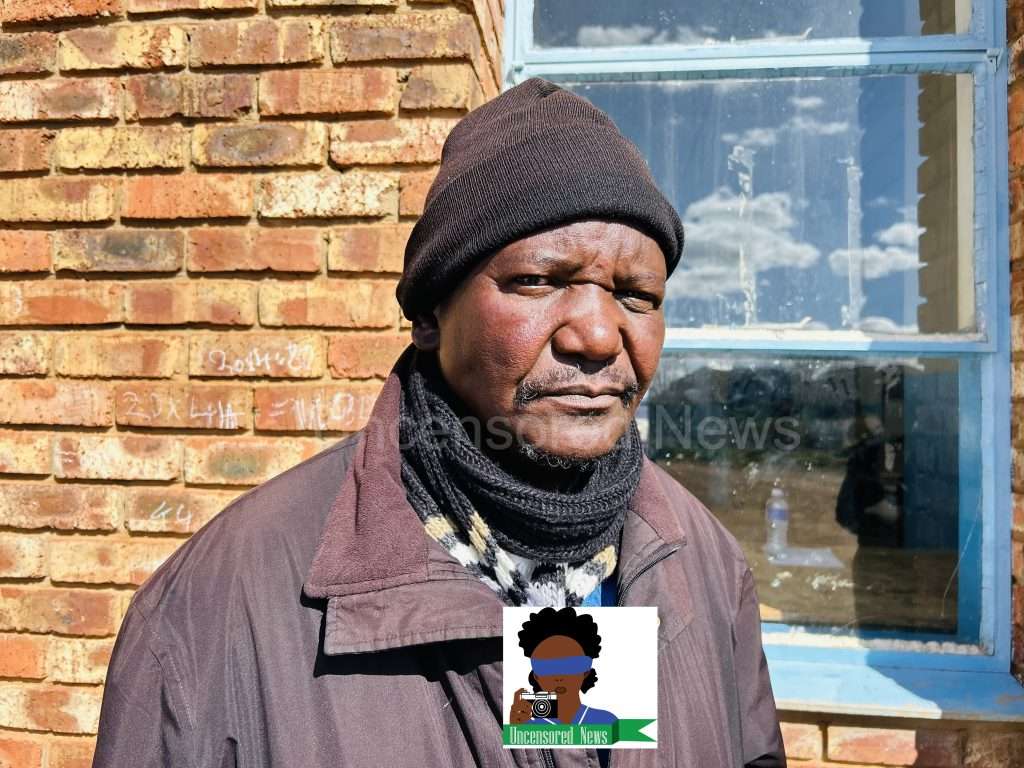
“My chicken coop was constructed using corrugated sheets for the lower walls and roofing. Between the corrugated sheets and the roof, there is wire mesh to allow for ventilation,” 67-year-old Ntisana Lefela told Uncensored News on 13 August 2026.
Just two weeks before the cold front that swept across Lesotho on the night of 8 August 2026, Lefela’s 61 chicks had arrived at the coop, fresh from a hatchery in Maseru.
“During the cold front, I placed some boxes inside the coop for warmth, but I realised it was very cold, so 28 died,” Lefela said.
After discovering that nearly half of his chicks had died, Lefela moved quickly to protect the survivors. “I moved the surviving ones into my house, put them in a box lined with blankets and lit a fire to keep the live chicks warm,” he said.
The best teacher
For a farmer who had just lost nearly half of his chicks, Lefela stood tall on the grounds of Hlotse High School in Leribe district, where the Rural Self-Help Development Association (RSDA) was holding an event to promote the rearing of buchveld chickens among farmers and families.
The movement is being carried out in collaboration with Slow Food Cooks Alliance Lesotho, with funding from Food and Agriculture Organisation and Government of Monaco.
According to RSDA, the dual-purpose buchveld chicken is resilient enough to withstand extreme weather conditions, including both extreme heat and cold.
Lefela was among farmers who travelled from afar to hear the message and learn more about raising the buchveld breed.
“The 28 chicks that died were a big loss for me,” Lefela said.
Lefela lost his chicks at a time when the Lesotho Meteorological Services (LMS) and the Disaster Management Authority (DMA) are implementing the ActionFirst programme in Lesotho. The initiative is designed to strengthen Action-Based Forecasting (ABF) and people-centred Early Warning Systems.
In simpler terms, the two institutions want to ensure that weather forecasts and early warnings reach people like Lefela in a way that goes beyond simply telling them what weather to expect. The warnings should also tell people what they can do to prepare for and reduce the potential impacts of the forecasted conditions.
From 10 to 14 August 2026, LMS and DMA brought together stakeholders to work on a “co-production process” aimed at transforming weather and climate information into clear, locally actionable and trusted warnings that support timely preparedness and response.
On the sidelines of the week-long meeting, Mokotla Ntela from the World Food Programme’s Emergency Preparedness and Response Office told Uncensored News that the meeting provided an important platform for stakeholders to move beyond simply communicating what the weather forecast predicts to understanding what those conditions could mean for communities.
“We are here to look at how we can co-produce messages that allow whoever receives them to take action based on the advice provided alongside the forecast. We do not want to leave anyone behind. For instance, when we talk about agriculture-related issues, experts in that sector will advise on the key messages,” Ntela said.
Also watch: https://web.facebook.com/share/v/1Bfj1oMJcJ/
While the LMS, DMA and their partners work to strengthen actionable forecasting, for farmers like Lefela, experience remains the most immediate teacher.
“But I now know what to do. I am going to recover the loss in no time,” he said.
For now, Lefela has moved the surviving chicks into his house, where he uses a heat-generating bulb to keep them warm.
“The remaining ones are growing well. They are gaining feathers, which is a sign of good growth. They are now warm in the house,” he said.
Lefela is in no hurry to move the chicks back into the chicken coop. Having learnt from the loss, he plans to keep them indoors until they are older.
“I will take them out when they are older. This is the experience I have gained,” he said.
He is already looking ahead to replenishing his flock.
“The hens are laying. I am taking the eggs to the hatchery, and I will have more chicks in no time,” Lefela said.
Lefela preaches local eat
Lefela became a full-time farmer after retiring from his job with an international transport company.
“At that time, I realised that farming was not only profitable, but also fulfilling,” Lefela said.
Before retirement, he spent his spare time practising subsistence farming, growing vegetables and keeping dairy cattle and poultry. His goal was to ensure that his family had a reliable supply of eggs, milk and chickens produced in their own backyard.
“I am now a full-time farmer. I have even received a shade net,” he said.
Lefela acknowledged that farming has its difficult days, but said he draws motivation from fellow farmers, including those who travelled with him to Hlotse, Leribe, on 13 August 2026.
“I get motivation from other farmers, like this gentleman who has so many chickens. When I visited his home, he gave me some chicks. They grew and started laying eggs. When one of the chickens was slaughtered, I noticed that its bones were very large, and I fell in love with the breed,” he said.
Lefela said his interest in poultry farming was also driven by the potential to produce larger chickens for meat.
“I know that, generally, the meat from our local Sesotho chickens tastes the same. The difference is in the size of the type of chicken one is rearing. That is why I decided to go into poultry farming,” he said.
Back home in Maqhaka, Lefela is a member of the Community Farmers Association (CMFA), which brings together poultry, vegetable and fruit farmers.
“We are all members of the same association. For instance, our association recently received a tractor from the government,” he said.
