
Qacha’s Nek Community Celebrates a M30, 000 Gift from the Regeneration of Landscapes and Livelihoods Project
26 October 2026 by Pascalinah Kabi
Thick white clouds drift across the sky, occasionally giving way to patches of blue as sunlight falls over the mountainous landscape of Ha Mosuoe in Qacha’s Nek. Below, scattered homesteads sit among rolling hills, while a winding gravel road cuts through the village.
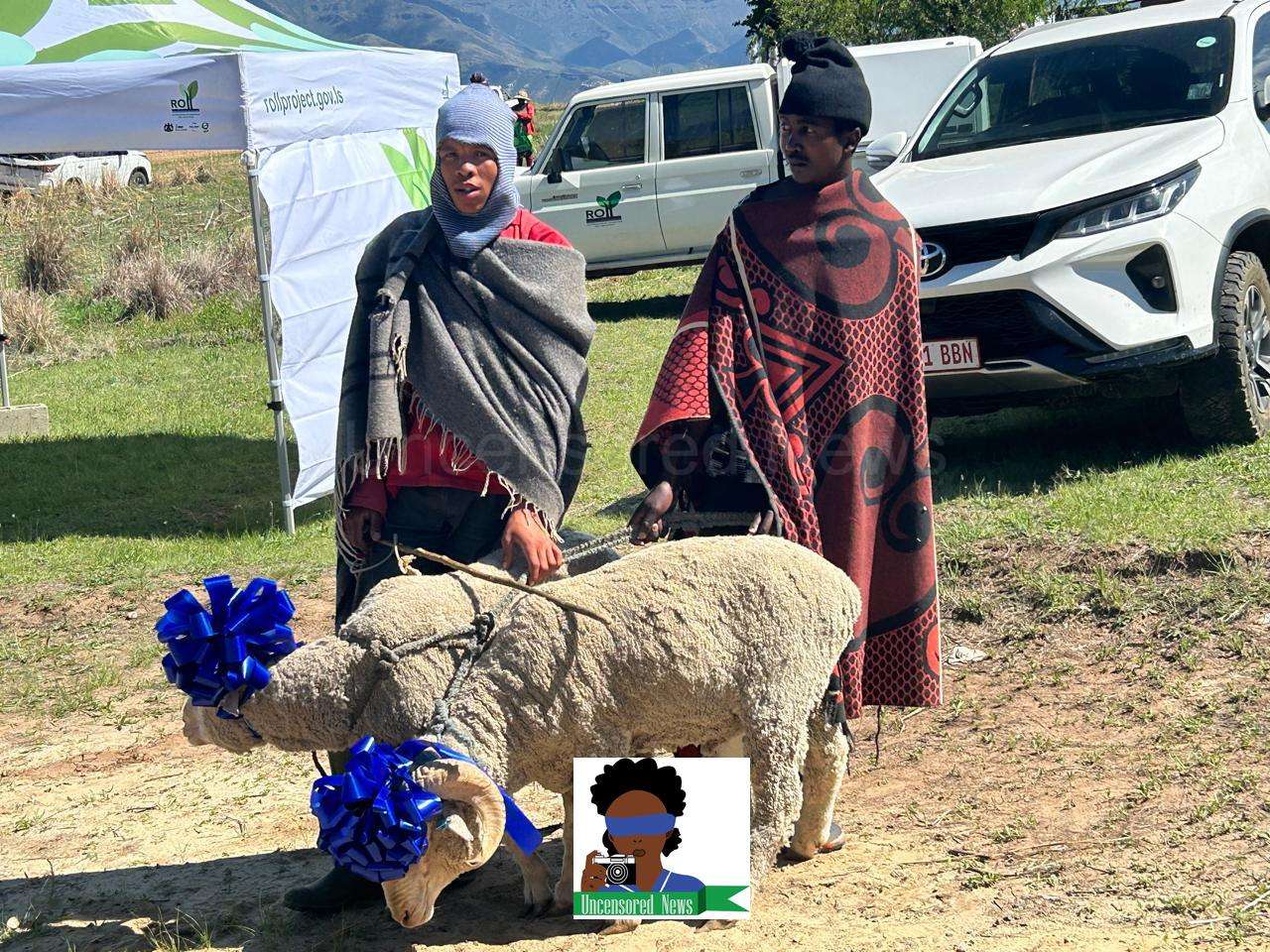
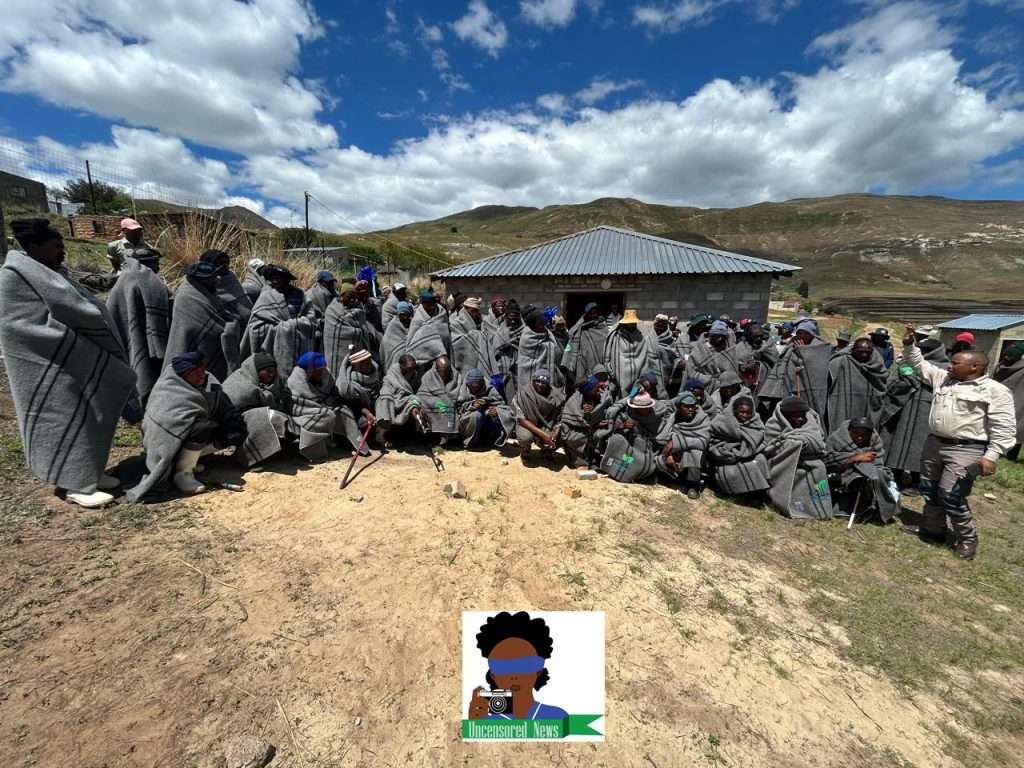
Alongside the road, a group of herders sing and dance in celebration as they prepare to receive two Merino rams and more than 60 grey blankets bearing the Regeneration of Landscapes and Livelihoods (ROLL) logo.
ROLL donated two Merino rams, valued at approximately M30,000, to the Mosuoe-Tšepiso Grazing Association on 15 October 2026. The donation forms part of an intervention responding to priorities identified by the Ha Mosuoe community during consultations with the project.
Speaking on behalf of the herders, Mofanyane Machaba said the community was proud that, as of 15 October 2026, no fires had been deliberately set in the environment. He said this reflected a significant improvement in community members’ understanding of the need to protect and preserve their surroundings.
“Even during the rainy season, they are scared to burn the environment. Even my chief knows that there are no environmental challenges caused by the people,” Machaba said.
As part of its efforts to regenerate Lesotho’s landscapes, ROLL advises communities against setting fire to grasslands because doing so can damage ecosystems. Such fires can destroy medicinal plants, degrade soil quality, damage grazing grass and kill other species, including insects that play a critical role in maintaining soil health.
‘Maamohelang Mosala, secretary of the Mosuoe-Tšepiso Grazing Association, says the community has been working hard to remove bitterbush, an invasive shrub known locally as sehalahala, from the mountainous landscape to protect its rangelands.
Lesotho is experiencing rangeland degradation, partly driven by the spread of invasive plants. This threatens the country’s wool and mohair industry, as well as the Lesotho Highlands Water Project, which contributes significantly to the national economy.
“That hill was covered in sehalahala, and we started clearing it in March 2024. Our aim is to remove the invasive shrub from all these hills so that we can restore the rangelands for our livestock. We are doing all this with support from ROLL, and that is how we have reached this point today, 15 October 2026,” Mosala said.
She explained that the initiative began with the Mosuoe-Tšepiso Grazing Association, but other grazing associations gradually joined the efforts to protect and preserve the environment.
Mosala said community members were not paid for removing the invasive shrubs from the hills, explaining that they were doing the work for their own benefit.
“We are doing it for our own benefit because it is our own livestock that graze there, no cattle from Thaba-Tseka (another district) will come to graze here. We are doing it for ourselves. Regenerating the rangelands improves the health of our livestock and, by extension, people’s lives,” she said.
Souru Chief ‘Malireko Sehahle said the Mosuoe-Tšepiso Grazing Association had previously carried out its responsibilities without external financial assistance. She stressed that her community was capable of protecting and preserving its rangelands without payment.
Sehahle referred to a public event in 2008, when former Prime Minister Pakalitha Mosisili visited the area for the official handover of responsibility for protecting and preserving the rangelands and all natural resources in the area covered by the Mosuoe-Tšepiso Grazing Association.
“During the official handover, community members and dignitaries were treated to a whole feast and money used for buying food came from us, which shows the community’s ability to feed people and do things for ourselves,” Chief Sehahle said.
Why ROLL does not pay communities for environmental protection
ROLL Project Director Mofihli Motšetšero explained why the project does not pay community members in cash for rehabilitating, protecting and preserving rangelands in their communities.
ROLL falls under the Ministry of Environment and Forestry. Motšetšero said his office’s responsibility is to support the work carried out by the ministry, to which ROLL reports directly.
“Our primary mandate is to help communities understand the importance of natural resources. There are experts responsible for removing invasive plants and planting trees. Our role is to ensure that, when these duties are being carried out, we explain why we are doing them.
“We are doing this for our own benefit as communities. This is the real reason why ROLL says it is wrong for communities to be paid for rehabilitating their own environment,” Motšetšero said.
However, he said communities must be supported to sustain their livelihoods, adding that the government is responsible for ensuring that livelihoods are sustained.
He said ROLL had been mandated to assist communities with a clear understanding that the environment belongs to them. He praised the Mosuoe-Tšepiso Grazing Association as one of the best-performing community initiatives under ROLL.
He noted that the partnership between ROLL and the association had faced challenges in the past and would continue to face them, but the challenges were addressed with a shared understanding and a commitment to moving forward.
“Dealing with challenges head-on, with a better understanding of each other, has led us to a situation where rangelands have been rehabilitated. We are here today (15 October 2026) to fulfil one of the promises we made to the association.
“As Basotho, we know that our economy is driven by the wool and mohair sector. Our responsibility is to strengthen the performance of this sector by assisting with Merino rams,” Motšetšero said. As part of this support, ROLL donated two merino rams to the Mosuoe-Tšepiso Grazing Association, collectively priced at around M30, 000. The rams were officially handed over to the association by Minister of Environment and Forestry, Thabo Mofosi.
Mofosi stresses: communities must look after their environment
Mofosi said his ministry was established in 1979, with the primary mandate of ensuring that communities look after the environment in which they live. He said rehabilitating, protecting and preserving the environment ensures that communities reap maximum benefits from it.
He said these benefits include communities living in harmony with one another and having enough food to feed themselves. However, he added that rehabilitating, protecting and preserving the environment alone would not end hunger in Lesotho.
He said respecting traditional community leadership structures, with chiefs and councillors working closely together without politicising their roles and communities respecting their leaders, would help Lesotho reclaim its food sovereignty. According to Newsday, Lesotho needs $8 million to respond to its growing humanitarian needs between July and December 2026 as 492,284 people are expected to experience high levels of acute food insecurity.
Meanwhile, ROLL also donated more than 60 blankets to members of the Mosuoe-Tšepiso Grazing Association.
Mofosi said providing herders, whom he described as drivers of Lesotho’s economy, with blankets and gumboots was part of the government’s efforts to look after them and ensure that Lesotho maximises the benefits it derives from the wool and mohair sector.
“We will not have a herder abused. I am happy that over the past two days, I have witnessed the good work being done by my ministry within communities,” he said.
He explained that ROLL is a project under the Ministry of Environment and Forestry, funded through a government loan to support communities in regenerating landscapes and improving livelihoods.
“Don’t say you are being given something. These are your taxes, and you must protect these resources and live off them,” Mofosi said.
He called on the Ministry of Agriculture, Food Security and Nutrition to assist farmers through livestock vaccination programmes.
“Even if we preserve rangelands and do everything in our power to ensure that our livestock are well cared for, if their bodies are not taken care of, their health will not improve. We need veterinarians within communities to prevent livestock diseases,” he said.
