

244 Deaths per 100,000 Linked to Open-Fire In-House Cooking in Lesotho
28 September 2026 by Pascalinah Kabi
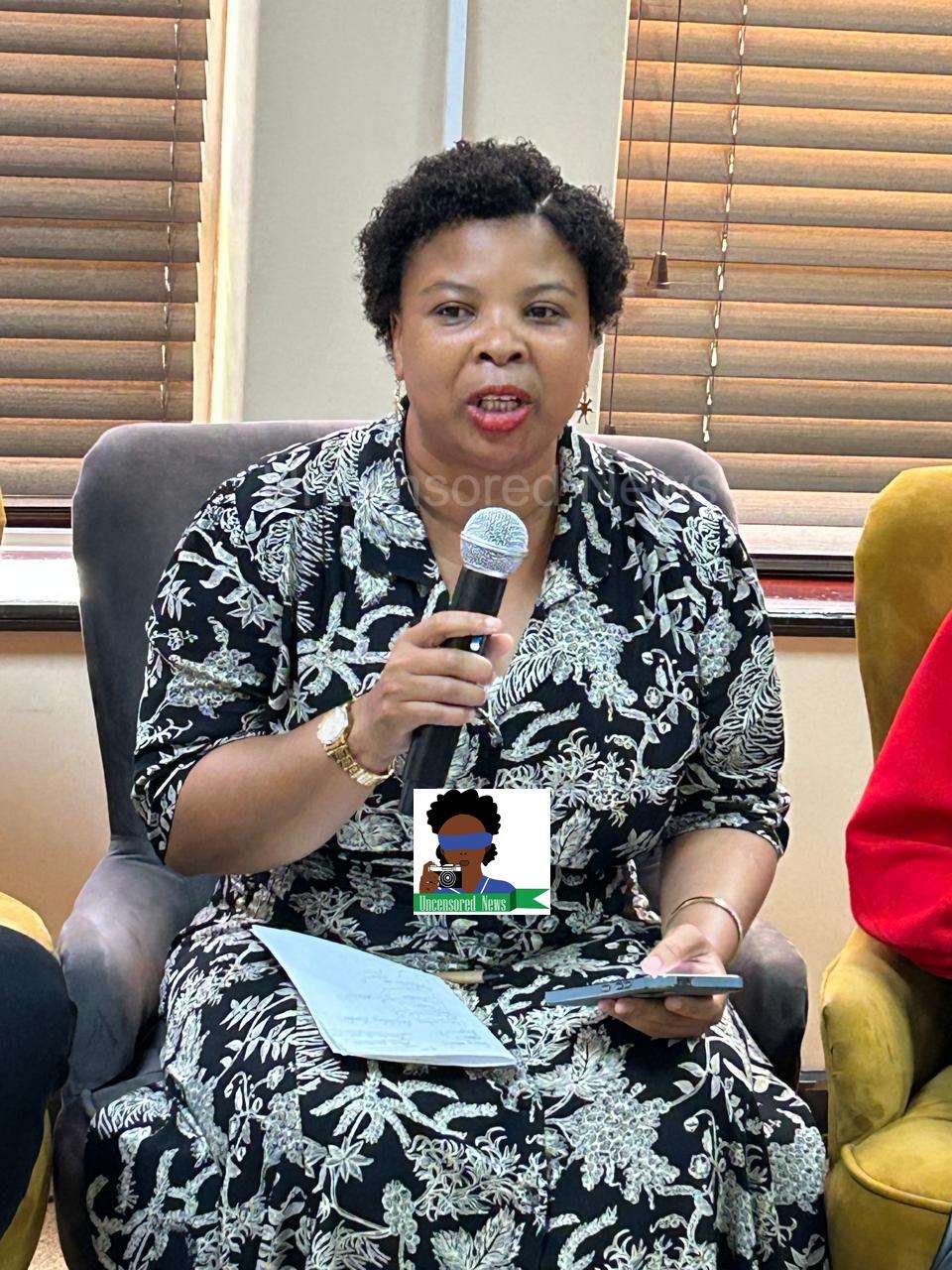
In Lesotho, cooking in the house on an open fire is linked to an estimated 244 deaths per 100,000 people, according to the Country Director of Africa Clean Energy, Rethabile Marumo.
The figure highlights the health risks associated with households relying on open fires for cooking, particularly in homes where cooking takes place indoors. Marumo described the situation as a burden that disproportionately affects women, who often bear responsibility for cooking.
“Let me start with a number that keeps me up at night. 224 deaths per 100,000 people in Lesotho are dying because of open fire cooking in the house,” Marumo said.
She quickly added: “This is one of the highest numbers in the world. This is just not a number. It is our brothers, our sisters, our mothers, particularly our mothers, as they have to face the cooking which has now become a burden – open fire cooking, in-house open fire cooking.”
Have you read this: The Beep That Signals Another Household Struggle – Uncensored news
Marumo made the remarks while responding to a question from the Ministry of Environment and Forestry Director of Economic Planning, Sebathama Moshoeshoe, during a panel discussion on climate-resilient innovation, entrepreneurship and green-job creation in Lesotho.
Listen to the discussions here:
The panel discussion was part of the activities of the inception meeting and stakeholder engagement for the “Promoting Climate Adaptation and Resilience through Innovation and Entrepreneurship for Green Jobs in Lesotho (PARS)” project.
The project is supported by the United Nations Industrial Development Organisation (UNIDO) with $10 million (M163,085,000).
It will be implemented over five years and aims to support 80 small and medium-sized businesses to reduce climate vulnerability and enhance the resilience of vulnerable communities in Lesotho. It will do this by promoting innovation, entrepreneurship, technology transfer and the deployment of climate adaptation and resilience solutions at scale, with particular emphasis on the Water, Energy, Food and Agriculture (WEFA) sectors.
During the panel discussion on 25 September 2026, Moshoeshoe asked Marumo about the biggest challenges preventing small and medium-sized enterprises from scaling up and enriching vulnerable communities.
“I am the country director of African Clean Energy, a stove company which operates in distribution, production and exports of clean cooked stoves. I believe that I have enough expertise to speak and I’m going to be blunt.
“So, what is holding us back? What is the bottleneck? We are too big for grants and we are just too small for banks. The cost of capital is choking us. It makes the products even more expensive for the very customers that we are trying to reach,” Marumo said.
She said PARS has tools, guarantees, blended financing and performance-based grants, and called for small and medium-sized enterprises (SMEs) to be allowed to use the project to facilitate a real de-risking process for these businesses. She said the last mile is a particularly difficult phase in Lesotho.
“The terrain, the mountainous roads and the margins are eaten by this – our margins as businesses,” Marumo argued.
“Lesotho’s terrain is brutal. Getting cookstoves into these hidden villages is very hard. The cost of a stove is in itself lower than the cost of delivery.”
Proposed solutions
Marumo did not just bring problems to the table. She also proposed solutions.
“So, what can we do? What do we need? Thank God, we have PARS build, PARS scale and the proper SMEs database to connect us to markets and investors. Policy fragmentation – water, energy, food, agriculture, difficult roads, difficult offices, different headaches.”
“For SMEs, compliance is a full-time job in this country. We need a National Climate Change Committee to be a real one-stop shop, not a coordinating body, please. People, women, youth are locked out. And we do not have enough technicians, incubators, certified adaptation experts. Without them, ideas stay small.”
She argued that this is a waste Lesotho cannot afford as a country. Marumo said the government’s role is to educate communities and potential customers and mobilise knowledge about climate change and its effects, while the private sector’s role is to provide solutions to these challenges.
“Clear roles, clear actions. The government, please,” Marumo said.
Moshoeshoe said the 244 per 100 000 deaths linked to inhouse open fire cooking were concerning.
“Your opening remarks on the number of deaths was quite scary. Just as a follow-up, do you see climate adaptation and resilience as solutions? Do you think they can be transformed into commercially viable business opportunities?
“I understand you are already through the energy solutions, trying to utilise adaptation and resilience. But beyond that, do you see any other opportunities that can create commercially viable businesses in line of climate resilience and to de-risk, as you had earlier suggested?” Moshoeshoe said.
Marumo responded by indicating that Lesotho needs to treat adaptation as a market, not charity.
“A solar irrigation pump isn’t just a green solution, it helps a farmer to grow more and spend less and that’s profit in our world, that’s return. Once you measure it, you can finance it. UNIDO can finance it once you can measure it. We need to invest in ecosystem, policy acceleration, and finance. PARS gets this right – build local incubators,” Marumo said.
She also pleaded with the Lesotho government to certify green energy experts by all means possible. “Keep that database alive. Then support outlives the project.”
In the end, Moshoeshoe said he felt “a bit ashamed that as the government we are contributing somehow to the failure of business development.”
“But I’m glad that colleagues are here. We have taken note of your concerns,” Moshoeshoe said.
