

Lesotho Must Look Beyond Weather Accuracy to How Forecasts Affect People’s Lives – Mohloki
20 August 2026 by Limpho Sello
When a severe storm approaches or a heat wave, a fundamental question must be asked: “When an early warning message is issued, does everyone receive it? Understand it, and have the ability to act on it?”
Mojabeng Mohloki, a Disaster Management Authority (DMA) Botha-Bothe District Manager, challenged stakeholders to look beyond basic meteorological timing.
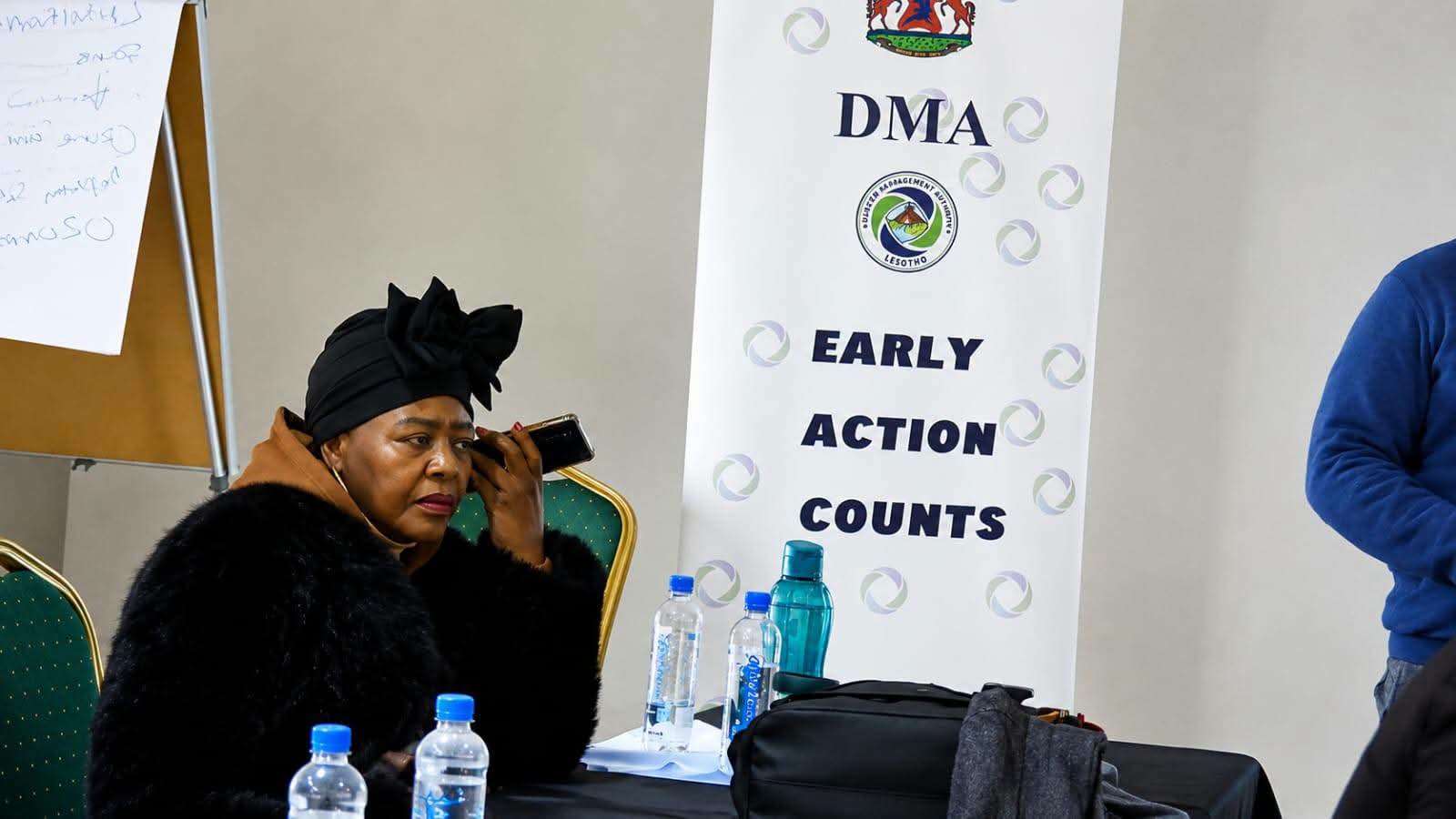
Mohloki threw this critical question during a stakeholder session on Gender Equality, Disability and Social Inclusion (GEDSI) in Early Warning Systems (EWS) at Ha-Motloheloa in Maseru.
“Oftentimes, we focus on whether the forecast is accurate, whether the warning was issued on time, and whether the message reached the community. But, there is another important question: Did the warning reach everyone equally?” Mohloki noted, framing the core issue.
She explained that women, men, persons with disabilities, older people, children, and other socially excluded groups may experience the same hazard differently, possessing varying access to information, resources, transport, or safe places.
This discussion took place during the National Stakeholder Mapping for the Action-Based Forecasting Workshop that ran from August 10 to 14, 2026, with Mohloki’s specific presentation delivered on Thursday, August 12, 2026.
Profound urgency
Mohloki added that these inclusion questions carry profound urgency given Lesotho’s harsh geographic and climate landscape.
“As a high-altitude, landlocked, and semi-arid nation, Lesotho is increasingly prone to severe weather shocks—such as the 2024 El Niño drought, which left approximately 524,950 people food insecure for the 2025/26 season with crop yields hitting their lowest points since 2018/19″ she said.
According to Mohloki’s GEDSI presentation within this challenging environment, vulnerabilities affect populations unevenly.
Women and Girls: Comprising roughly 51 percent of the population, women earn about 28 percent less than men, face higher concentration in informal and domestic sectors, encounter customary law barriers to land and livestock ownership, and carry a disproportionate burden of unpaid care work.
Persons with Disabilities: While official prevalence stands at 3.7 percent (compared to global estimates around 16 percent), their socio-economic status is roughly three times lower than persons without disabilities, with over 65 percent dependent on family or neighbors.
Children and Youth: Youth make up about 40 percent of the population, with youth unemployment hovering around 30 percent and a 35 percent stunting rate among children under five, while young boys face severe weather risks while herding livestock in remote highland cattle posts.
Rural Communities: Over 80 percent of the poor live in rural areas where rugged terrain hinders infrastructure, only 46 percent of rural residents have electricity access (compared to over 90 percent in urban areas), and more than 70 percent rely on rain-fed subsistence farming.
A personal struggle
For Pascalina Letsau, the Botha-Bothe District Coordinator for the Lesotho National Federation of Organisations of the Disabled (LNFOD), these systemic vulnerabilities are a matter of life and death.
“As people with disabilities, weather forecasts are often things we do not understand, and we do not know how to read them,” Letsau told Uncensored News.
She pointed out that while television broadcasts sometimes feature sign language interpreters, many weather reports lack them entirely, effectively excluding people with speech and hearing impairments.
Letsau shared striking examples from rural communities, noting incidents where individuals with intellectual disabilities or hearing impairments remained herding cattle near rivers during dangerous water releases simply because they could not hear or understand the warning alarms.
“Without accessible formats—such as Braille, audio clips uploaded online or distributed flash drives, or pictograms for those with cognitive disabilities or low literacy—preventable tragedies continue to threaten lives,” Letsau said.
Leaving no one behind
Bringing a broader perspective on social responsibilities, Vanetia Phakula from the South African Weather Service (SAWS) emphasised the importance of holistic empowerment when building resilience.
Phakula highlighted that when empowering women, “we must consciously bring everyone along to walk the path together, ensuring that neglected issues like gender-based vulnerabilities and past oversights are addressed so that society functions harmoniously without leaving anyone full of anger or resentment.”
Building on this, Mohloki stressed that equity means redefining roles to leave no one behind. Disability inclusion means ensuring persons with disabilities can fully participate and benefit, while social inclusion actively removes barriers for marginalized groups such as the elderly, ethnic groups, and the rural poor.
Meanwhile, Lesotho Meteorological Services (LMS) Director Dr. Teke Ramotubei addressed the technical challenges head-on, noting that addressing gender and social dimensions is becoming increasingly intricate.
“When I look at gender, every day it keeps being complicated. It’s no longer male and female. It’s also different groups. So it gets complicated every now and then,” Dr. Ramotubei remarked.
He added: “We also need to incorporate those gender-based sensitivities, gender-based considerations and dis-activated data into the future focus group, warning, dissemination, and response activities.”
He acknowledged that scientists typically prefer engaging with computers and machines rather than humans, making the shift toward impact-focused, user-friendly communication a major hurdle.
However, Dr. Ramotubei expressed gladness that stakeholders agreed on these inclusions, emphasising the need for LMS to expand dissemination channels—including media channels, community radios, SMS networks, faith-based organisations, and local leadership structures.
He further stressed the necessity of establishing clear forecast triggers, disaggregated data practices, and predefined anticipatory actions to release resources before a hazard turns into a disaster.
A shared commitment
As the session concluded, participants agreed that integrating Gender Equality, Disability and Social Inclusion (GEDSI) into early warning systems is a vital human rights obligation. By combining disaggregated data with multi-channel communication strategies, Lesotho’s disaster management and meteorological teams are taking crucial steps toward ensuring that future forecasts truly protect every Mosotho.
