

Gavi Funding Cuts Raise Concerns Over Lesotho’s Immunisation Gains
29 September 2026 by Limpho Sello
Lesotho’s immunisation programme faces a major transition as Gavi, the Vaccine Alliance, prepares to significantly reduce both cash and vaccine support during its next strategic period.
The funding cuts raise concerns about possible declines in vaccination coverage, an increase in the number of zero-dose children and the risk of disease outbreaks.
The concerns emerged as the Gavi mission to Lesotho concluded its assessment of the country’s immunisation programme. The Alliance acknowledged the progress made by the country, as well as challenges that could affect the sustainability of those gains.
Gavi Senior Country Manager, Jonna Jeurlink, said the mission came to Lesotho to understand the strengths and challenges of the immunisation programme, monitor the country’s existing grant and prepare for the next grant-making period, known as Gavi 6.0.
“The Gavi cuts for 6.0 are significant, and they’re quite abrupt. It’s not been a gentle degradation,” Jeurlink said.
The reductions, she explained, would affect both cash and vaccine support, increasing expectations on national resources and requiring greater contributions from the Ministry of Health for activities such as campaigns, co-financing and self-financing.
She warned that the reductions could create a risk of falling immunisation coverage, reversing progress made in previous years, increasing the number of zero-dose children and potentially contributing to outbreaks in the coming years.
“We don’t want to disregard that. But we do believe that it can be done, that we can jointly move forward,” Jeurlink said.
She said Lesotho was close to finalising its National Immunisation Strategy, but that gaps and funding needs had already been identified, including needs that were previously expected to be met through Gavi support. This, she said, makes prioritisation essential.
“We really need to agree on a key set of priorities going forward,” Jeurlink said.
She also stressed that Gavi could no longer be viewed as the sole source of financing for the immunisation programme.
“Gavi must be seen as a contribution to your immunisation programme, but no longer a full sourcing of your immunisation programme,” she said.
Despite possible funding cuts, Jeurlink said the visit to Lesotho helped Gavi understand the realities on the ground and the next steps needed for future grants.
Ntšekhe acknowledges risks
However, Health Minister ‘Mamokete Ntšekhe said the government was deeply concerned about the anticipated reduction in funding as Gavi transitions its support model and as Lesotho’s eligibility and co-financing obligations evolve.
“A reduction in external support, if not carefully and jointly managed, risks reversing the gains that the partnership has helped us to build over the past two decades,” she said.
She said the concern was particularly important because of the protection immunisation provides against diseases including measles, polio, pneumonia and diarrhoeal diseases.
Ntšekhe said the government was not raising the concern to place the responsibility solely on Gavi, but to emphasise the importance of an honest discussion about the pace and manner of the transition.
“We therefore look to this mission as an important opportunity for this kind of dialogue,” she said.
On the other hand, Ntšekhe acknowledged Gavi’s contribution to the progress of Lesotho’s immunisation programme over the years.
“Through Gavi’s support, we have introduced new and life-saving vaccines into our national schedule, strengthened our cold chain and supply systems, and built capacity of our healthcare workforce,” she said.
“Many of the gains we celebrate in child survival in Lesotho today bear the fingerprints of this partnership. And for that, we remain deeply grateful.”
At the same time, Ntšekhe made clear that the government recognises that the long-term sustainability of the immunisation programme must ultimately depend on domestic financing.
“The government of the Kingdom of Lesotho does not see this transition as Gavi’s responsibility alone to manage,” she said.
“We recognise without reservation that the long-term sustainability of our immunisation programme must ultimately rest on the strength of our own domestic financing commitment.”
She said Lesotho could not remain permanently dependent on external partners for a service as fundamental as protecting children’s lives.
Ntšekhe said the Ministry of Health, working with the Ministry of Finance and Development Planning, was committed to strengthening the case for increased domestic budget allocation to immunisation and the broader health sector.
She also committed the government to meeting its core financing obligations in full and on time, exploring innovative domestic resource mobilisation mechanisms and ensuring that immunisation is increasingly treated as a national priority funded by Lesotho.
“This is the surest path to a sustainable, resilient and truly Lesotho-owned immunisation programme and it is a commitment this government intends to honour,” she said.
The Minister said the mission had come at a defining moment as Lesotho prepares its priorities for 2028 to 2030 and its next engagement with Gavi.
She said the discussions had been grounded in mutual respect, honesty and a shared commitment to the health of Basotho children.
The ultimate goal, she said, was a Lesotho where every child, regardless of how remote their village is or how difficult the journey to reach them, is protected against diseases that have previously claimed children’s lives.
She stressed that immunisation could not be achieved through meetings and discussions alone.
“Immunisation will not be achieved through talks only,” Ntšekhe said. “There has to be action. And that action has to be targeted. And that action has to have targets.”
Those targets, she said, must reach every child.
“So this is for every child and I want my team to work extremely hard to make sure that where funding is available, we use it adequately, we use it appropriately to benefit the needy,” she said.
UNICEF’s commitment
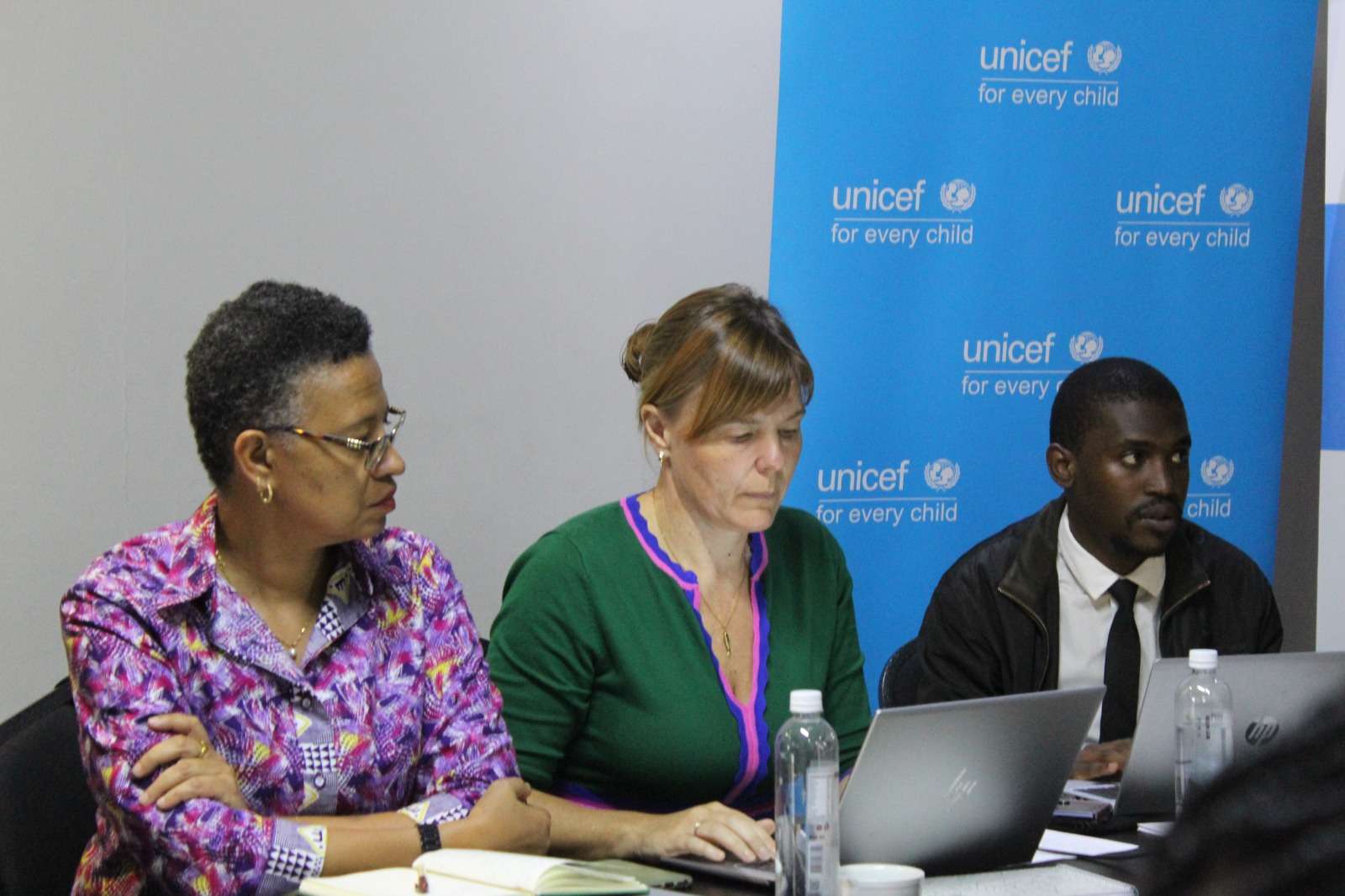
UNICEF Lesotho also reaffirmed its commitment to supporting the country through the transition. UNICEF Lesotho Chief of Child Survival and Development, Ngozi Kennedy said Gavi 6.0 would bring important shifts towards greater sustainability, stronger performance and accountability, realistic budgeting, improved integration with primary healthcare and a sharper focus on equity, zero-dose and under-immunised children.
“These shifts are timely, and they also call for careful planning, strong coordination, and collective ownership,” she said.
UNICEF, she said, was ready to continue working with the Ministry of Health, Gavi, World Health Organisation (WHO) and other partners to develop a strong and credible application, including the necessary facts and budget.
Kennedy said UNICEF could also support technical assistance, equity and data analysis, supply chain strengthening, community engagement, resource mobilisation for primary healthcare, financial monitoring and hands-on implementation.
