
“I Wouldn’t Be Alive Today” – Mantea Lehloesa
25 November 2026 by Limpho Sello
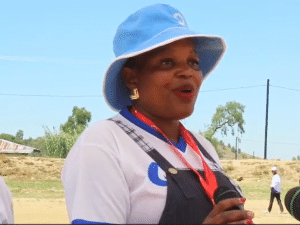
Mantea Lehloesa, a woman from Botha-Bothe district, discovered that she was diabetic while pregnant. Although the diagnosis was difficult, she believes joining the Diabetes Association of Lesotho helped save her life by providing the support, encouragement and knowledge she needed to manage the condition.
“Maybe if I hadn’t made a choice to become a member of the diabetic association of Lesotho, I wouldn’t be alive,” Lehloesa said.
Lehloesa shared her experience during the Ministry of Health’s commemoration of World Diabetes Day in Mafeteng on November 12, 2026, organised through its Non-Communicable Diseases and Injuries (NCDI) Department under the theme “Early Action on Diabetes”.
Although World Diabetes Day is observed internationally on November 14 every year, Lesotho held its commemoration two days earlier, bringing together different sectors to strengthen the country’s response to diabetes.
For Lehloesa, being diabetic for 14years has not only meant watching what she eats and following advice on managing her health.
“To eat well does not mean I eat ‘nice food’. I eat food that are good and healthy for my well-being, I eat small portion of starch, with plenty of fruits and vegetables,” she said.
Dealing with discrimination
Lehloesa has dealt with discrimination and misconceptions about people living with diabetes all her 14-year journey of being diabetic.
She recalled instances when people failed to give her priority when using public toilets, despite the difficulty of holding herself for long periods because of her condition.
She has also encountered insensitive remarks around food, with people making assumptions that someone living with diabetes is always hungry.
She challenged these attitudes, explaining that hunger is not exclusive to people with diabetes.
Her message resonates with that of Makhele Khomo-lishoele, a representative of SolidarMed, who warned that diabetes is among Lesotho’s silent killers because people may live with it for years without recognising the danger.
“Being diabetic today your signs will not show the same-day. That is why we are saying it kills you silently. It will take years for signs and symptoms to present and this says by the time it presents those symptoms, it is because the damage has been done,” Khomo-lishoele said.
Khomo-lishoele, whose organisation works in health education and research, said the growing burden of diabetes and hypertension requires people to reconsider their everyday lifestyles, particularly their eating habits and levels of physical activity.
He cited that the number of people affected by hypertension and diabetes has increased from 25 percent in 2000 to 54 percent in 2025.
He said the reasons behind the increase include unhealthy diets and insufficient physical activity, habits that are becoming increasingly common as lifestyles change.
He pointed to how some people, after securing employment, buy vehicles and become accustomed to spending their leisure time sitting in front of television screens.
“We need to eat healthy and do regular exercises,” he said, referring to the message also communicated by village health workers through their educational song.
He encouraged Basotho to become physically active and return to activities they engaged in while growing up, rather than allowing convenience and sedentary lifestyles to define their daily routines.
Drinking fruit juice is not healthy
Khomo-lishoele also challenged the perception that drinking fruit juice is necessarily a healthier alternative to consuming sugary drinks.
He cautioned that even drinks labelled as 100 percent fruit juice may carry health risks associated with diabetes and hypertension.
“All we are saying is that people must get active and do work activities they used to do when growing up,” he said.
He added: “To quench your thirst drink water, do not drink a fruit juice, eat a fruit instead.”
His message brings attention to a simple but important distinction in healthy nutrition: choosing whole fruit and water rather than assuming that every product marketed as healthy is necessarily the better option.
While individual choices are important, the Ministry of Health says the responsibility for preventing diabetes cannot be placed on individuals alone.
Ministry of Health Director of NCDIs, Dr. Malitaba Litaba, said the health sector needs other government ministries, the private sector, development partners and communities to address the growing burden of non-communicable diseases.
She emphasised that diabetes prevention must begin with healthy lifestyles, particularly proper nutrition, and that the agricultural sector has an important role to play in making healthy eating possible.
“When we farm, our crops that we grow and harvest, they don’t have fats, they don’t have salt, they don’t have sugar. We spoil them only when we get into the kitchen,” Litaba said.
She urged households to reconsider how they prepare food, warning against adding excessive sugar, salt and fats to otherwise nutritious produce.
“An important point is proper nutrition. Rather than preventing diseases as the health sector, let that be the main topic, all diseases. Whether communicable, or non-communicable. We just need to eat properly according to nutrition,” she said.
Her remarks placed agriculture at the centre of diabetes prevention, illustrating why health education alone cannot transform people’s eating habits without support from sectors involved in food production.
Dr. Litaba said the Ministry of Health was working with the Ministries of Agriculture, Education, Finance and Local Government, among others, to strengthen prevention efforts.
She also acknowledged private sector contributions. She highlighted the National NCDI Coordination Mechanism as an important platform through which government ministries, private institutions, development partners and civil society organisations come together to coordinate their response.
Among the partners and organisations she acknowledged were EGPAF, SolidarMed and other development partners, alongside associations representing people affected by non-communicable diseases, including the Diabetes Association of Lesotho and Epilepsy Lesotho.
Early childhood nutrition education
Dr. Litaba emphasised the importance of introducing nutrition education while children are still young so that healthy choices become part of their upbringing.
A child who learns at school about appropriate eating habits, she explained, can even remind parents about what they should or should not eat at home.
Physical activity was another area where she called for collective action. Meanwhile, Dr. Litaba called for reduced tobacco use and attention to harmful substance consumption as part of broader efforts to address risk factors associated with non-communicable diseases.
However, Dr. Litaba stressed that prevention must be accompanied by early screening and appropriate treatment.
She explained that identifying prediabetes early provides an opportunity to intervene and reduce the likelihood of progressing to diabetes.
“Let us not wait for people to get sick, then only want to treat them. Let us change our gears,” she said.
She noted that people living longer with HIV also face the need for attention to other conditions, including diabetes, hypertension and cancer.
“Let us change please. Let us be like SolidarMed and EGPAF and all the others. Let them not just prevent here with non-communicable diseases,” she urged.
Meanwhile, President of the Diabetes Association of Lesotho, Motsamai Mokoto, highlighted the importance of improving the well-being of people already living with diabetes while reaching those who may not know their status.
He said Lesotho’s national theme for diabetes was “Diabetes and Well-being”, with an emphasis on promoting healthy living, reaching everyone, caring for those already affected and strengthening health services.
Mokoto said some people are living with diabetes without knowing it, making screening important across clinics, hospitals and health centres.
He also emphasised the importance of supporting patients through appropriate care, education and guidance on managing their daily routines, particularly their eating habits and physical activity.
He said the country’s response should bring together prevention, treatment and community support rather than concentrate on one aspect of the disease.
