
Children Watch Their Mother Beaten—Then the Alleged Abuser Comes Back Home on Free Bail
24 July 2026 by Limpho Sello
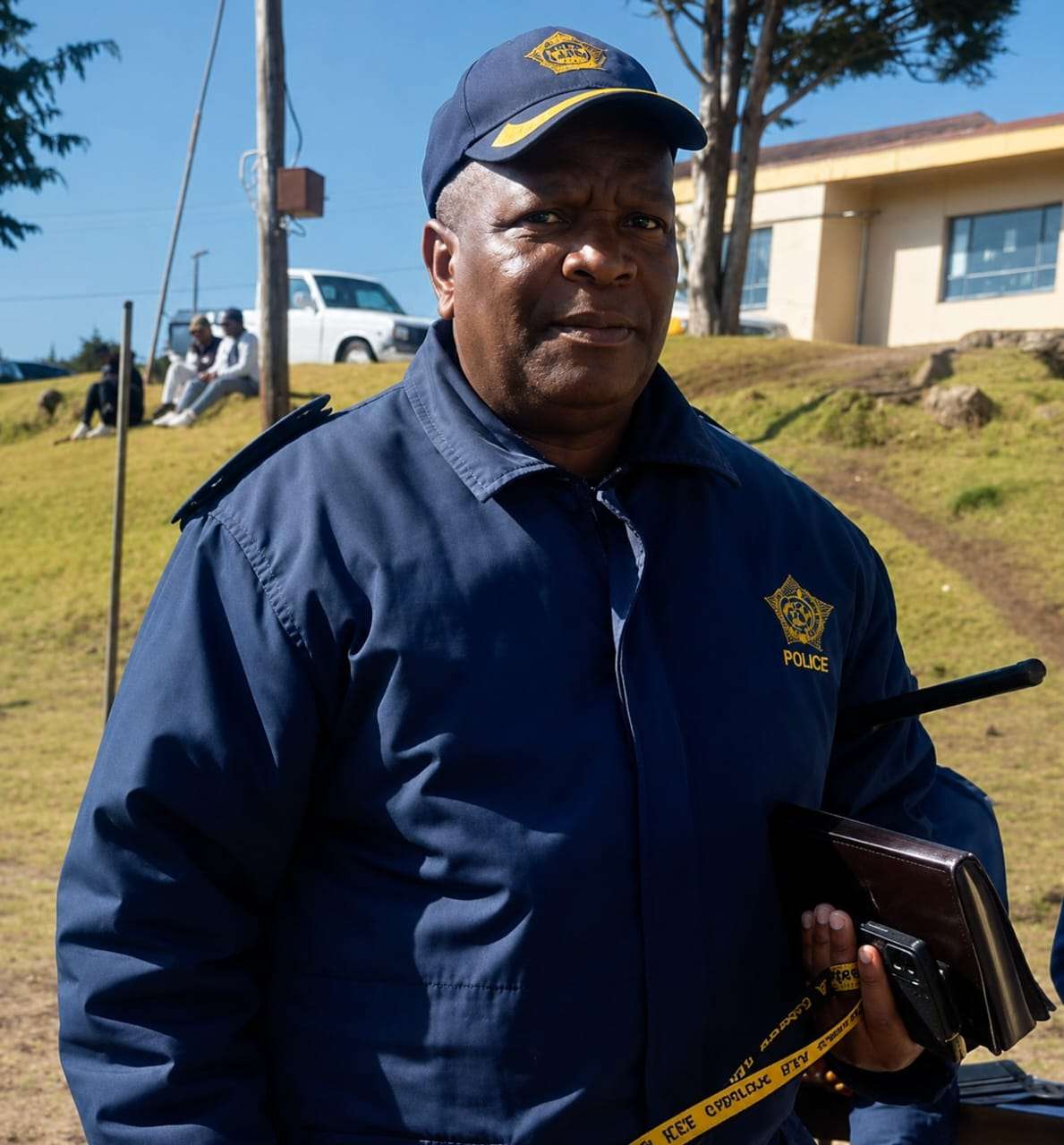
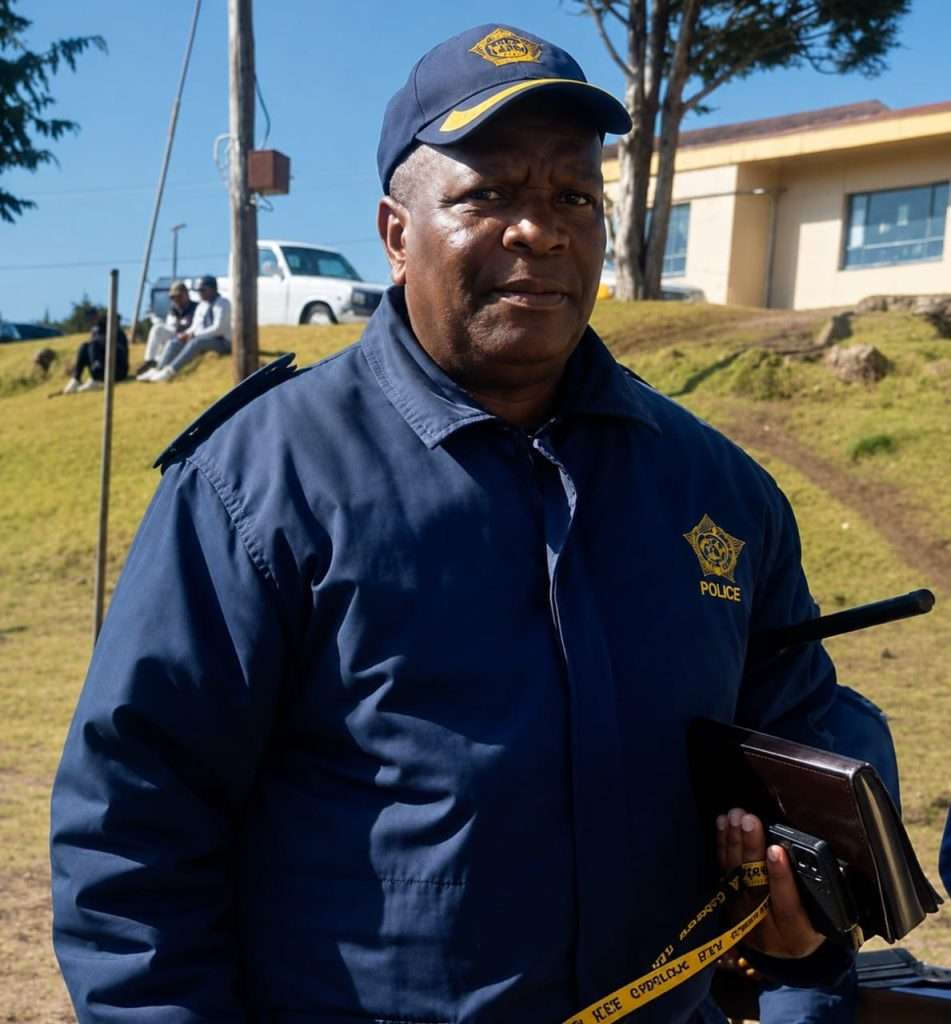
The heavy silence in the room was first broken by Officer Commanding Thaba-Tseka Police Station, Senior Inspector Moeketsi Mokotjo, who spoke not with official detachment, but with the raw exhaustion of a police officer fighting a losing battle against institutional failure.
He began by offering a rare, solemn apology on behalf of men: “I would like to start by asking for forgiveness from the women.”
Without a flinch, he continued: “On behalf of the men, I ask for forgiveness where we have wronged them, because the things we do as men show no manhood at all anymore. I do not know what women have done to us, but I simply ask for forgiveness. Even though terrible things continue to happen in our district, there is still some good.”
Acknowledging that Paray Hospital has been instrumental—tipping off police to arrest those who abuse young children of “from four years old.”
The wheelbarrow night club
Senior Inspector Mokotjo quickly directed the room’s focus to a major breeding ground for trauma in Thaba-Tseka town: a local nightclub named Kiribaeng – translated as a place of a wheelbarrow.
“I am asking my young sisters here, please reflect deeply on yourselves. There is a place here—I don’t know where it comes from—called Kiribaeng. The way young girls go there, inflict pain on each other, and have terrible things done to them is alarming.
“We try to talk to them, but it goes in one ear and out the other. You end up asking yourself: What kind of young girl leaves a nightclub at 3:00 AM walking, alone, in such a dangerous place?”
Stepping up to validate Senior Inspector Mokotjo’s alarm over Kiribaeng, Likopo Raliforo, a young representative from Sentebale, tied the nightclub culture directly to the systemic exploitation of young girls.
“Sir, you are speaking the absolute truth about Kiribaeng. Underage youth frequent that place—youth who we expect to act responsibly. Older, married men also frequent the establishment.
“What I am trying to say is that there are many issues surrounding these clubs. The pressure inside drives a young person to act recklessly and interact with older men, which later leads to early pregnancies, unsafe terminations of pregnancies, and even the deaths of young girls.”
Raliforo emphasised that in a district where Gender-Based Violence (GBV) is extremely high, young people cannot claim ignorance because peer educators continually educate villages on GBV contributing factors.
These harrowing accounts were laid bare on the evening of July 1, 2026, during a high-level meeting convened with United Nations Population Fund (UNFPA), key government representatives, police officials, and legislator ‘Mamamello Holomo. The purpose of the meeting was to confront the devastating challenges highly affecting the young people of Thaba-Tseka.
Free bail under scruitiny
Yet, as horrifying as the nightclub reality was shown to be during this session, Senior Inspector Mokotjo exposed an even greater obstacle: a justice system that actively sabotages the work of law enforcement through the revolving door of the courts.
“Honorable DA (Thaba-Tseka District Administrator Tlali Mphafi), we will not lose strength; we will keep pushing hard. As your officers, we are trying and working hard, but we have a massive problem with the courts. We take suspects to court… only for them to be granted free bail. How can a sexual offense perpetrator be given free bail and then allowed to just carry on?” Senior Inspector Mokotjo asked.
To illustrate this systemic sabotage, Senior Inspector Mokotjo painted a painful, concrete picture of what happens when the courts release violent perpetrators back into vulnerable households.
“A man abuses his wife, assaults her in front of their young children inside the house, and subjects her to severe abuse right before their eyes. As the police, we do our duty, arrest him, and present him before the court. The court grants him free bail. Where does that man go once he is released? Right back to the same wife and those same children! Truly, Honorable DA, please look into your judicial officers.
“It is disheartening to drive all the way to Bobete in an unreliable vehicle with finished tyres to arrest someone, only for him to be granted free bail when you return. Yet, we still make the promise that as the Thaba-Tseka district police, we are here.”
Directly mirroring Senior Inspector Mokotjo’s outrage at judicial failures, the District Manager for the Ministry of Gender, Youth and Sports, Mosili Liphoto exposed how prosecutors actively break the law by forcing out-of-court settlements on rape cases that should go straight to a magistrate.
“A prosecutor violates the law because a rape case is not supposed to go before a prosecutor for mediation or out-of-court settlement. It shouldn’t even reach that point; such cases are supposed to go straight to a magistrate. However, our prosecutors are consulted on these cases and facilitate mediations in GBV matters,” Liphoto said.
She added: “Then, a mother will say, ‘The perpetrator’s family offered me a cow, so I’m taking it.’ And she will take it because her family is hungry. It won’t change the fact that her child was violated, but at least they get food. These are horrific abuses that we commit as service providers. The stories are deeply saddening.”
Parents allegedly neglect their responsibilities
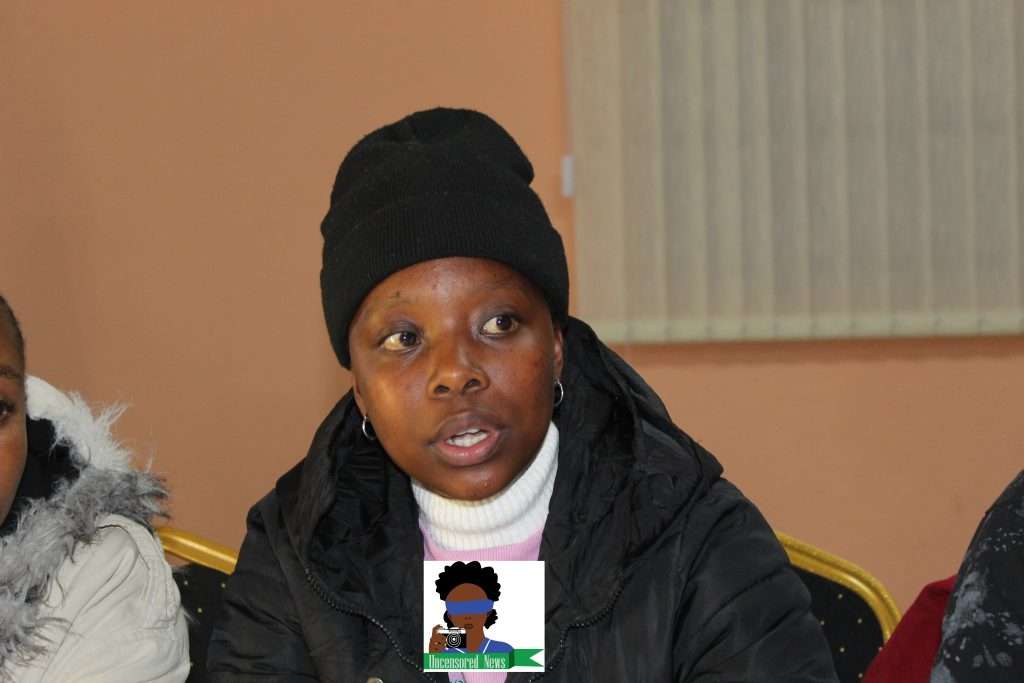
Sentebale young representative, Likopo Raliforo, placed the spotlight on another critical link in the chain: parents abandoning their duty.
“Another challenge that prevails in the district is parents who have neglected their responsibility to prohibit their children from going to clubs at night. They allow their children to go out at night even though we would say they grew up under older, stricter norms. Parents of these days have become ‘soft parents’ because they allow their children to leave their households at night to go to nightclubs.
“What do you expect from your child when you allow them to go to nightclubs at night, fully aware that they will come back in the morning? Their approach to parenting directly contributes to the severe challenges their children face at these night venues,” Raliforo said.
Patriarchal and christianity spotlighted
Connecting the dots between the parental neglect highlighted by Raliforo and the legal failures exposed by Inspector Mokotjo, the District Manager for the Ministry of Gender, Youth and Sports, Mosili Liphoto, delivered an unfiltered, systemic critique.
Liphoto began by confronting the deep cultural and religious taboos hindering progress.
“I agree that many critical issues have been raised, issues that we—as a nation—must genuinely confront. We are a deeply patriarchal society, and that dynamic brings about challenges we are currently unable to address,” Liphoto said.
She added: “Behavioural change will be difficult precisely because of this patriarchal nature. I will also touch on something sensitive: as a Christian country, it restricts us from being open about the truths we ought to discuss, such as sexuality…”
Liphoto pointed directly at the conflict between governance and faith-based healthcare: half of the district’s hospitals are under church management, meaning government teachings on early pregnancies hit a wall because church-run facilities host these clinics and refuse contraceptives.
Then, turning to the family dynamic, Liphoto radically challenged the narrative around GBV and family accountability.
“I want to speak about our condition as Basotho. I often hear people say that men are the drivers of GBV, but that is not true. Women act as buffers for GBV. When my husband beats me, who is the first person to tell me, ‘My child, just bear with it’? Is it my father? No, it is my mother. Who is the first person to protect a boy child who has committed rape? It is his mother. So we act as such buffers that we cannot be honest with ourselves as women regarding the role we play in perpetuating GBV.”
Liphoto took the critique a notch higher, pointing an accusing finger directly at service providers—including herself—for failing children before they ever reach the courts.
“In some schools, high schools with only four teachers neglect life skills, leaving youth without guidance when parents and schools fail them simultaneously. In places like Bobete, waiting rooms host pregnant girls under 16 and under 18, signaling rape, yet nurses, police, and social workers “just turn a blind eye.”
To remedy this, Liphoto stressed that programs must aggressively target parents through Positive Parenting Initiatives.
“I expected the previous speaker to touch on the positive parenting initiatives we are attempting to establish—initiatives that require real momentum so they can become strong, community-based programs. We need to implement them aggressively so parents are not left behind. We cannot reach out to young girls without engaging their parents; otherwise, we are simply threshing wind and milking in the desert.
A platform for youth solutions
As UNFPA Country Representative John Kennedy Mosoti listened to the harrowing realities of nightclub exploitation, soft parenting, institutional complicity, and judicial failure, the focus turned to a structured, forward-looking path for action.
Mosoti stepped forward to frame the overarching strategy designed to directly address the very challenges raised by Senior Inspector Mokotjo, Raliforo, and Liphoto.
“We are going to have a Thaba-Tseka Youth Summit 2026. It will involve discussions centered around various groups of young people. We will bring in people from Maseru, from the Ministry of Gender, and from the Ministry of Youth. They will be there to allow young people to discuss their problems and present solutions to us.
“The District Administrator (DA) is hosting us; Legislator Holomo will reach out through Members of Parliament, and we will have representatives coming from different constituencies so that we can listen to them. They need to come so we can hear about their challenges,” Mosoti said.
He indicated that this will be the first event of its kind that they are hosting, organising, and gathering together for in Thaba-Tseka, so that the DA and other UNFPA partners can formulate a declaration.
“We have to come up with the Thaba-Tseka Youth Declaration, which will serve as our foundation moving forward,” Mosoti said.
He added: “By bringing together officials from Maseru, local ministries, law enforcement, and youth representatives from every constituency, the summit aims to ensure that the struggles voiced on the ground—from the doors of Kiribaeng to the courtrooms—are transformed into an actionable, binding declaration for Thaba-Tseka’s future.”
