
A Policewoman Who Became Blind Says Learning to Use Her Mobile Phone Again Was Difficult
19 October 2026 by Limpho Sello
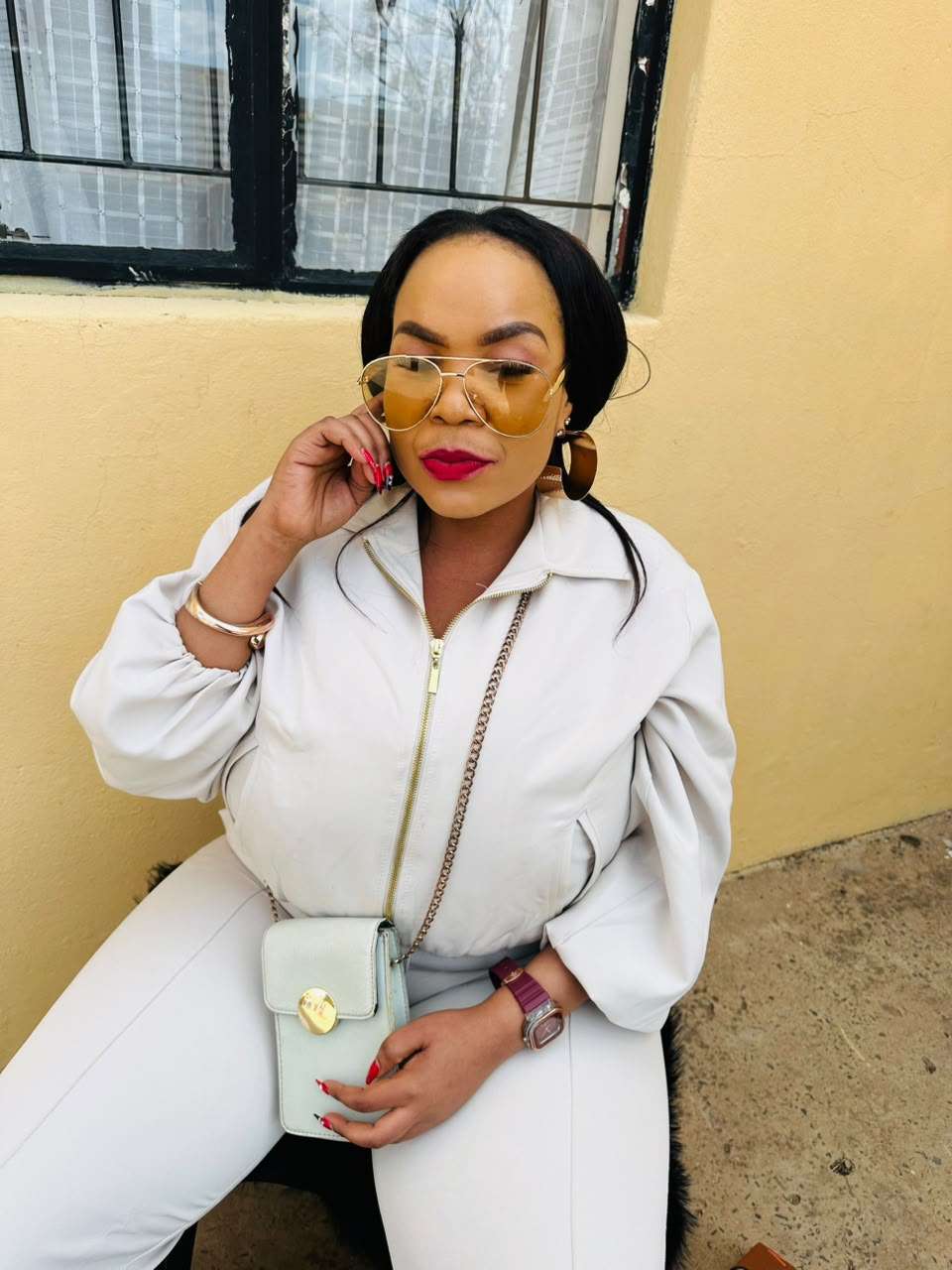
A 36-year-old police officer, Mamashome Khemisi, lost her sight after being diagnosed with uveitis – a form of eye inflammation that affects the middle layer of tissue in the eye, called the uvea.
The diagnosis came after Khemisi experienced changes in her vision in her mid-twenties. Initially, Khemisi believed that she needed reading glasses when she began experiencing problems with her sight. However, after consulting an optometrist and undergoing further examinations, doctors eventually diagnosed her with uveitis.
The condition progressed significantly in both eyes by 2017, leading to her first surgical procedure that year. Despite extensive medical interventions, including infusions and injections, her vision gradually worsened. She lived with partial sight for several years until she became completely blind in 2021.
“The transition was overwhelming. Tasks that had once been effortless, such as using my mobile phone, navigating messaging applications and making M-Pesa transactions, suddenly became difficult,” Khemisi told Uncensored News on 23 September 2026.
She added: “I am still a police officer and am treated as such by my employer. However, I am currently waiting for the LMPS management to make the necessary workplace accommodations so I can perform my duties effectively as a visually impaired officer.”
Determined to regain her independence, Khemisi sought rehabilitation at the Mohloli-oa-Bophelo Training and Rehabilitation Centre at Ha Tšosane, Maseru, in 2022. However, she was only admitted in 2023 because the 2022 intake was already full when she applied.
There, she learned independent living skills, orientation and mobility, and how to use assistive technologies. Through screen readers such as TalkBack and VoiceOver, she learned to navigate computers and smartphones.
The experience changed how she viewed herself and her future.
“Living with a visual impairment does not make you a permanent patient once you commit to self-reliance,” she explained.
Khemisi said she learned how to use touch and tactile feedback to carry out everyday activities, from cooking and chopping ingredients to cleaning and personal care.
“Technology has also become an important part of my independence. Applications such as Be My Eyes help me identify household items, including distinguishing between low-fat and full-cream milk, and matching colours when choosing outfits,” Khemisi said.
Khemisi’s love for beauty
Khemisi said she had always had a deep love for beauty, fashion and cooking and that losing her eyesight has not forced her to change her passions.
“I still apply my own makeup, style my hair, cook full meals and maintain my personal routine. The core of who I am hasn’t changed; the only difference is the pace and method. I work at my own speed using tactile techniques,” Khemisi said.
Today, she manages her mobile phone and M-Pesa transactions independently. Although she acknowledges that adjusting to life without sight takes time, she takes pride in living a self-sufficient and fulfilling life.
“I can speak for myself”
For Khemisi, however, rebuilding independence has involved more than learning practical skills. It has also meant confronting the attitudes and assumptions that people with visual impairments encounter in their everyday lives.
She said people sometimes assume that when a visually impaired person walks with a guide, that companion makes decisions on their behalf.
Although she sometimes requires assistance with outdoor mobility and navigation, Khemisi said this does not mean she has lost her ability to speak for herself or make decisions.
The same misconceptions appear in healthcare facilities and financial institutions, where service providers sometimes direct questions to her companion instead of addressing her.
She recalled situations in which people asked her companion what was wrong with her or sought information about her affairs without speaking directly to her.
“It is exhausting to be spoken about as if you are not in the room,” she said, emphasising that visual impairment is a physical condition and does not mean that a person is incapable of making decisions.
“I can speak for myself.”
She also highlighted misconceptions within religious and social spaces, where visual impairment may be viewed solely as a spiritual affliction or something that should be prayed away.
“People with visual impairments are sometimes expected to remain isolated or unhappy. I believe that participating in community activities, visiting local markets and socialising can help challenge these assumptions,” she said.
She said the barriers people with visual impairments face are often created by inaccessible environments rather than their conditions alone.
“Public notices, official announcements and important documents are rarely provided in accessible formats, including large print for people with partial sight and Braille for those who are blind and that is frustrating and inconsiderate,” she said.
For Khemisi, meaningful inclusion requires public education, accessible information and respect for the autonomy of people with disabilities.
Rebuilding confidence through support
Khemisi said her rehabilitation journey also taught her the importance of accepting her circumstances and moving forward despite the challenges.
She experienced strained relationships and lost friendships as she adjusted to life without sight. The experience was emotionally demanding, but she eventually decided to accept her reality and work towards independence.
“There were times when I realised that I have become a burden to some people in my life,” she added.
She also experienced a period of high blood pressure, which she said was diagnosed during a time of significant pressure. She was never formally diagnosed with depression, despite assumptions she had that losing her sight and the frustration from it inevitably lead to it.
After completing two consecutive three-month courses of medication for high blood pressure, she focused on stress management, exercise and healthy eating. She said these lifestyle changes helped her return her blood pressure to normal levels without needing long-term prescription medication.
Khemisi however added that she did not achieve all of this without the support of her family and the Lesotho Mounted Police Service (LMPS).
“I want to express so much gratitude to my family, friends who stood by and the LMPS for standing by me during the difficult period,” Khemisi added.
Women learn to prioritise their health
Khemisi, who resides at Katlehong in Maseru, also reflected on how the Lesotho National League of the Visually Impaired Persons (LNLVIP) helped her rebuild her life. Her appreciation of the LNLVIP comes as the organisation celebrates 40 years of existence in Lesotho, marking four decades of supporting people with visual impairments. On 16 October 2026, members of the visually impaired and others walked from Setsoto Stadium to Ha Tšosane with a powerful demonstration that disability is not inability, sickness, or a reason to diminish a person’s potential.
On 8-9 August 2026, the organisation held a workshop for visually impaired women in Lesotho, discussing various issues from health, financial literacy, self-acceptance to personal wellbeing. One of the sessions focused on healthy eating and the relationship between diet and chronic conditions such as hypertension and diabetes.
Participants were encouraged to be mindful of what they eat, establish regular meal routines and understand the importance of physical activity. For Khemisi, the health discussions were particularly valuable because they addressed everyday concerns that women do not always have the opportunity to discuss openly.
Khemisi said the facilitator also demonstrated exercises that women could perform at home without needing gym equipment or travelling to facilities that might be difficult to access.
The discussion extended to menopause and hormonal imbalances, helping participants understand the differences between the two and recognise symptoms that may require medical attention.
“I believe that such information is particularly important for women with visual impairments, who may encounter barriers when accessing health education,” Khemisi expressed.
Before attending, she said she did not regularly prepare a budget and often spent money as it came in.
“The training encouraged me to reconsider my spending habits, distinguish between needs and wants, and recognise the importance of saving for emergencies,” she said.
Participants were also taught to be cautious about borrowing money, particularly for everyday expenses that should be managed within their means.
“Now, before making a purchase, I stop to ask myself: Is this truly necessary?” she said.
