
Mokhotlong Records 408 GBV Cases: Behind the Numbers Are Women and Children in Need of Safety
15 October 2026 by Limpho Sello
For women and children experiencing gender-based violence (GBV) in Mokhotlong, seeking help has not always meant finding safety. Survivors reporting abuse to the police have had to navigate overcrowded offices, limited privacy and a lack of suitable space to wait while investigations and court preparations are underway. For those already traumatised by violence, the conditions have risked making an already difficult experience even more distressing.
The challenges are particularly concerning in a district where reported cases of sexual offences against adults and children, as well as domestic violence, have continued to rise. In 2024, the district recorded 50 sexual offences against adults and 60 involving minors. The figures rose in 2025 to 60 cases involving adults and 70 involving minors. Reported domestic violence cases also increased, from 70 in 2024 to 98 in 2025. In total, Mokhotlong recorded 408 cases between 2024 and 2025.
Behind these figures are women and children who need protection, confidential support and access to justice, but whose circumstances may make it difficult to leave abusive situations or report their experiences.
The opening of improved facilities for the Child and Gender Protection Unit (CGPU) at the Mokhotlong police station therefore represents an important step towards providing survivors with a safer and more dignified environment. The initiative brings together the government, the United Nations Population Fund (UNFPA) Lesotho, the police and private-sector partners in an effort to strengthen the district’s response to GBV.
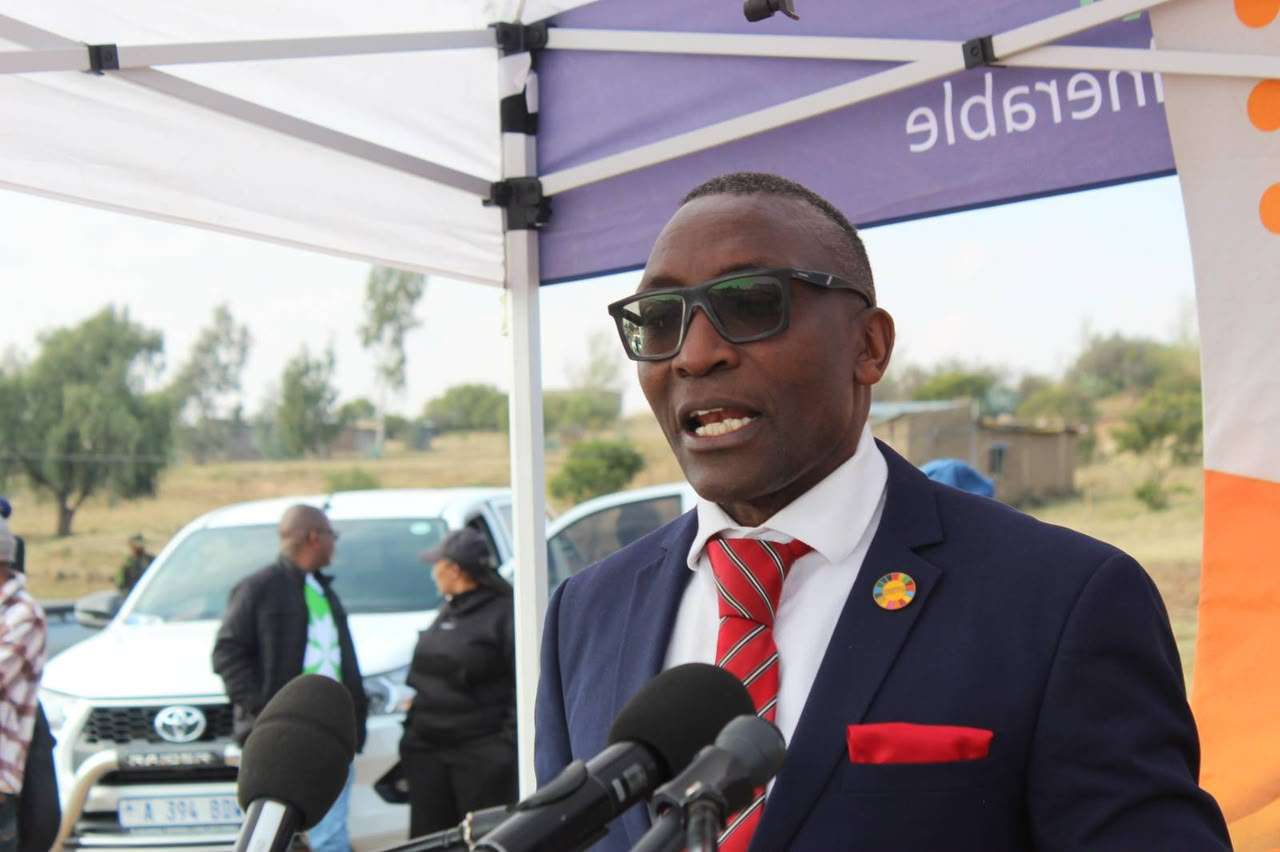
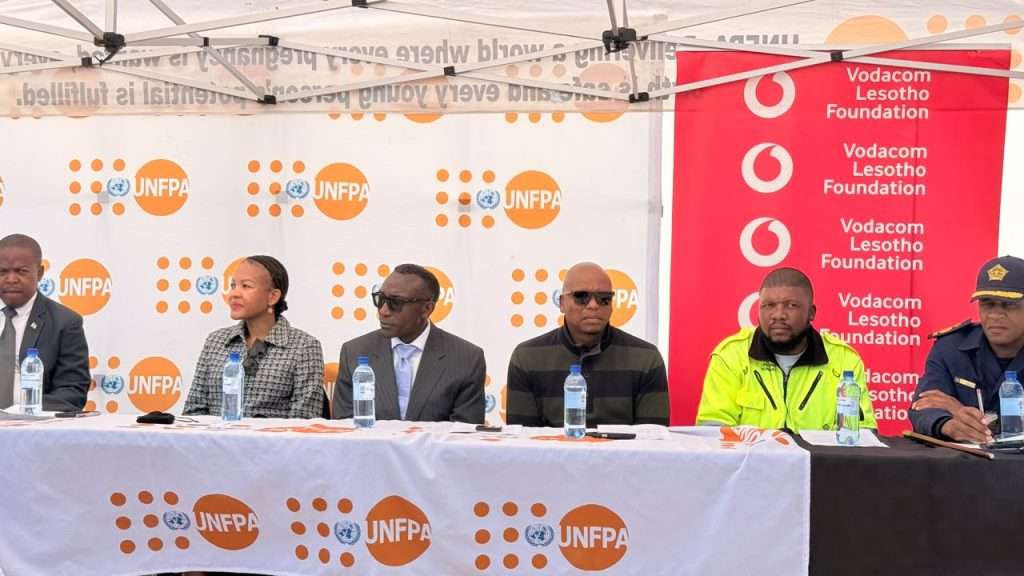
The facilities were officially handed over on 30 September 2026, at the Mokhotlong police station during an event attended by Minister of Youth, Sports and Social Development, Pitso Lesaoana. Two of the three donated park homes were allocated to the police’s CGPU and will serve as accommodation for women who have experienced violence as they await court preparations and investigations and the other as an office. Of these two, the UNFPA donated the other furnished park home to be used as an office facility, while Letšeng Diamonds Mine donated the park home intended to accommodate survivors.
The improvements follow an initiative coordinated by UNFPA, which brought leaders from companies operating in Mokhotlong and nationally to see firsthand the challenges confronting local service providers. These challenges include limited office space and the absence of suitable accommodation for survivors that constrained the ability of those responsible for assisting victims to provide the support they needed.
Victims forced to report in open space
Speaking on behalf of the Mokhotlong police leadership, Assistance Commissioner of Police Khethang Tenane said the previous working environment had made it difficult to handle sensitive cases appropriately.
“In the past, victims of trauma would often arrive at a standard office, distressed, only to be confronted by multiple officers, sometimes five at once, handling various tasks in an open space,” Tenane said.
He explained that survivors of sexual assault, domestic violence and offences against children needed private spaces where they could speak confidentially to officers trained to handle their cases with sensitivity.
“These cases involve deeply sensitive and traumatic events, requiring a private, secure space where a survivor can confide in a single, dedicated officer,” he said.
According to ACP Tenane, officers were sometimes forced to ask other people to leave shared rooms to create privacy for survivors. Those who had experienced serious domestic violence could also find themselves waiting in open areas where people connected to perpetrators might learn about their circumstances.
He said the new facilities would help restore survivors’ confidence in reporting abuse and ensure that sensitive information was handled discreetly.
“We pledge before you today that whenever such crimes occur, victims will be brought directly to this secure facility. We will guarantee their safety while they are here and ensure that confidential matters and delicate details are strictly protected by dedicated, trustworthy officers who will safeguard their privacy,” ACP Tenane said.
Numbers do not lie
The need for improved services is underscored by figures presented by UNFPA Lesotho in March 2026, which indicate that Mokhotlong has the second-highest rate of GBV in Lesotho.
In 2024, the district recorded 50 sexual offences against adults and 60 involving minors. The figures rose in 2025 to 60 cases involving adults and 70 involving minors. Reported domestic violence cases also increased, from 70 in 2024 to 98 in 2025.
These figures reflect the scale of the challenge facing the district’s protection services. However, reported cases represent only part of the picture, as many survivors never approach the police.
The Lesotho Demographic and Health Survey 2023-2024 indicates that 45 percent of women aged 15 to 49 in Mokhotlong who have ever been in a relationship have experienced emotional, physical or sexual abuse.
Nationally, the survey found that 44.1 percent of women aged 15 to 49 had experienced physical or sexual violence since the age of 15, while 36 percent had experienced violence from their current or most recent husband or intimate partner. Up to 90 percent of women experiencing intimate partner violence do not report it to the police.
These figures point to a challenge that extends beyond the availability of police facilities: survivors must also feel safe enough to disclose abuse and confident that reporting it will lead to meaningful assistance.
UNFPA Country Representative, John Kennedy Mosoti, said the handover marked the culmination of a partnership that had been developing over several months, with the aim of improving the lives of women and children in the district.
“GBV rates in Mokhotlong are very high, so we hope that those numbers will go down,” Mosoti said.
He acknowledged that the absence of women in shelters could not automatically be interpreted as evidence that violence had ended, since some survivors remained at home without anywhere safe to go.
“But that is unlikely to happen because we think there are so many cases that are at home, they don’t have any place to go. And that’s the reason, as UNFPA, we are very grateful,” he said.
Mosoti also highlighted the importance of connecting the Mokhotlong facility with other support services, including a shelter in Leribe and the facility in Maseru, to help more women access protection.
He called on men to take responsibility for ending violence within their families.
“Most importantly, men, let’s not beat up our wives or our children. Let us talk these things so that we do not get into situations whereby we have to have our sisters, our mothers, our daughters, our wives running away from home or coming to stay here,” he said.
Mosoti further linked the initiative to wider efforts to improve the well-being of young people, including plans for a youth centre where boys and girls could develop skills and find opportunities that support their growth. He also referred to menstrual health and hygiene initiatives intended to help girls remain in school and avoid early marriage and pregnancy.
Eliminate abuse
Minister of Youth, Sports and Social Development Pitso Lesaoana said the government’s collaboration with UNFPA and private-sector partners was intended to produce measurable improvements in communities, rather than simply provide infrastructure.
“Our primary objective is to eliminate abuse,” he said, adding that district-level social workers needed to educate communities about GBV prevention and inform the public about the criminal consequences of sexual offences against children.
Lesaoana stressed that community members must know where to report abuse and be confident that survivors would receive assistance while perpetrators were held accountable.
He also called for stronger monitoring to establish whether interventions were reducing violence, saying the resources provided must translate into measurable results.
“Now that we have been provided with these resources, we must document clear, data-driven outcomes showing concrete statistics so that we can present unified progress,” he said.
The call for accountability comes against a wider national picture in which declining violence prevalence has not necessarily translated into stronger protection and access to justice for survivors.
A Gender Links Study comparing findings from 2013 and 2025 found that lifetime GBV prevalence among women had declined from 86 percent to 66.7 percent, while intimate partner violence fell from 62 percent to 45.7 percent. Despite this progress, the study found that nine in ten women experiencing intimate partner violence did not report it to the police.
Among those who did report abuse, only 15.6 percent saw an arrest, while fewer than two percent saw a court outcome. The study also found that fewer than two percent of survivors accessed shelters, which were available only in Maseru.
These findings illustrate why improving facilities in districts such as Mokhotlong matters, particularly for survivors who may otherwise have limited access to safe accommodation and support.
Facilities alone will not eliminate abuse
For the new facilities to achieve their intended purpose, however, the improvements in infrastructure will need to be matched by effective policing, appropriate handling of sensitive cases, community awareness and reliable links to medical and psychosocial support.
ACP Tenane said the police were committed to putting the resources to effective use, maintaining the facilities ensuring that survivors received appropriate assistance. This could include transport to medical professionals and access to counselling, particularly when cases were being prepared for court.
He urged survivors to come forward, assuring them that the unit was ready to assist them in a private and secure environment.
For Mokhotlong, the handover offers an opportunity to address some of the practical barriers that have complicated the reporting of abuse. Whether it ultimately leads to fewer cases of violence will depend on how effectively the new facilities are used, whether survivors can access the services they need and whether perpetrators are held accountable.
As Lesaoana emphasised, the measure of success will not be the furnished park homes themselves, but evidence that the interventions are making communities safer.
For women and children who have experienced violence, that success would mean more than having a place to report abuse. It would mean being heard without fear, receiving protection when they need it and having a clearer path towards safety and justice.
