

Will Basotho Know What to Do When Disaster Is Coming?
10 August 2026 by Limpho Sello
The Lesotho Meteorological Services is warning that weather forecasts are of little use if ordinary Basotho cannot understand what the warnings mean and use that information to make informed decisions about what to do when disaster is coming.
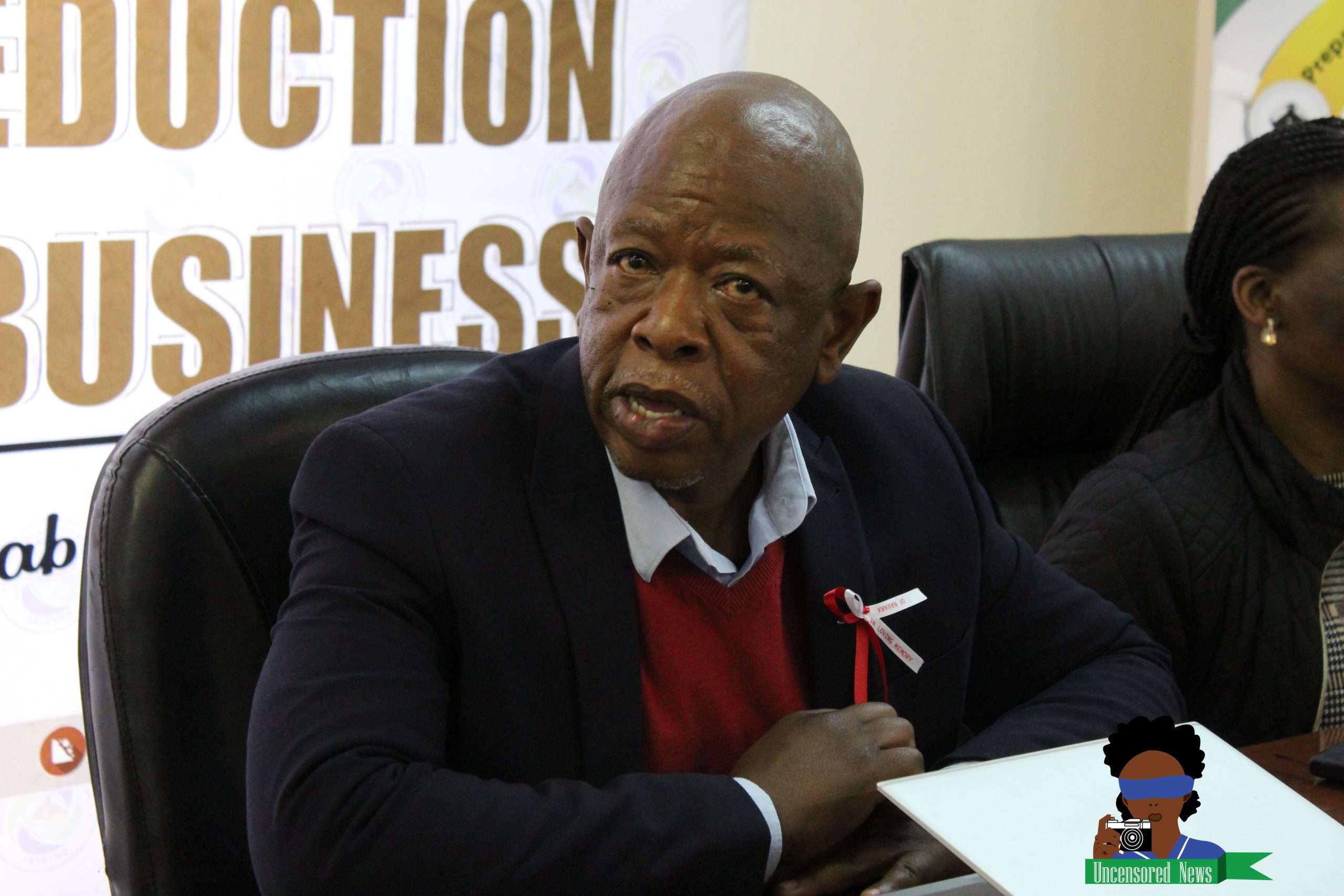
LMS Head of Research and Innovation Development, Moahloli Ntele, told Uncensored News on the sidelines of a five-day National Stakeholder Mapping Workshop for Action-Based Forecasting, held in Maseru from 10-14 August 2026.
“The challenge with messaging in forecasting is that when we forecast, the information needs to be understood by the public,” Ntele said on 8 August 2026.
He added: “We need to ensure that the forecasting information is translated effectively so that communities and stakeholders can take action.”
What is ActionFirst programme?
Lesotho Meteorological Services Director, Dr Teke Ramotubei, explained ActionFirst programme as an initiative designed to strengthen the Action-Based Forecasting (ABF) and people-centred Early Warning Systems.
Under the ActionFirst programme, Dr Ramotubei said stakeholders will be able to co-produce information that will transform weather and climate information into clear, locally actionable, and trusted warnings that support timely preparedness and response.
“Action-Based Forecasting (ABF) and people-centred Early Warning Systems have become critical components of weather and climate information distribution, more especially so when considering the changing climate,” Dr Ramotubei said.
He added: “Since the impacts cut across various specialised sectors, there is a need to engage in co-production of actions based on the available weather forecasts.”
He said this co-production requires collaboration among government institutions, technical experts, humanitarian organisations, media partners, academia, civil society organisations and representatives of vulnerable communities.
Bringing these voices together is aimed at closing the gap between receiving an early warning and knowing what to do with it when a threat is approaching.
High above the valleys of Ha-Motloeloa, Maseru, the coalition gathered under the chill of a winter morning to rethink how Lesotho prepares for the unexpected.
Disaster Management Authority (DMA) Chief Executive, Reatile Elias, set the tone by reflecting on an intensive week that will be spent integrating indigenous knowledge systems with rigorous science to craft more impactful messaging for vulnerable populations.
Elias noted: “We had our very first meeting of the Project Steering Committee, for the Improving Adaptive Capacity of Vulnerable and Food-insecure Populations in Lesotho (IaCOV)-based group.”
He explained that the group aims to help vulnerable communities and households struggling to access enough food better prepare for and cope with shocks. The group is working with the World Food Programme (WFP), which has also included security concerns in its Country Strategic Plan (CSP).
Meanwhile, the Disaster Management Authority (DMA) and its partners have completed an annual assessment of people’s access to essential services and released a Food Classification Analysis.
The findings are now helping stakeholders focus on action-based forecasting—using weather information not only to predict hazards, but also to help communities prepare and take action before disaster strikes.
Changing behaviours
The aim of the five-day workshop is for stakeholders to address the challenging task of influencing human behavior regarding food security and early action.
Elias emphasised the difficulty of changing habits. “One of the most difficult things, and I’m sure you will agree with me on that, is to bring about or influence human behaviour, especially when human behaviour has been so used to certain types of behaviour.”
He further added that no single institution can successfully build trust or alter behavioral patterns alone.
“No single institution, no single agency, can be able to gain trust, successfully influence people’s behaviour, especially in the space of food security and taking necessary actions,” he said.
Elias said to combat this, DMA has collaborated with with Vodafone to leverage telecommunications and FinTech tools for quicker, sharper messaging.
“You have the tools, the IT tools, the knowledge, the expertise to advise those of us in this space how to have messaging that is much better, quicker, and more impactful,” Elias noted.
Media urged to use information for right purposes
He also urged the media to communicate accurately without pursuing selfish social media interests.
“Are we saying the right things? Are we saying things at the right time? Are we using information for the right purposes?” Elias asked.
He argued that avoiding the use of information for selfish interests or to generate clickbait on social media could go a long way towards influencing people’s behaviour.
This collaborative momentum draws robust backing from regional and international allies, including the South African Weather Services, the British Met Office, and Action Aid, with crucial funding provided by the British people.
British High Commissioner in Lesotho, Martine Sobey, deepened this narrative by drawing from her own background as a climate expert. Sobey shared personal concerns about severe dry spells and fast-moving wildfires tearing through places like East Anglia and Scotland.
“They are pretty terrifying. They move extremely quickly, and I think if we are honest with ourselves as a country (Lesotho), we are not ready.”
She stressed that neither the UK nor Southern Africa was initially ready for such rapid climatic shocks, underscoring the critical importance of forecasting—noting the vital work of experts.
“Forecasting is absolutely critical and shifting rapidly toward anticipatory action (AA) before weather events escalate into full-scale disasters.”
Highlighting the UK’s ongoing commitment through initiatives like Weather and Climate Information Services programme (WISER), High Commissioner Sobey praised the LMS and DMA for assembling such a diverse, cross-room of experts.
“I think it’s brilliant to have the representation that we have in the room.”
True resilience, she emphasised, relies entirely on unbroken collaboration between government bodies, local authorities, community leaders, private innovators like Vodacom, academic institutions like NUL, and global development partners.
“Success depends on strong collaboration, and you’ve already used this word, and I think this word is key for the coming week.”
