
Lesotho Spent M535 Million Importing Chicken from South Africa. Can RSDA Put Local Chicken on Basotho Plates?
28 August 2026 by Pascalinah Kabi
The fire crackled. Then came a sudden, unmistakable hiss.
In 2024 alone, Lesotho spent M535 million (US$33million) importing 9,781,170 kilograms of chicken meat and other edible poultry offal. South Africa supplied the bulk of it, accounting for M522 million of the imports, followed by Eswatini at M8.9 million, Brazil at M3.3 million and Ireland at M1.3 million.
The country also imported eggs worth M4.3 million that year. The figures, from UN Comtrade trade data accessed through the World Bank’s World Integrated Trade Solution (WITS) database on 25 August 2026, point to Lesotho’s continued dependence on imported chicken products. Yet, Lesotho is not producing nothing of its own. The Lesotho Bureau of Statistics recorded 31.3 million eggs produced locally in the 2021/2022 agricultural year.
The figures paint a picture of a country that has a poultry sector, but still relies heavily on imports to meet demand. This dependence on imported chicken products has caught the attention of the Rural Self-Help Development Association (RSDA) – a non-governmental organisation which will be celebrating 35 years of existence in Lesotho.
With funding support from the Food and Agriculture Organisation of the United Nations (FAO) and the Government of Monaco, RSDA is working with farmers in Berea, Leribe, Mafeteng, Mohale’s Hoek and Quthing to rewrite Lesotho’s story – one chicken and one egg at the time.
At the centre of RSDA’s model is the production of day-old chicks at its farm in Mafeteng district. The organisation sells the chicks to farmers, who will raise them for four to six weeks before selling them to the next group of farmers to rear to maturity for both meat and egg production. RSDA believes this model could help Lesotho significantly reduce its reliance on imported poultry products.
Maholenyane Matlosa, a farmer from Berea district and a member of the Berea Business Forum—one of the forums established through RSDA’s initiative—is among those learning how to make the model work.
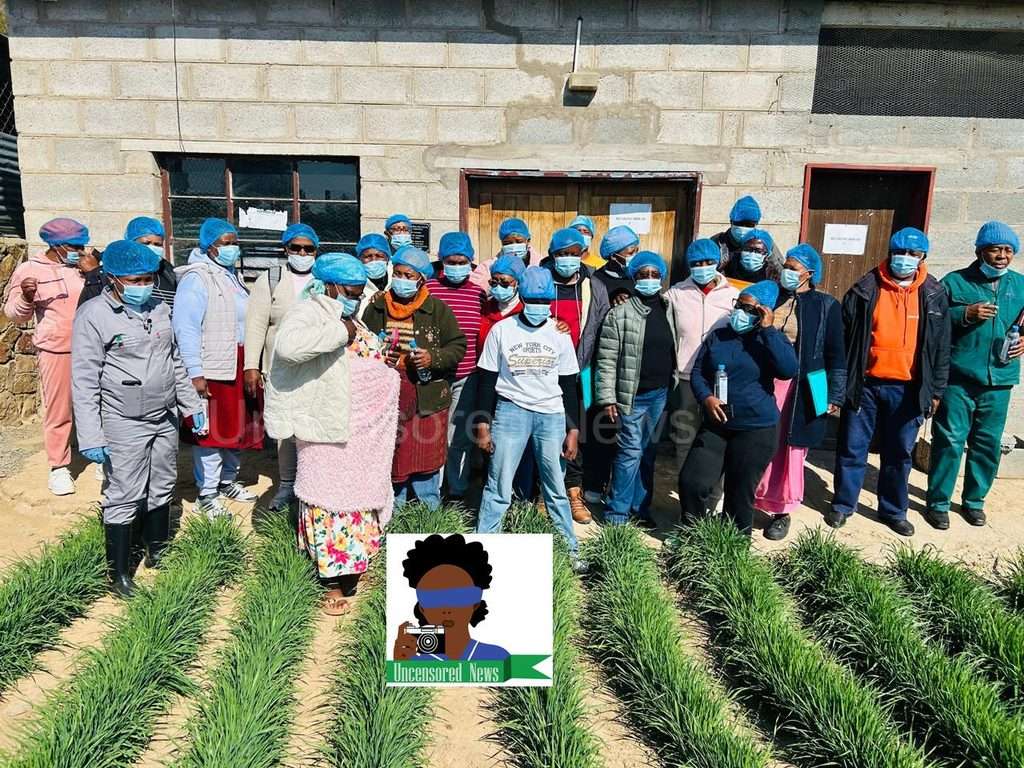
On 4–5 August 2026, Matlosa was one of 29 farmers from Berea, Leribe, Mafeteng, Mohale’s Hoek and Quthing who attended a broiler production training organised by RSDA. The first day focused on theory, while the second took the farmers to RSDA’s farm in Mafeteng for a practical lesson on how day-old chicks are produced and cared for.
“I am a dual-purpose poultry farmer. These chickens are commonly called Sesotho chickens, but they are boschveld chickens. We are here at the RSDA farm to learn how these chickens are bred because RSDA is expanding boschveld poultry farming in the country,” Matlosa told Uncensored News on the sidelines of the study tour.
He added: “Myself and other farmers are here to learn because we are going to be full-time breeders of boschveld chickens, starting next week (10 August 2026).”
Matlosa wants to become a boschveld chicken breeder because, according to him, this type of chicken is highly resilient. He explains that it can survive extreme cold and heat more easily than white broiler chickens, which are typically raised for meat and sold at around six weeks old.
“With these boschveld chickens, my chances of growing my business and making profits are greater,” Matlosa said.
Long cooking hours?
RSDA, however, does not want Basotho to focus only on rearing these chickens. The organisation is also creating a platform that brings farmers and cooks together, enabling farmers to produce for a ready market while cooks use locally produced food items to prepare meals for their customers.
Sesotho chickens, or free-range chickens, can forage on grass and other natural food sources such as worms, making them relatively inexpensive for farmers to raise.
But these chickens are also known for being tough and taking longer to cook. For decades, the traditional method has been to boil them for hours and season them with just table salt, nothing else.
As part of the alliance between farmers and cooks, RSDA is collaborating with Slow Food Lesotho to teach farmers, cooks and ordinary Basotho different ways of preparing Sesotho chicken, including roasting it over an open fire.
Also watch: https://youtu.be/EH9FSeeu4yc?si=kpdaOTZpvqo66lcb
On 13 August 2026, Chef Ska Moteane of Slow Food Lesotho led a group of cooks from Leribe in preparing a meal for more than 50 people who gathered at Hlotse High School under the RSDA banner.
It was here that a loud sizzle erupted as the Sesotho chicken hit the fire, followed by the crackle of fat dripping onto the hot coals. Braaiing the Sesotho chicken is part of efforts to encourage more Basotho not only to immerse themselves in poultry farming, but to do so knowing there is a market for their produce as more braai outlets open across the country.
Chef Ska says the best way to ensure the Sesotho chicken is tender and flavourful is to first mix water and salt and let the chicken soak in the homemade brine overnight.
Once that process is complete, she encourages Basotho to avoid relying on commercial spices, which may contain additives. Instead, she teaches them how to make a homemade marinade using herbs grown in their backyards, salt, lemon, sour milk and cooking oil.
“When you make a marinade, three most important ingredients are acid, oil and seasoning—your salt. You can add herbs for a tastier outcome, but when you have those three things, you can make your marinade and still have the best outcome,” Moteane said.
She says herbs that can be used include paprika, black pepper, oregano, parsley, thyme, rosemary and garlic, either as powder or fresh. Using these ingredients, Moteane prepared a marinade and applied it to a boschveld chicken before putting it straight onto the fire.
Taste in the chicken
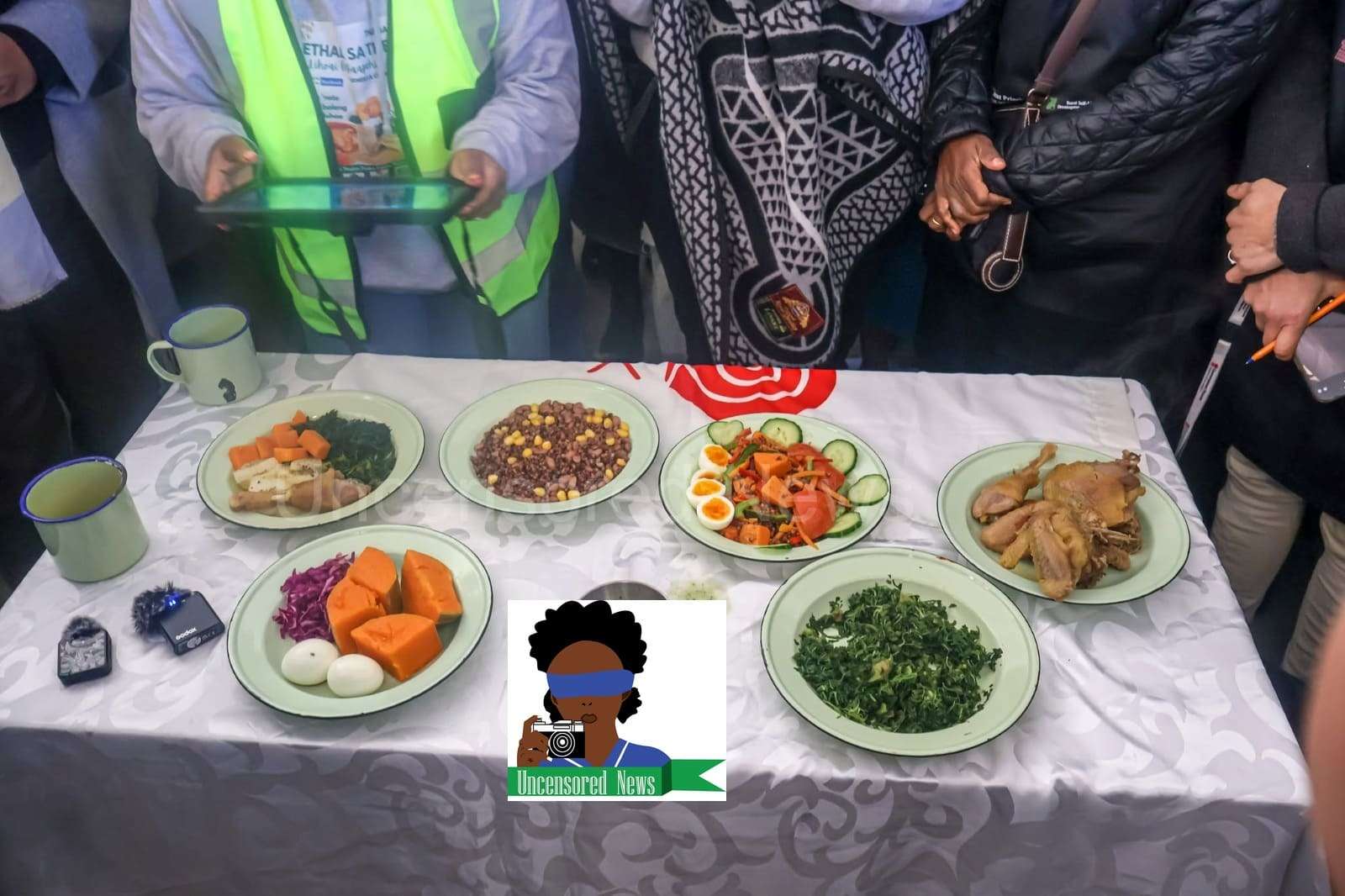
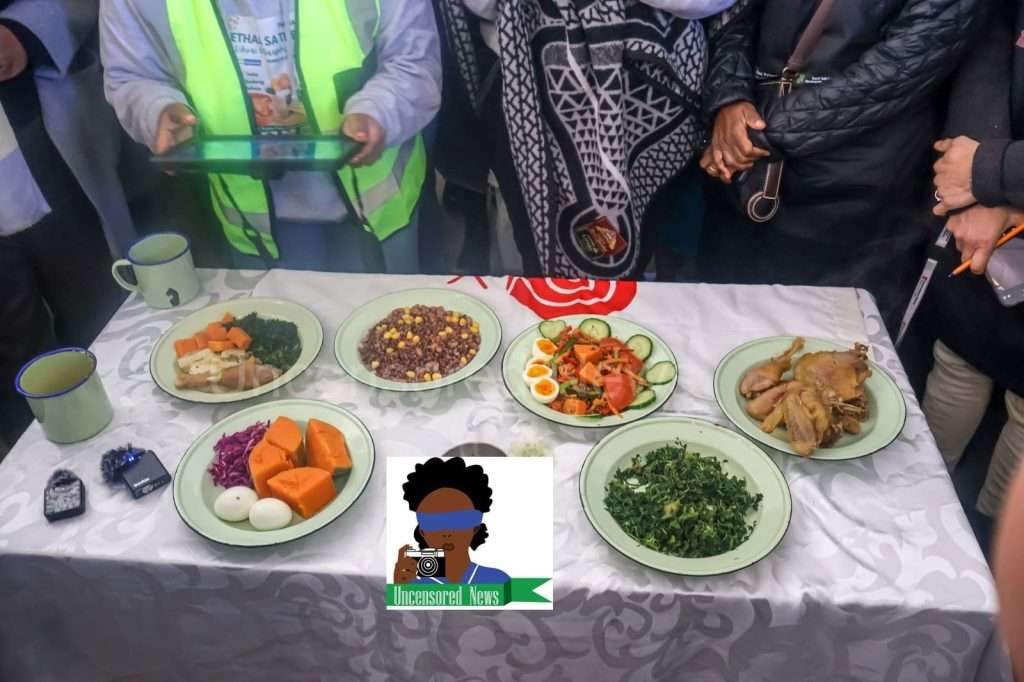
Once all the official activities were concluded, Moteane and her team served the guests a hot plate of pap, vegetables, sorghum salad and boschveld chicken.
Lineo Martin, 57, from Leribe, was among those who tasted the meal. Her verdict was clear:
“The food was very delicious and suitable for someone with diabetes like me. There were no spices that could make one crazy, like this popular one, Six Gun, without mocking it, as some people still like it.”
Martin says this is the type of food she prepares at home every day. Asked whether she would still prepare and eat the food if she did not have diabetes, she said:
“I am a very creative person. I am not a chef, but a cook. I do not use recipes from books; I cook from my heart. I do not like spices. I prefer black pepper, paprika and salt. Spices here and there, but not too much.”
“This food is very delicious. I live off Sesotho chickens. I am a poultry farmer; I have a lot of Sesotho chickens, but I came here to learn more about this type, boschveld. I have just learnt that it is a type I already know, but I do not have it on my farm,” said Kabelo Moffman from Naleli in Berea district.
Moffman says the main reason he started rearing free-range chickens was to have access to Sesotho chicken meat—what he describes as organic feed that does not come from shops. He says he has grown tired of eating frozen chicken.
“I just do not like frozen chicken meat that has stayed in the fridge for long,” he said.
At just 26, ‘Manapo Mocheku, born in 2000, does not have the same experience of distinguishing between the taste of Sesotho chicken and the frozen chicken sold in shops.
“I have finished eating grilled Sesotho chicken. I wished it had some watery juice because I like the juice more. I think it would have been tastier. I was born at a time when families were already eating frozen chicken, but I can distinctly tell that this Sesotho chicken is the best. I can live off Sesotho chicken.”
RSDA at 35
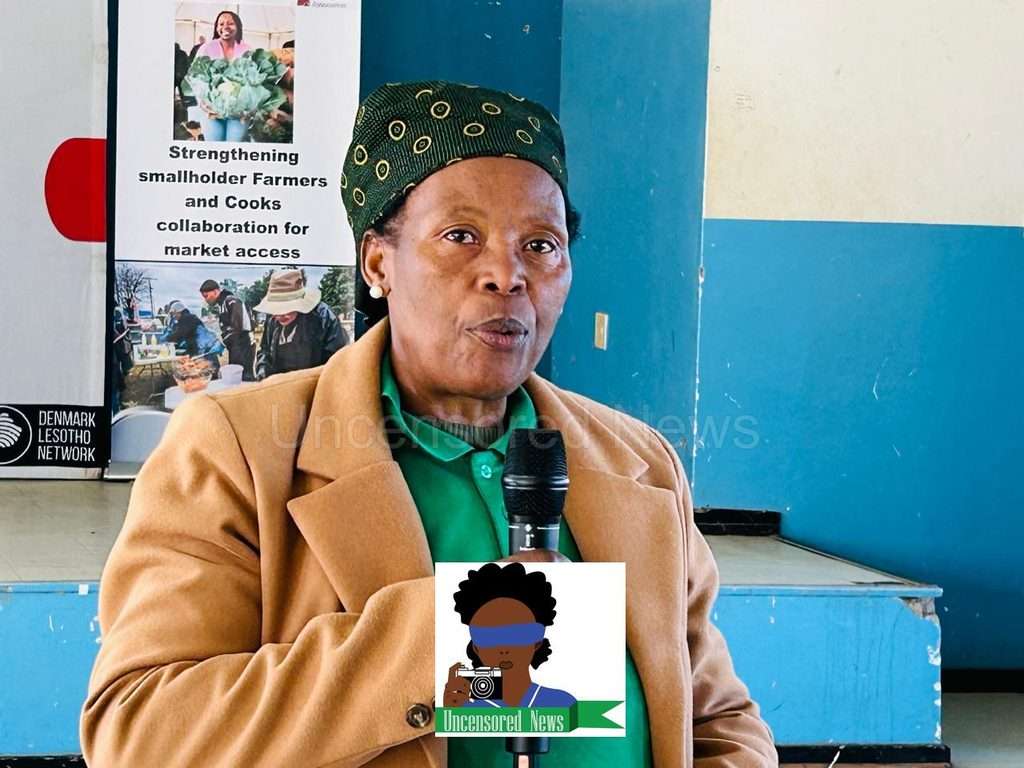
On 13 August 2026, RSDA Director ‘Mampho Thulo stood before Basotho who had gathered to hear the organisation’s message about consuming food produced in Lesotho—from vegetables to chicken.
“On 9 December 2026, RSDA will be celebrating 35 years of working in Lesotho,” Thulo said, opening her speech to applause from the audience. She explained that RSDA has always worked with farmers in communities across Lesotho.
“Along the way, we faced challenges and called on you to band together because we have the land in Lesotho, but the main challenge is that once we produce food, there is no market for it,” Thulo said.
She added: “We noted that you are also struggling to penetrate the retail market due to standards that are not set in Lesotho, but are set somewhere else.”
To address these challenges, Thulo said RSDA developed a strategy to encourage Basotho to consume their own produce through an “Eat Local” campaign.
At the heart of this strategy is a collaboration between farmers and cooks, where cooks buy food produced by local farmers, while farmers work together to produce the required types and quantities of food and ensure a sustainable supply.
This collaboration is already paying off in Thaba-Tseka, where farmers are now supplying schools with food produced on their farms.
Also watch this: https://youtu.be/9Col9jwgH_o?si=y21cbkWl4kEHmakg
“They started small and established an online platform. They are now feeding schools because of a collaboration between farmers and cooks. We cannot continue to feed our children food that is not good, clean and fair,” Thulo said.
This good, clean and fair food include free-range chickens, a star ingredient towards RSDA’s quest for local production. “You must produce in high volumes so that when we advocate for buy local, we will be certain that there is more than enough local production to feed the nation,” Thulo said.
RSDA’s quest aligns with the government’s Lesotho Suppliers Development Programme (LSDP), which brings together smallholder broiler farmers and off-takers in an initiative designed to improve market access and unlock new business opportunities for local poultry producers.
The Lesotho Suppliers Development Programme is implemented through a partnership involving the United Nations Development Programme (UNDP) Lesotho, Standard Lesotho Bank, the Lesotho National Development Corporation (LNDC), FinMark Trust and the Ministry of Agriculture, Food Security and Nutrition. The collaboration brings together expertise in agriculture, finance, enterprise development and public policy to support the growth of local businesses.
