
More Than 2,800 Basotho Died From Drug-Resistant Infections in One Year
31 August 2026 by Limpho Sello
Antimicrobial Resistance (AMR)—which happens when tiny germs like bacteria and viruses adapt so that standard medicines can no longer kill them or stop their growth—has quietly turned into one of the Lesotho’s deadliest health threats.
When these germs become resistant, everyday infections become much harder and costlier to treat, leaving common medicines ineffective and putting patients at serious risk.
Across the World Health Organisation (WHO) African region, deaths linked to AMR have now surpassed those caused by HIV/AIDS (639,554) and malaria (594,348). In fact, four major bacteria that cause serious infections like bloodstream or diseases like pneumonia, meningitis, urinary tract infection (UTIs) or common childhood ear infections are each responsible for more than 100,000 deaths in Africa.
The severity of this threat hits close to home. According to the Institute for Health Metrics and Evaluation (IHME) data, Lesotho ranks among the top ten countries globally and top two in Africa for high AMR-linked death rates, recording over 2,800 deaths in 2019 alone. Experiencing more than 200 deaths per 100,000 people, Lesotho’s AMR fatalities surpass those caused by cancer, diabetes, or pregnancy-related conditions.
Highlighting these grave statistics, Dr. Moeketsi Ntakatsane emphasised: “If you happen to read a lot of news related to the issues of anti-microbial cases, you will find that Lesotho is ranked in the top ten of the countries that are affected by the antimicrobials. And statistics of 2019 shows that over 2,800 deaths have been reported in the country.”
Dr. Ntakatsane said the above statistics paint a clearer picture of a situation that is not looking good for Lesotho. “That is why we have to do things like this particular study.”
One health approach
Resistant germs can spread easily between people, animals, food and the environment. For example, animal waste and improperly discarded medicines can contaminate rivers and soil. This therefore makes it necessary for the health, agriculture and environmental sectors to work together to tackle the problem.
Unsafe disposal of unused medicines into household garbage or water sources, doctors overprescribing antibiotics for viral infections like flu, and farmers using antimicrobials instead of routine animal vaccinations all accelerate the spread of drug-resistant superbugs.
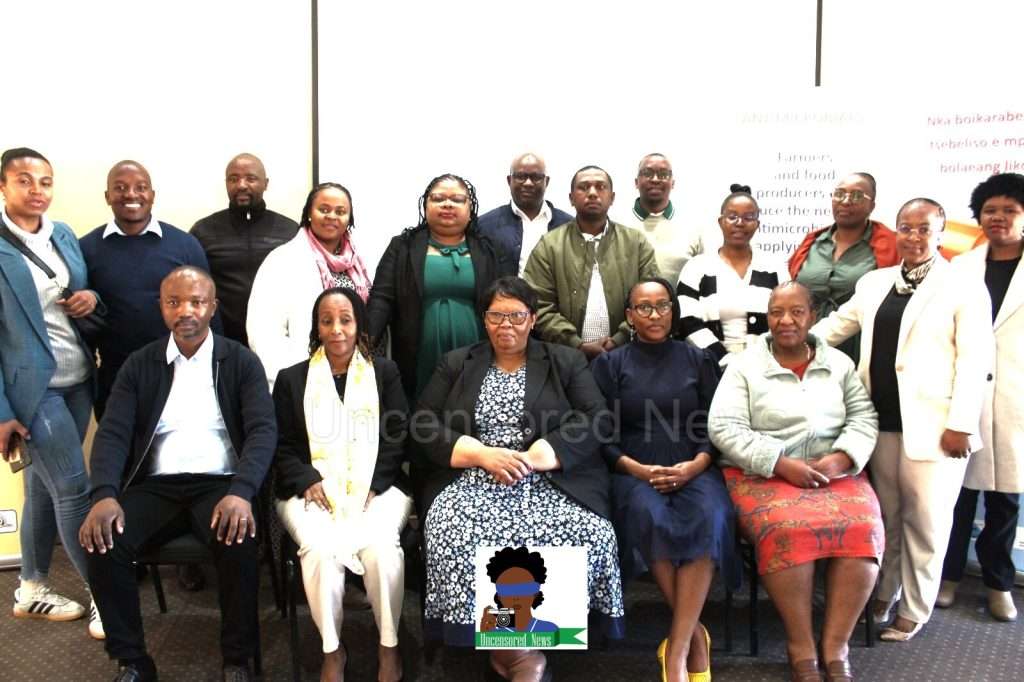
To confront this growing threat, key government bodies and stakeholders have rallied together under a unified “One Health” approach. On August 24, 2026, during a joint representation involving the Ministry of Health, the Ministry of Agriculture, Food Security and Nutrition, the Ministry of Environment and Forestry, and key stakeholders in Maseru, public health officials reaffirmed AMR as an urgent national priority.
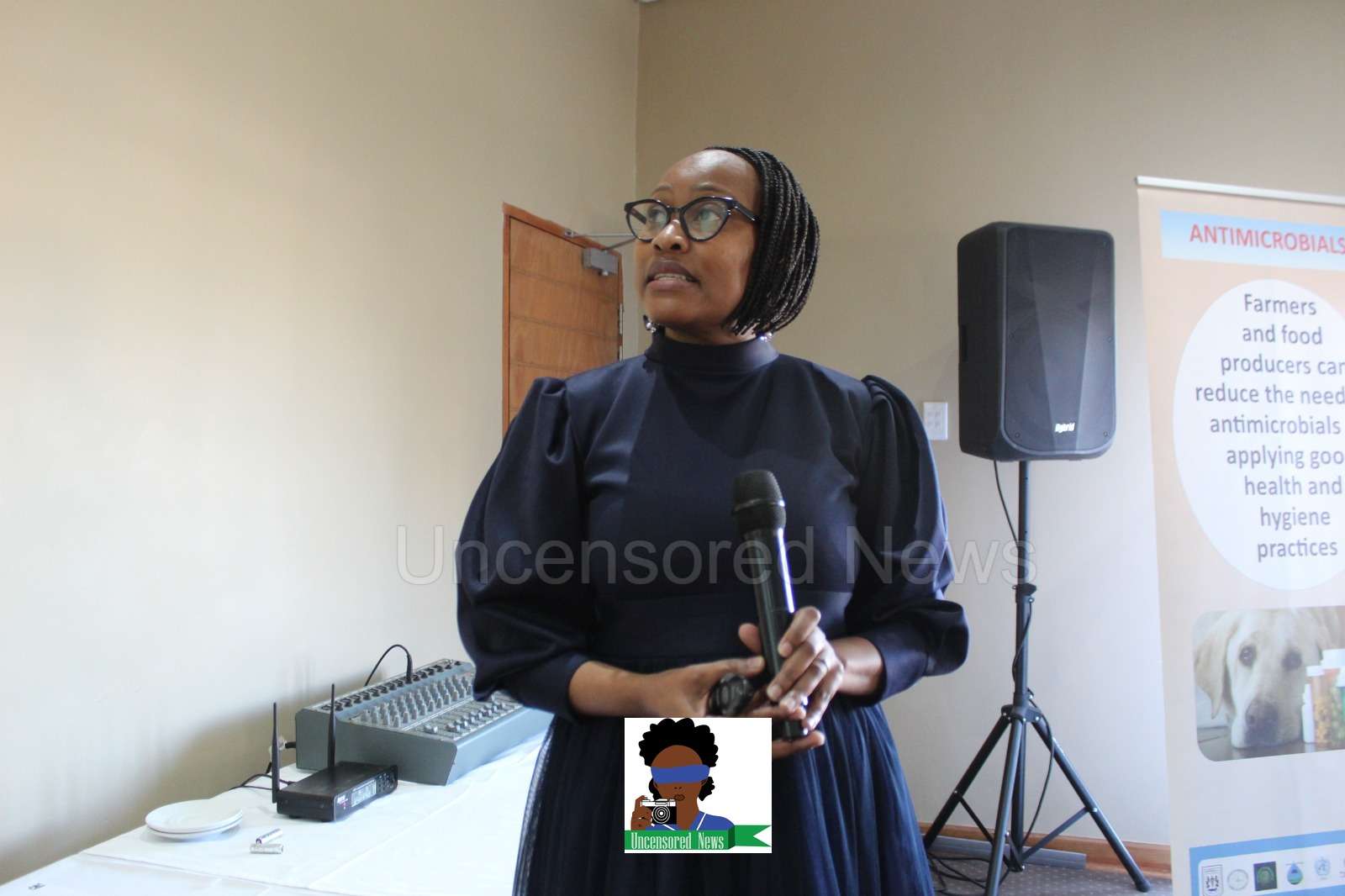
Outlining the core purpose and scope of the meeting, Nteboheng Tjobe Maina, a pharmacist with the Ministry of Health Pharmacy Department and National Focal Point for AMR, explained: “The objectives of this meeting is to reaffirm antimicrobial resistance as a national agenda and a national priority.”
To achieve this, Maina said multidisciplinary disposal committee is required, saying “this means AMR is an issue that affects human health and, the health and sectors that are responsible for environmental health.”
Maina added that the goal of the AMR National Action Plan is to save and protect lives by keeping the medicines safe.
“Despite the National Action Plan giving such a direction, what is of the difference is the actual practices that we shall see when we get to the ministries, to the villages, and to our different communities.”
As part of this national response, researchers from the National University of Lesotho (NUL)—including Molungoa Sello from the Pharmacy Department—are leading a comprehensive baseline study on Knowledge, Attitudes, and Practices (KAP) across One Health professionals and the general public.
Detailing the gap between awareness and behavior, Sello stated: “Most of practice studies, we just reveal the relationship that people may possess a certain level of knowledge, but their practices most of the time do not seem to be as paying the knowledge that they have.”
Sello said there is a gap between people knowing what they are supposed to do and ensuring that regulations are properly enforced.
“So we find that with a Knowledge, Attitudes and Practices, it helps us to describe what we observe. But, for us to move from knowledge to behaviour, we need to understand certain important components that would help us link the practices with the behaviours by finding out how to feel nervous to determining the behaviours that we are having,” Sello said.
He said the baseline will provide the foundation to build practical solutions that are going to protect the viability of the medications as well as protect the health of the country’s people.
Resource allocations
Meanwhile, Dr. Mabusela Makalo from Veterinary Services also emphasised that gathering accurate baseline evidence is essential to ensuring that the country’s One Health interventions respond directly to local needs.
Addressing the national timeline and the alignment of the project with the National Action Plan, Dr. Makalo noted the importance of establishing benchmark data to guide future resource allocation.
“As per our National Action Plan, these activities were supposed to be here,” Dr. Makalo stated.
“I don’t know whether we still call it a baseline study or an end-line study, because in 2026, a baseline study was supposed to be first to inform all the activities that are put in our plan.
“This is why I forced them to disclose the amount of money that was acquired, because it was very helpful. If we had not been able to conduct this study, that would have informed our plans for implementation.”
He further underscored the urgency of viewing AMR not merely as a passive threat, but as an active, actionable challenge requiring cross-sectoral mobilisation.
“From the financial year, it says there is a need to mobilise resources towards combating this threat,” he urged.
“We all are going to fight it because we are bringing it into our context. It’s going to be a challenge. When it’s a challenge, it means we have something to do about it. When it’s a threat, we cannot face it; it’s a total failure that will affect us. So, if it is a challenge, it means we need to go to our respective institutions—law enforcement and other sectors—to see to it that we direct resources towards combating this.”
Highlighting the global stakes, Dr. Makalo cited stark mortality statistics to demonstrate the potential consequences of inaction across Sub-Saharan Africa.
“The projections show that by 2050, we will probably have 39 million people dying because of AMR if we are not going to do anything.”
To ensure the study successfully reaches every district and yields meaningful data, Dr. Makalo made an appeal for complete institutional cooperation as field teams prepare to deploy.
“The most important thing is to make a humble plea to the leaders who are here today that when the study commences, their assistance and cooperation in opening doors for those undertaking the study will be very important,” Dr. Makalo emphasised.
“We can have this good plan, which is going to address the major issue affecting our health in different sectors, but if we do not get the necessary support during the study, then all these efforts will be in vain. Let’s work together for the benefit of this country, and we hope things will ultimately be better once we work together in this fight.”
Target study areas include representative districts across the country—Leribe in the north, Mafeteng in the south, and Maseru in the central region.
By gathering local, real-world data, the One Health alliance plans to fix critical gaps in public knowledge and professional practices, strengthen laboratory capacity, and ensure medicines remain effective for future generations.
