
Every M1.00 Spent Preparing for Severe Weather Saves M4.00 in Disaster Response for Lesotho
1 September 2026 by Limpho Sello
Extreme weather is changing lives across Lesotho, but a major shift in how the country prepares for severe weather aims to save lives, protect property, and reduce the heavy costs of emergency response.
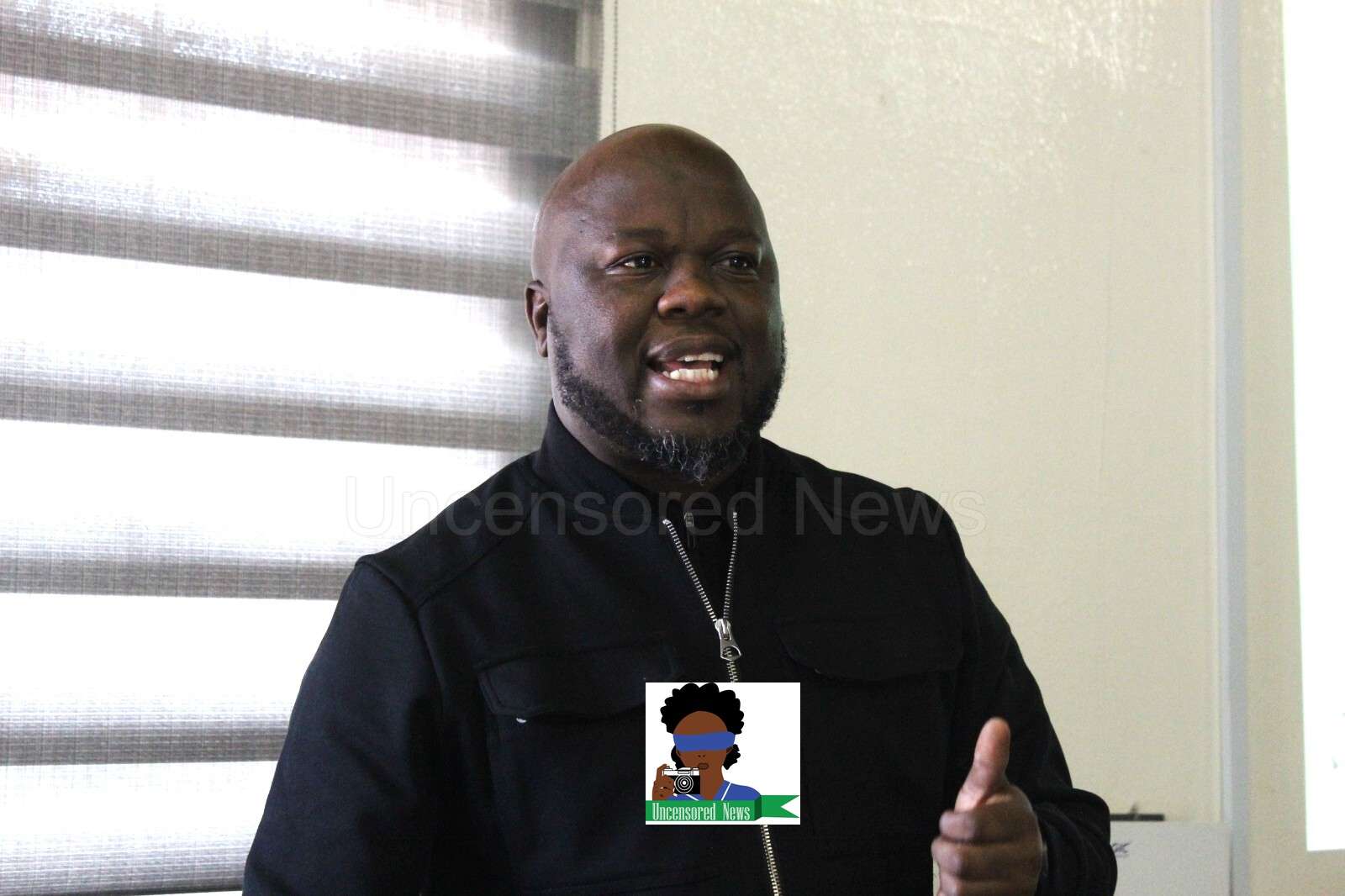
This is according to the Disaster Management Authority (DMA) Emergency Response Director, Retšelisitsoe Molefe, who explained that He highlighted that responding to disasters after they happen is very expensive.
“There is a saying that every M1.00 spent on preparedness, mitigation and prevention can save more than M4.00 that would otherwise be spent on responding to a disaster. This shows that responding is costly,” Molefe said.
Molefe added: “We are funded when we want to respond which is really expensive, when we can be given money for pre-arranged financing that there is a disaster projected. We say let us by all means prepare, mitigate and prevent. It is when we have failed on all these that we respond by all means.”
Molefe made the remarks at the opening of a five-day ActionFirst Lesotho training of different ministries and other stakeholders in Hlotse, Leribe. The training, which runs from 31 August 2026 to 4 September 2026, is jointly organised by the Lesotho Meteorological Services (LMS) and DMA.
Officials and experts gathering in Leribe are being encouraged to move Lesotho from simply reacting to disasters after they strike, to taking action before the damage is done.
Future projections
Molefe noted that when the DMA is allocated funding to respond to disasters after they happen makes him reactive when he is supposed to be proactive.
“I love to plan before I respond and that is why we are here today (31 August 2026), that is Impact Based Forecasting which says let’s project the future and learn what is coming our way.”
Molefe emphasised that extreme weather is an inescapable reality for the country. “In forums like this, I always say the current climate conditions are not a matter of if it will happen, it’s a matter of when it will happen. And what will happen says we have to move from crisis management to improved preparedness.”
Molefe stated that Impact-Based Forecasting (IBF) is “one of the mechanisms that we implement to see to what extent disasters affect us.”
He explained that officials must map out risk hotspots directly in the communities and conduct detailed risk assessments to know who will be affected and on what scale when disasters strike.
Stressing the vital importance of this mission, Molefe noted, “This is a very important job because it deals with life and livelihoods,” adding that there is nothing bigger than rescuing a person’s life: “Food, clothing, and shelter can be there, but sparing someone’s life is the biggest.”
Vulnerabilities
Joining the call for urgent action, the Lesotho Meteorological Services (LMS) pointed out that several Southern African Development Community (SADC) member states have already taken steps to implement these forecasting and action processes.
LMS Meteorologist, Charles Tšeole, stated: “Let me just indicate from the onset that a number of SADC member states have already implemented or some are some steps ahead in implementing the IBF-ABF Process.”
Tšeole therefore requested training participants to take this matter seriously and act on it with high priority, especially since Lesotho, due to its complex topography, is very vulnerable to extreme weather events.
“We still recall the recent heavy snowfall, earlier this month 10-11 August, where livestock farmers suffered losses, schools were unroofed, along with damage caused by strong winds and snow,” he said.
Tšeole expressed appreciation for the commitment to strengthening Action-Based Forecasting and people-centred early warning services in Lesotho, stressing that “one cannot overemphasise and highlight the importance of the Action First initiative in advancing Impact/Action-Based Forecasting and Warning Services (IBFWS) and anticipatory action.”
ActionFirst is a co-designed initiative by the Met Office in collaboration with global partners that aims to transform weather and climate services into socially inclusive, equitable, and easily understood people-centred services for action.
He emphasised that the workshop focuses on two priority hazards for Lesotho—heavy rainfall and cold waves—noting that research already done on cold waves by LMS and the European Centre for Medium-Range Weather Forecasts (ECMWF) “will make our work this week on cold waves a bit more simplified.”
Tšeole stressed the importance of co-production, bringing together scientific expertise, disaster management practitioners, sector stakeholders, and local knowledge to develop practical solutions. Over the five days, the workshop aims to jointly develop and validate impact tables, operational thresholds, early action tables, and trigger-to-action matrices.
Encouraging active participation, open discussions, and sharing of experiences, Tšeole pressed “the need for stronger collaboration between forecasting, warning dissemination, preparedness, and response institutions” to achieve “the goal of translating forecasts into timely action that protects lives, livelihoods, infrastructure, and vulnerable communities,” while acknowledging the support of ActionFirst and its partners.
The district leader echoed the urgent need for early preparation, drawing a comparison to everyday life. Leribe District Administration Office Senior Information Officer, Rasebilo Maqelepo, said the gathering is taking place to plan on mitigation at the right time.
“The changing of the climate that brings us heavy rains and floods and severe colds year in year out makes early planning imperative. You know that just as you plan for deaths, you payout insurance subscriptions every month to make sure that as much as death is not the nicest thing but at least you prepare for the death, noting you will be financially able which eases some pressure,” Maqelepo said.
He added that early preparation ensures climate impacts “find us well prepared.” Maqelepo reminded attendees that they represent the broader community of Leribe who cannot be present in the room themselves.
He stressed that having a well-informed public requires getting the right information to them. “When they are well informed, we will then proudly say we are ready as the district.”
Urging delegates to commit fully to the task, he concluded, “So I urge you that all the five days you will be here it shouldn’t be a playtime, but know that you are here for the public’s best interests.”
