

Africa CDC Boss Raises Alarm Over Vanishing Aid — What About LGBTQI+ Funding in Lesotho?
28 October 2025 by Pascalinah Kabi
Est. Read Time: 5m
Listen to this article:
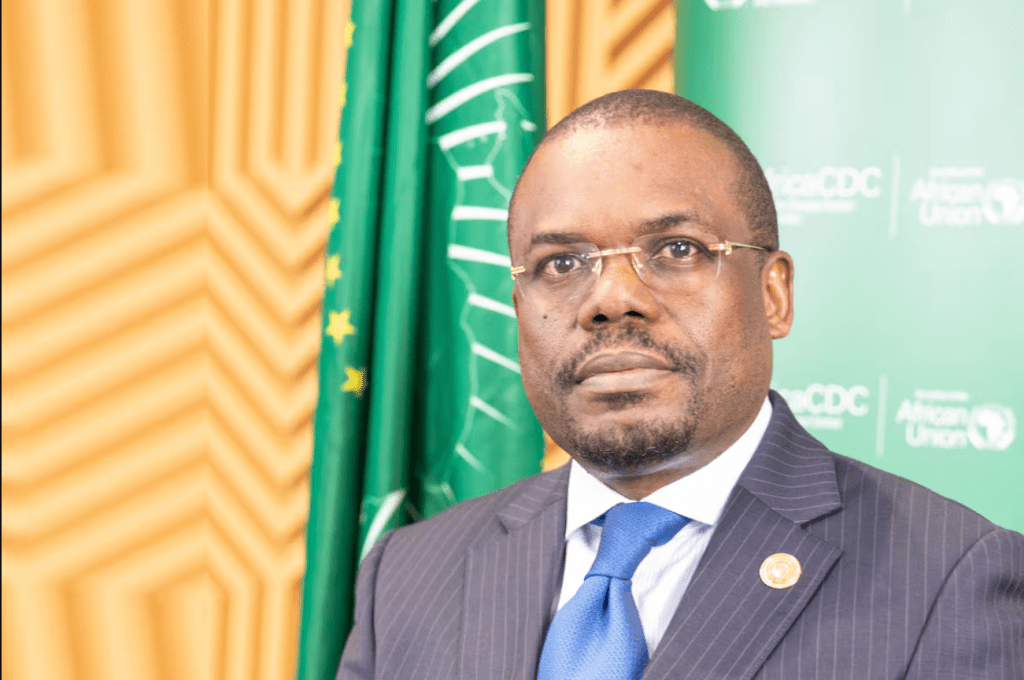
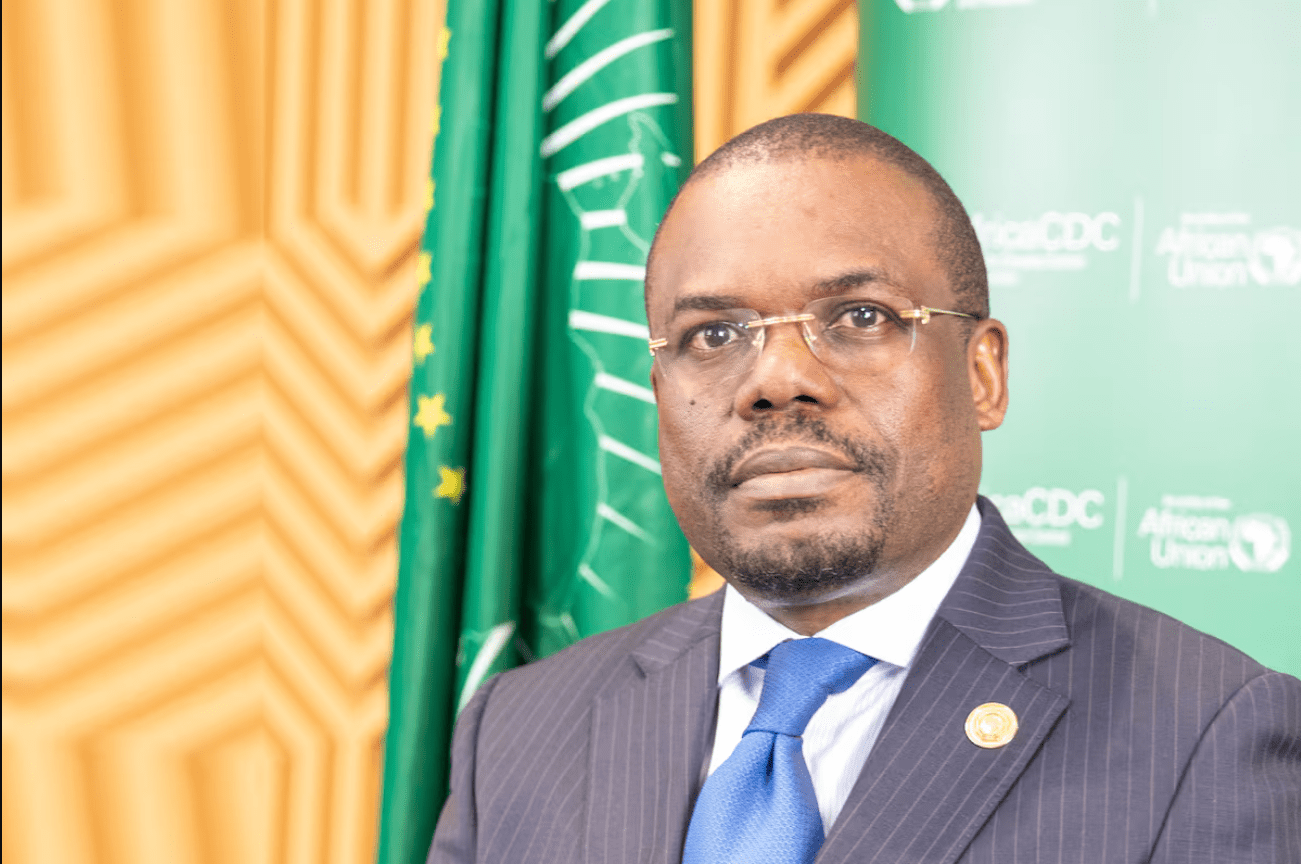
The Director General of the Africa Centres for Disease Control and Prevention (Africa CDC), Dr. Jean Kaseya, says that for every $100 (M1, 700) sent to Africa in foreign aid, $60 (M1, 000) goes unaccounted for.
Dr. Kaseya revealed that this information was shared by officials of the United States government during a meeting held in New York in September 2025 — just six months after he told the American government that 80 percent of aid funding meant for Africa never reached the continent.
“Do you know that in March 2025, I was in Washington, I was challenging the US government. I was telling them why you (US government) are not disclosing your support to my continent, and I was telling them that we know from our side that around 80 percent of money that we are saying is coming to Africa is disappearing somewhere,” said Dr. Kaseya.
“Then in September, in New York, we were informed officially by the US government that out of $100 they are sending, only $40 (M690) are lending, $60 are disappearing somewhere. At least they made it official.”
Dr. Kaseya made these remarks on the sidelines of the 4th International Conference on Public Health in Africa (CPHIA), held in Durban, South Africa, from 21–25 October 2025 under the theme “Moving Towards Self-Reliance to Achieve Universal Health Coverage and Health Security in Africa.”
His comments were in response to a question from this journalist about how Africa — and the Africa CDC in particular — is working toward self-sustainability in light of US foreign aid cuts announced in January 2025. The question was inspired by the conference’s theme, which emphasises Africa’s need to rely on its own resources to strengthen health systems and ensure health security.
Demand for transparency
Dr. Kaseya further emphasised the need for Africans to demand transparency about where foreign aid funds are going, saying government ministers should be fully informed — regardless of how the money is channelled by donors.
He argued that it is unacceptable for governments to be unaware of the total amount of funding sent to their countries, including the exact figures allocated as budget support through implementing partners.
“And this money must also support the vision of the government,” he said. The issue is particularly relevant in Lesotho, where in March 2025, the LGBTQI+ community in Lesotho denied knowledge of the $8 million (M138 million) funding president Donald Trump said was channelled to Lesotho to address the LGBTQI+ issues.
“$8 million to promote LGBTQI+ in the African nation of Lesotho”, Trump said before mocking the country by adding that “nobody has ever heard” of the southern African nation of 2.4 million people.
In response, People’s Matrix spokesperson Tampose Mothopeng alleged that Trump’s claim was baseless. They told AFP: “We are literally not receiving grants from the US.
“We have no idea of the allocation of eight million dollars. We do not know who received or is going to receive that money.
“We do not have such moneys or a contract that would even reach a quarter of half of that money.”
Out-of-pocket health expenditure remains high
Meanwhile, Dr. Kaseya noted that while many African countries rely heavily on external resources to fund health programmes, foreign aid is not the primary source of health expenditure on the continent.
“The first source of health expenditure in Africa is not external aid. It’s out of pocket, people who are paying to get access to health services.”
He explained that in some West African countries, out-of-pocket payments account for more than 70 percent of total health expenditure.
“But overall, we are around 40-45 percent for out of pocket, 30-35 percent for external aid. And then we have the government country providing domestic resources. What we are saying is clear. We are not just addressing the aid cut. We are also addressing out of pocket. And to address out of pocket, the community health insurance is the way to move forward,” Dr. Kaseya said.
He cited Rwanda as a successful example, recalling that after the genocide, only about 15–20 percent of the population had access to health insurance.
“We saw some countries like Rwanda, after the genocide, we had around 15-20 percent of people having access to health insurance. But when they implemented the community health insurance, or what you call the health insurance scheme, we saw that currently with less than two dollars per month, we have more than 80 percent of people having access to quality health services. You will see in a number of countries there are some political initiatives, free delivery and others.”
However, Dr. Kaseya acknowledged that such models are not sustainable in all countries because governments often have to fund them despite limited fiscal space. In Lesotho, both primary and secondary healthcare services are heavily subsidised by the government. Patients pay as little as $0.87 (M15) to consult a doctor at a public hospital, and those referred to specialists in South Africa by public hospitals receive treatment free of charge.
He explained that this is why Africa CDC is advocating for multiple financing options through its initiative, “Africa Health Financing in a New Era”, also known as the Green Book.
“The first priority,” he said, “is to increase domestic resources for health.”
“We need countries to make a little effort to increase domestic resources. The second one we are talking about more innovative financing. We have our brothers, sisters living in other countries, people we are calling diaspora.
“This is a main source of funding for many families in Africa. They are sending more than 85 billion dollars every year in Africa. How can we capture some of this funding to support, like the community health insurance scheme we are talking about, and we have also some taxes.”

2 Comments
This helped clarify a lot of questions I had.
What a helpful and well-structured post. Thanks a lot!