

How Mountain Grannies are Saving Mothers and Babies in Thaba-Tseka
30 October 2025 by Limpho Sello
Est. Read Time: 9m
Listen to this article:
In the misty mornings of Ha-Shoaepane village, deep in the rugged mountains of Thaba-Tseka in Lesotho, ‘Manthabeleng Mokone ties her shawl tightly around her waist and steps out into the biting cold. The 55-year-old Village Health Worker begins her day long before the sun peeks over the peaks that guard her home.
The air is thin here, the roads long and winding — and yet, for nearly a decade, Mokone has walked them with purpose. Her mission is simple but sacred: to help women in her village experience safe motherhood.
Each knock on a door carries both hope and uncertainty. Sometimes, she is greeted with a smile; other times, only silence. Inside many of these stone houses, she says, the hardest battle is not distance — it’s secrecy.
“Some women hide their pregnancies,” Mokone says softly, her voice carrying the weight of countless encounters. “You can see the signs — the swelling, the tiredness — but they deny it. They don’t want to visit the clinic or let others know.”
In such cases, she must tread carefully. “Sometimes I go through their relatives, husbands. If she trusts another woman, I ask that friend to talk to her.”
But even with patience and gentleness, she faces hostility. “Some call me names — that witch of a health worker,” she says quietly. “I don’t take offense. My duty is to make sure they go to the clinic.”
Mokone’s calm persistence often saves lives, yet the emotional cost is heavy. She recalls a young woman who vanished for months and returned without her pregnancy — the baby, she later learned, had died. Another delivered at home despite repeated warnings.
Still, Mokone endures. “Since I started in 2016, I’ve never lost a mother or baby that I personally accompanied to the clinic,” she says with quiet pride before pausing, glancing toward the steep footpath that disappears into the hills.
For her, those hidden pregnancies are not just private matters; they are quiet cries for help — echoes of fear, stigma, and isolation that she faces every day in her work.
Still, as the sun rises higher and warms the valley, Mokone presses on — one among hundreds of village health workers scattered across Lesotho, a mountainous nation of 2.4 million people where maternal deaths remain heartbreakingly high. Together, they form an invisible lifeline, carrying hope from home to home, mountain to mountain.
Poor-performing Thaba-Tseka
Thaba-Tseka — the land of towering peaks and deep valleys — Mokone’s home. It is also one of Lesotho’s hardest places to be a woman. With a population of about 135,347, according to the 2016 national census, the district consistently ranks lowest across nearly all health indicators.
Here, motherhood often begins too soon and too far from care. One in every five girls in Thaba-Tseka becomes pregnant before adulthood — a staggering 22 percent, well above the national average of 17 percent. For many, the dream of finishing school ends with an early pregnancy, while the path to family planning remains narrow and uneven.
At Linakeng Health Centre, Nurse Midwife Karabelo Mpiti witnesses high teenage pregnancies. “We’re seeing a rise in teenage pregnancies — some as young as 13. Many hide their condition until the fifth or sixth month.”
Mpiti said from January to September 2025, the facility has recorded 20 teenage pregnancies and two of those were 13-year-old girls.
“But the total number of pregnancies is 61 and when I break down the numbers of teenage pregnancies into age groups, we have two who are 13, three who are 15, two are at the age of 16, and seven aged 17, four at the age of 18 and lastly two at the age of 20,” she said.
“Most of these girls are very young, about 13 years old, and their bodies are not yet fully developed. You will find that labour becomes difficult.”
Mpiti indicated that because their bodies are very fragile they are referred to Paray Hospital, but for those who delivered here at the clinic, immediately after delivering their babies at the Centre, they are referred to Paray Hospital.
“When they get here they are examined and check if she is likely to reach Paray safely. If they see that she cannot make it, we deliver her right here at the clinic. Others develop complications,” Mpiti said.
Yet, even when young women want help, they often find the health facilities doors closed by faith or distance. The district main hospital, Paray and run by the Catholic Church, does not provide contraceptives, forcing women to travel long distances to access family planning services. The mountains, majestic as they are, turn every journey into a test of endurance — and for expectant mothers, that distance can mean the difference between life and loss.
Maternal mortality remains a heavy shadow over these highlands. Women walk for hours, sometimes in labor, along rocky paths that twist around cliffs and rivers. This is the world Mokone moves through every day — where her footsteps echo in places where healthcare rarely reaches, and where her persistence is an act of quiet defiance against the odds.
On September 22, 2025, Mokone and her village health workers colleagues from Thaba-Tseka district narrated their stories to journalists during the United Nations Population Fund supported trip. She revealed that some expectant mothers walk three to four hours to reach Linakeng Health Centre. Others refuse to relocate closer before delivery, fearing to leave their other children or homes.
“We keep urging them not to delay,” she says, adding “late clinic visits and long distances have caused many complications.”
Even in the darkest moments, she remains hopeful — like the time she and villagers carried a woman in labour all the way to the clinic until she gave birth by the roadside. “It was a baby boy,” she recalls. “We were all relieved.”
Stories of carriage and pain
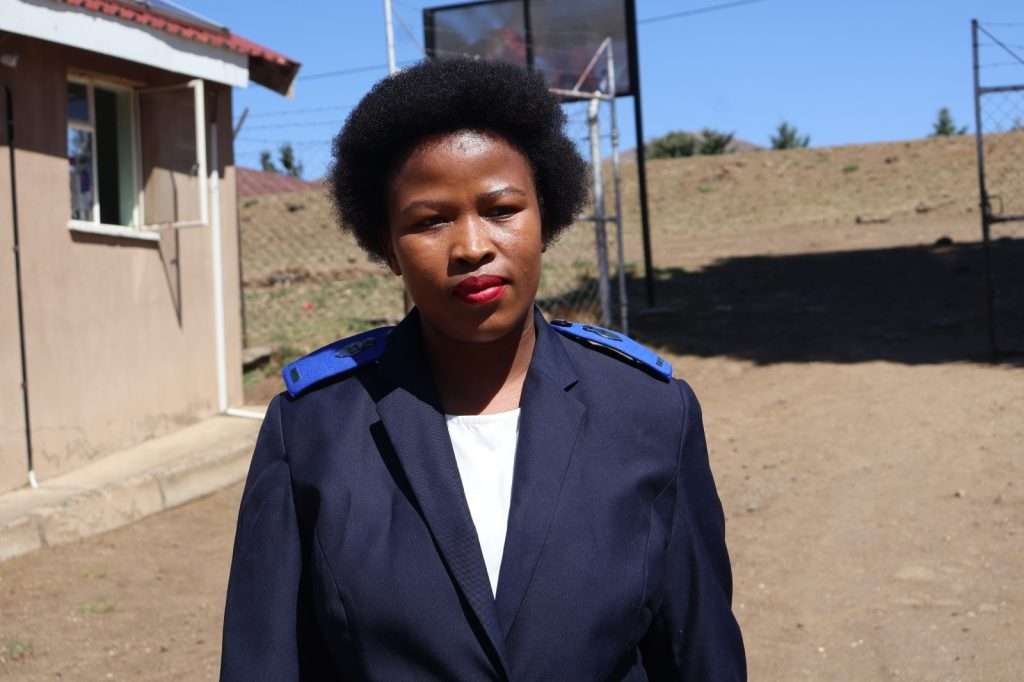
Mapelaelo Nchoba, aged 67, has been a village health worker since 2005. Her decades of experience carry stories of both courage and pain.
“One night, I was called to help a woman in labour on her way to the clinic. There was no car and we were only waiting for one to come pick us up, so the village chief arranged for a men with a lantern to go with us. She gave birth before we arrived at the hospital where we were waiting for pick up, it was around 1:00am.”
Nchoba said on that fateful night they had no gloves, no water, no cotton — only bare hands and determination. “We used what we had and prayed for both to survive. Thank God, they did.”
But her act of compassion came at a cost. “Later, the health centre told me to pay M500 because I had assisted in a delivery without authorisation,” she says, shaking her head. “I couldn’t leave her helpless. It was my moral duty.”
Nchoba was penalised because Village Health Workers are not permitted to deliver babies. Nurse Midwife Karabelo Mpiti explains why.
“To become a midwife, one must first complete a diploma or degree in general nursing, while doctors study medicine,” she says. “Village Health Workers, on the other hand, are selected by their own communities and trained to carry out specific tasks — such as providing first aid and linking patients to clinics or hospitals.”
She added:“Their training does not include assisting with childbirth. Deliveries require specialised skills, and those fall outside the Village Health Worker’s role.”
For Nchoba and her other colleague Mats’enye Hlao reaching the clinic can take nearly six hours — a journey that tests both body and spirit.
“We walk one and a half hours to the road, then five more to the clinic,” she says.
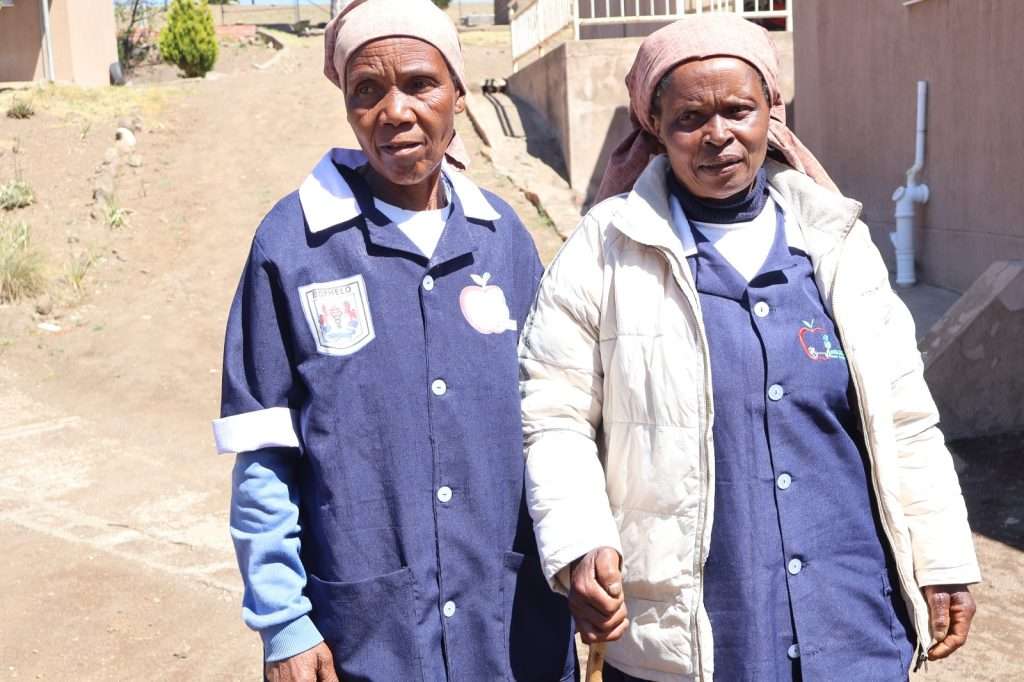
Still, Nchoba continues the work, guided by a sense of responsibility that no obstacle can silence. Another village health worker, Masebotsa Pitso, aged 69, moves slowly, yet her memories of years spent serving her community are vivid — marked by moments of courage, exhaustion, and deep compassion.
Pitso recalls one particular day that tested not only her endurance but also her professionalism, as traditional norms clashed with medical guidance.
“Since 2013, we have not lost a baby or a mother at all,” she began proudly.
“From that time, there was a pregnant woman I once accompanied while she was in labour. There was no car available, and the clinic was far. This woman was already experiencing labour pains when the elderly grandmothers said, ‘Since you see her like this, we also see her.’ They then put a stone on her back here on the upper part and I said, ‘Let’s go.’ But she never removed that stone at all until we arrived there. Truly, we walked with her like that, without any car.
When she said she was tired, “I told her, ‘Hold yourself and rest a bit,’ up the hill, even though I felt like there was no time to rest. We kept going until we arrived, and it took us a long time. By the time we reached the place, the night was about to fall. The baby was indeed born at the clinic, and it was a boy. We were very happy.”
She added: “When we finally arrived at the clinic yard, we removed that stone. I personally took it off her back with my own hands and put it inside the jacket I was wearing. I was told by the elderly women that stone was going to delay labour just until we arrive at the clinic for her delivery.”
Pitso strongly believes situations where women nearly deliver in unsafe environments can be avoided if pregnant women who are eight months along go and stay at the clinic as encouraged.
“But you still find mothers who choose to stay at home, thinking about who will look after their children while they are away, not realising that there are serious consequences. Because walking with a pregnant woman who is about to give birth — and who has to stop and rest when she feels labour pains — is not a good thing.”
Pitso’s story reflects the daily reality faced by many village health workers — where cultural beliefs, lack of transport, and community expectations collide with their duty to uphold medical standards.
For Mpiti, the Linakeng Health Centre nurse in charge, says women delay coming to the clinic, and also because some of them are too young.
“We have an ambulance, but the challenge is that many of them live far from the health facility. However, there is also the m-mama transport’, and we teach them to call it. It’s a vehicle that brings pregnant women to the clinic,” Mpiti said.
“Sometimes, when a woman gets sick at night, they don’t use the transport. I have never seen them use it. Instead, they come with a car from their village, and you find that they have paid as much as M800, yet the mama transport is free. Others don’t hire private cars they wait until morning. By the time they arrive here, they have already delivered or given birth on the way, sometimes.”
“The problem is, sometimes you find that a village health worker has done her part to encourage them to go to the clinic and use the waiting mothers’ shelter which some choose not to use.
So, when a woman starts experiencing labour pains, she goes to that village health worker. Some women want to be delivered by these village health workers, but the workers do not assist with delivery at all. Then you find that the woman gives birth at home.”
Mpiti further said at times these women implicate the village health workers that they have assisted them to give birth at home. ”But, we keep talking to them, emphasising that such things should never happen again, because there is a waiting mothers’ shelter right here near the clinic.”
“Even those who deliver at home — you will later hear them say, ‘I brought the baby.’ They know that they must still come here for check-ups, for their babies to receive drops, and to be examined. The mothers too are given postnatal examination after delivery. We check if they have injuries; if so, we stitch them if necessary. Sometimes the placenta remains inside, and we help with that too.”
The United Nations Population Fund (UNFPA) Lesotho Communications Assistant Violet Maraisane, explained the International Conference on Population and Development (ICPD) agenda recognises Sexual and Reproductive Health and Rights (SRHR) as a comer stone for achieving sustainable development, gender equality, and improved quality of life In Lesotho.
Maraisane said districts such as Thaba-Tseka continue to face serious challenges in realising the ICPD commitments. “These intersecting challenges highlight the urgent need to accelerate implementation of the ICPD agenda through targeted advocacy and effective media engagement,” she said.
“Journalists are uniquely positioned to influence public discourse, amplify community voices, and hold stakeholders accountable by reporting on SRHR and related issues.
“The media can raise awareness, mobilise action from decision-makers, religious leaders, parliamentarians, donors, and civil society, and bring national attention to the lived realities of women, men, and young people in Thaba-Tseka.”
