

Thaba-Tseka Girls Want to Get Married and Have Babies
6 July 2026 by Limpho Sello
The Thaba-Tseka District Administrator Tlali Mphafi leaned forward, looking closely at the partners in his office.
The partners are United Nations Populations Fund (UNFPA) Country Representative John Kennedy Mosoti, Vodacom Foundation Senior Specialist Pinki Manong, and government representatives from Social Development.
As partners settled in Mphafi’s office, he opened his mouth and said: “I’m going to tell you a short story of this teenage pregnancy.”
“It’s a bit sad, but I always believed that unless you tell the truth the way it is, you cannot apply the measurable or the true effect to the problem.”
Support our public interest journalism today. We accept contributions through Mpesa: 51863, Ecocash: 120668 and Nedbank Lesotho: 11990336867
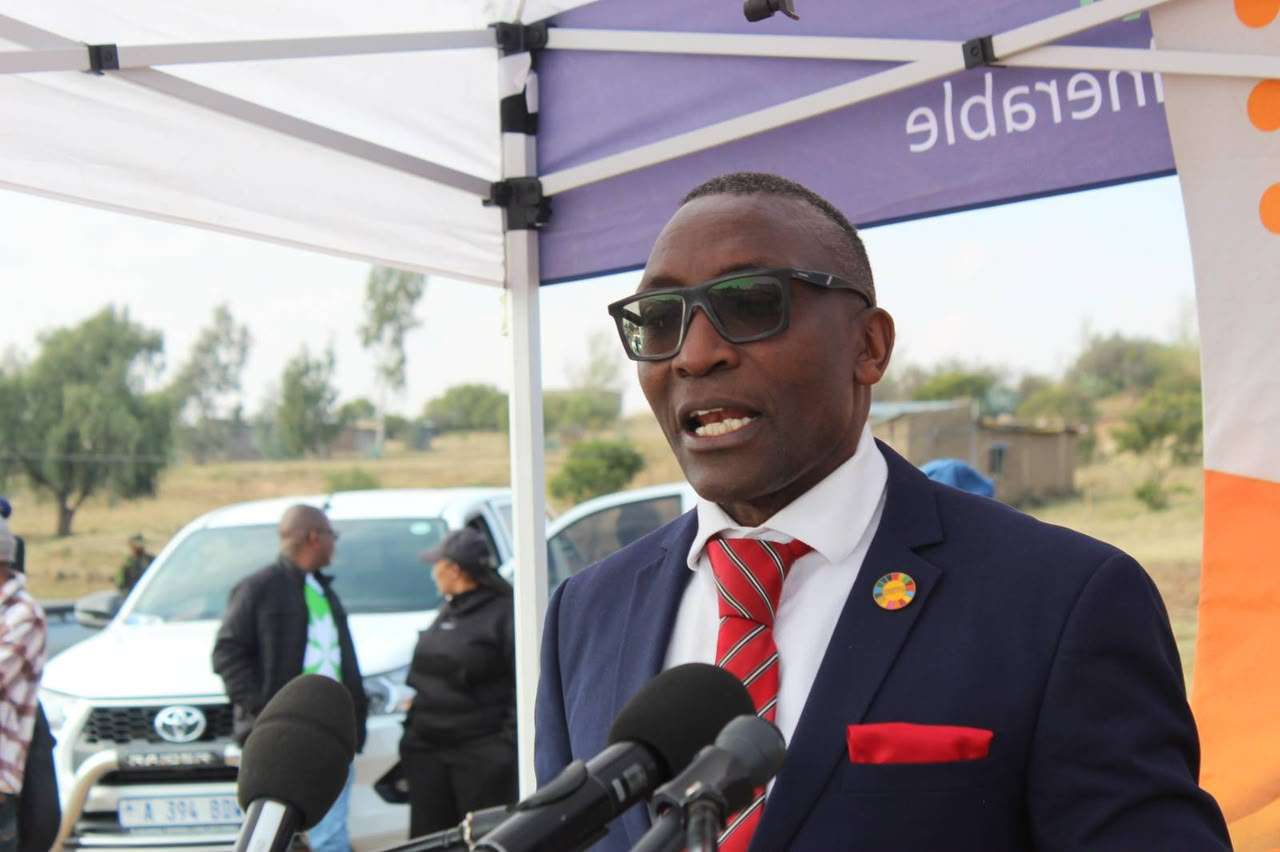
Mphafi, pictured, took a breath, recalling a visit from the previous year, 2025.
“That was last year (2025) when I went to one of our facilities. I went to the maternity ward. So as I got there, I met around eight pregnant ladies.”
He paused, letting the reality of the room settle in. “Of all of them, the oldest was thirty-two and the youngest was thirteen.
“Behind this thirteen-year-old, there was someone a lot older. Tell you what, I posed a few questions to them. Questions like,
‘What are you expecting about your unborn baby in the future?”
The answers he received revealed the deep, cyclical nature of the problem in Thaba-Tseka district.
“I want my daughter to get married,” Mphafi recounted, mimicking the voices of the young expectant mothers.
“I want my son to go to initiation school. I want my son to get married so that I have lots and lots of grandbabies.”
The 2023–24 Lesotho Demographic and Health Survey (LDHS) indicates that Thaba-Tseka has the highest rate of teenage pregnancy in the country, with 32 percent of young women aged 15 to 19 years having ever been pregnant. Nationally, the average stands at 17 percent, with district rates spanning from a low of 12 percent in Leribe up to Thaba-Tseka’s peak.
Mphafi narrated this story during a courtesy call in his office by Mosoti and their partners on 1 June, 2026.
This call was meant to discuss the challenges faced by the district which includes high numbers of early and unintended pregnancy, Gender-Based Violence (GBV) and Child Marriage. The meeting was also meant to see how the UNFPA and its partners can do to help address challenges through various initiatives such as empowering men through Men Engagement activities, support and rehabilitation of adolescent health corners and youth centers.
Mphafi looked around the room at the UNFPA and Vodacom representatives.
“You understand what I’m saying?”
He added: “So this story is not very nice, but I’m only saying it because it portrays the true depths of the problem that we have in the district. However, we can’t just be talking about all these problems without implementing proper interventions to overcome them.”
He explained how this structural trap extended far beyond the walls of the clinic.
“The truth of the matter is they do not get into the game on their own. They share with the males. And one young pregnant lady at the age of thirteen is struggling with pregnancy in the hospital ward.
“The partner is out there enjoying, or maybe even chasing after another girl. And we can’t just sit by and say, hey, we’ll engage girls or women on their own. We need to engage the partners also. The partners of the game, if you understand what I’m saying,” Mphafi said.
𝗔 𝗰𝗿𝗶𝗺𝗲 𝗮𝗻𝗱 𝗮𝗻 𝗼𝗳𝗳𝗲𝗻𝗰𝗲
John Kennedy Mosoti, the UNFPA Country Representative, looked at the DA and nodded, his expression turning sharp.
“That’s a crime,” Mosoti said, addressing the room directly. “It is an offence. It is a crime. Why are the perpetrators not in jail? I mean, we have to take action. If you don’t take action… you cannot get married to a thirteen-year-old. So they should be in jail.”
Mosoti said this as a response from what the DA has said about young girls falling pregnant and probably by older men than them.
Data from the 2023–2024 Lesotho Demographic and Health Survey (LDHS) indicate that child marriage is a persistent crisis in Thaba-Tseka. The district registers the highest prevalence of child marriage in the country, with 35 percent of girls married before the age of 18.
Early pregnancy in minors legally ties into statutory rape and child marriage and also contributes to high GBV cases.
Mosoti leaned in, emphasising the weight of law enforcement.
“And for as long as we are not accountable to our own laws in the country, that brings impunity. When they see a thirteen-year-old getting away with something, John will do it. And somebody else will do it. But if we stop you from doing it, I will think about it before I do it again.”
He looked back at the DA. “So I said, look, I told the corporal, we need to be able to ensure, even if there are no resources—you know, the police have infinite powers. Even if it takes three days, five years, they will still get you. Because crimes don’t expire. If you committed a crime, you committed a crime. But yes, so I agree with you on most of everything that you said.”
𝗕𝗿𝗲𝗮𝗸𝗶𝗻𝗴 𝘁𝗵𝗲 𝗰𝘆𝗰𝗹𝗲 𝘁𝗵𝗿𝗼𝘂𝗴𝗵 𝗲𝘅𝗽𝗼𝘀𝘂𝗿𝗲
Mosoti continued, addressing how a lack of exposure and opportunities directly feeds this cycle, and how they plan to change it. While young people in the district face a lack of information, providing positive “distractions” and accurate knowledge can alter their trajectory.
He connected this directly to how the Vodacom Foundation is working to bring that exposure to Thaba-Tseka.
“If we are able to empower young people to be able to connect to what Vodacom does—we give them computers, we give them the network—they are able to see what other people are doing,” Mosoti explained.
“They are able to apply for jobs, they are able to join Sebabatso , they are able to join the Youth Connect, they are able to. you know, we get the American Corner, you know, scholarships are given.”
He emphasised that providing this exposure gives them an alternative path.
“They see the opportunities that are available, and they have a distraction, a good distraction. For example, younger people come in to be able to play sports, they are able to develop skills.
We give them the information about pregnancy, and we hold people to account. We look forward to pregnancies going down. We look forward to early marriages being eliminated, or at least reduced significantly.”
