

When the Warning Comes: Lesotho Wants to Know What Happens Next
7 October 2026 by Limpho Sello
A warning can arrive on time and still fail to protect a community.
It may be issued when heavy rain reaches a dangerous threshold, or when a cold wave or snow is expected to bring serious impacts. But between that warning and the moment a family takes action lies a chain of decisions: Was the warning received? Was it understood? Did the responsible institution act? How quickly did that action happen? And was the action that had already been agreed upon actually carried out?
These are some of the questions now occupying stakeholders working to strengthen Lesotho’s Impact-Based Forecasting (IBF) and Action-Based Forecasting (ABF).
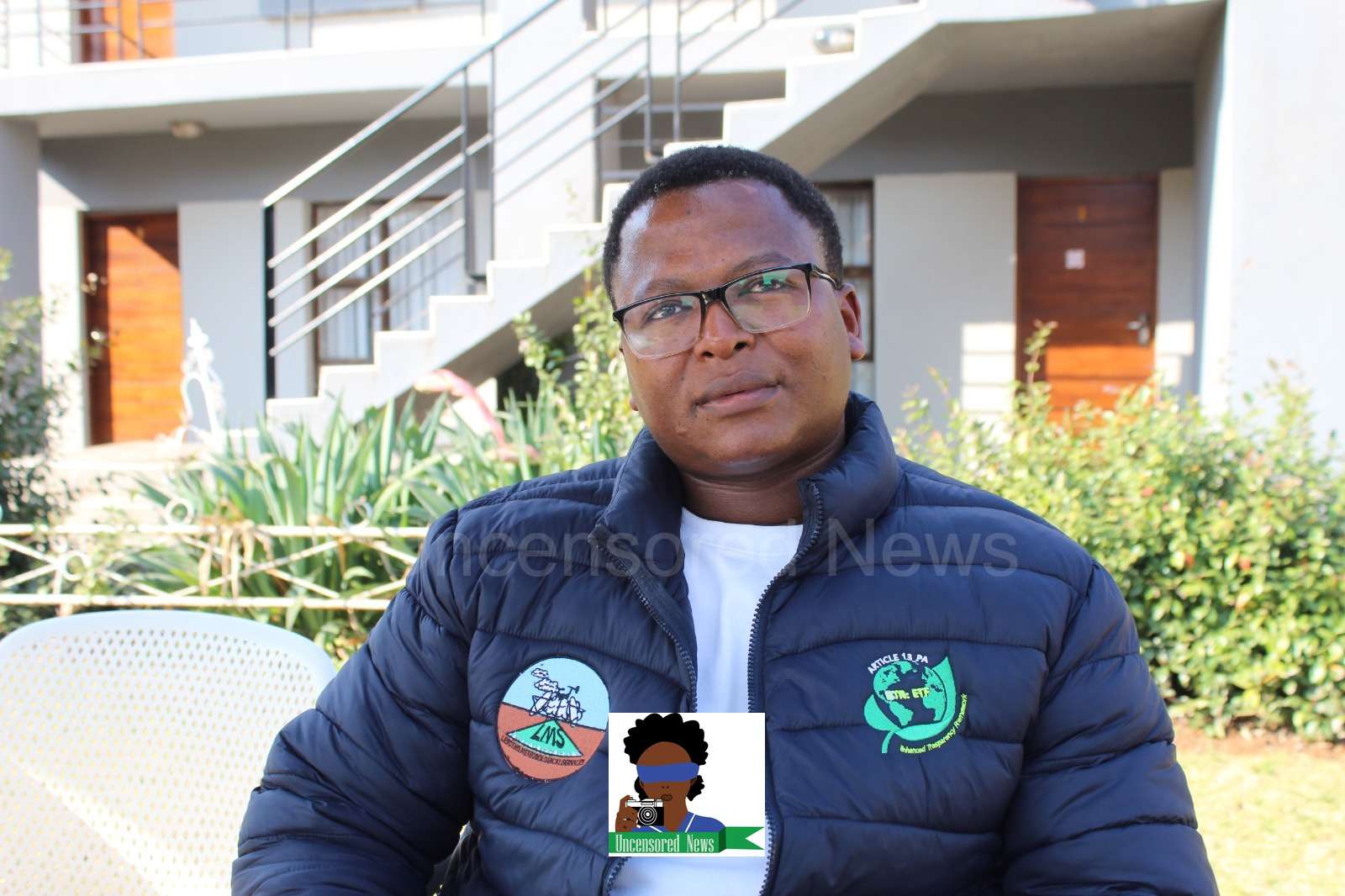
For Moahloli Ntele, the Impact-Based Forecasting and Warning System (IBFWS) National Coordinator and ActionFirst Lesotho Co-Production Project Lead, the current stage of the work is about more than producing another set of documents. It is about reflecting on what has been developed, identifying what still needs to be fixed and putting in place a way of measuring whether the system works when it matters most.
The Monitoring and Evaluation and Learning (MEL) Development, Learning Reflection and National ABF Roadmap Workshop took place from September 28 to October 02 2026 at Teyateyaneng, Berea.
Speaking to Uncensored News on 30 September 2026, on the sidelines of the ongoing workshop, Ntele explained that the activity builds on previous co-production activities. Ntele said it focuses on lessons learned, system gaps, development of the ABF Results Framework and MEL Indicator Matrix, and the drafting, validation and endorsement of the National ABF Roadmap, including its implementation timeline and review cycle.
Learning while the event is unfolding
For Ntele, one of the important changes in the new MEL Indicator Matrix is that stakeholders will not have to wait until a disaster has passed before learning what happened.
“The MEL Indicator Matrix built this week deliberately includes process-level indicators logged at the moment an impact threshold is crossed,” Ntele explains.
These indicators will measure the time from the trigger to warning issuance, the time from warning to the first anticipatory action, and whether the pre-agreed early action was actually executed.
The focus, therefore, is not only on what the eventual outcome was after an event. “This lets us learn while an event is unfolding, not just in the post-disaster review,” Ntele said.
He gives a practical example. “When a cold-wave or heavy-rainfall threshold is crossed, the Matrix requires a time-stamped log of warning issuance and the first District Disaster Management Teams and Village Disaster Management Teams (DDMTs/VDMT) action taken, not only a summary written up afterwards.”
The reason for doing this is equally practical: “So, we can spot and fix delays while they still matter, not only in hindsight.”
He said that means the system will be able to show not simply whether a warning was eventually issued, but how long it took, what happened immediately afterwards and whether the action that had been agreed upon beforehand actually took place.
But did the warning actually reach the people?
For Ntele, a warning system cannot be considered successful simply because a warning was produced at national level.
The real test is whether that warning reaches the people who need it.
The framework therefore includes community-level feedback and accessibility measures.
“Gender Equality, Disability, and Social Inclusion (GEDSI)-disaggregated indicators and a dedicated accessibility checklist require data from VDMT/DDMT level,” Ntele explains.
That includes checking “whether warnings reached persons with disabilities, women, and remote highland communities, and whether the anticipated impact was actually reduced or avoided.”
This means that feedback from communities and local disaster management structures will feed into the same MEL system.
It will not be treated as something separate from the overall monitoring process.
Ntele says the approach will also look at the actual reach of accessible warning formats.
“Concretely, this includes tracking whether accessible formats such as sign-language interpretation, Sesotho-language and other languages products, pictorial warnings actually reached people in the districts they were meant for, not just whether they were produced at national level.”
From warnings to protecting livelihoods
For the Food and Agriculture Organisation of the United Nations (FAO), the emerging MEL framework could provide a practical bridge between a forecast and action in agriculture.
FAO Monitoring and Evaluation Officer Rethabile Pelane said the value of the framework would be in helping institutions identify who and what is exposed to a hazard, understand the likely impacts and establish when specific actions should be triggered.
She said this would support FAO’s work with the Ministry of Agriculture, Food Security and Nutrition (MAFSN) to translate early warnings into anticipatory action that protects food security, agricultural livelihoods and vulnerable communities.
“For example, a heavy-rainfall warning could trigger actions such as protecting crops and livestock, moving animals to safer areas, securing farm inputs, and advising vulnerable communities,” Pelane said.
She said the approach would help ensure that forecast information leads directly to action before losses occur, rather than only documenting the effects of a hazard afterwards.
For Pelane, making this work in practice will require institutions and communities to move away from fragmented approaches and operate through a coordinated MEL system with clearly defined responsibilities, common indicators, reporting channels and agreed decision thresholds.
She said community-level observations should also become part of the system, with information gathered through extension officers, local authorities and community structures rapidly validated and shared with LMS and DMA to complement scientific forecasts.
However, Pelane identified practical barriers that could undermine this coordination, including unclear responsibilities, limited resources and connectivity, inconsistent data quality, delayed reporting and weak feedback from national institutions to communities.
She said regular joint reviews, standardised tools, capacity building and two-way communication would be important in overcoming these barriers and ensuring that vulnerable people are protected from hazards while communities become more resilient.
