
Ntšekhe Hospital Apologises to the Mosebetsi Family, Offers Free Counselling and Transport for Burial in Ketane
5 June 2026 by Pascalinah Kabi
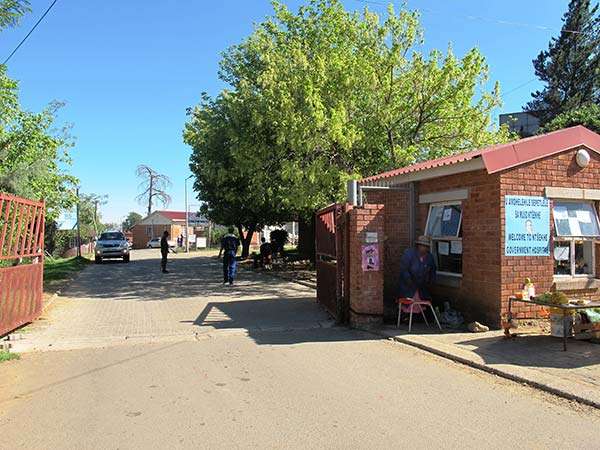
Mohale’s Hoek District Medical Officer, Dr Bokang Kojana, says the management of Ntšekhe Government Hospital has apologised to the Mosebetsi family following the death of their unborn child, who died in the mother’s womb after she had been admitted to the hospital for delivery.
Dr Kojana says the hospital has also offered free transport to assist the family with the burial in Ketane, cancelled the family’s medical bill, and arranged free counselling services for the family after the mother’s wound has healed following the surgical removal of the deceased full-term baby on 2 June 2026.
Join the Uncensored News Public Interest Journalism Fund with a minimum contribution of M100 per month or a once-off donation. Your support helps fund independent health and environmental reporting, amplify community voices, and spotlight solutions to the challenges facing Basotho. Nedbank Lesotho: 11990336867, Econet Merchant: 120668
“We met with the family and apologised. We offered to see how the family needed to be assisted, especially because the husband indicated that they originate from Ketane and live in rented accommodation in Mohale’s Hoek.
“The hospital offered transport for collection of the corpse and transportation to Ketane. The hospital sat down and decided to write off the family’s medical bills because the family did not anticipate that this could happen, and now it has to cover expenses related to the burial of the child,” Dr Kojana said.
She said the bill was written off in accordance with the hospital’s policy that vulnerable patients should not pay for services.
“The third intervention was that we made arrangements for the family to receive free counselling sessions once the mother’ surgical wound has healed. As we speak, they have been provided with transport and all necessary arrangements for the burial,” Dr Kojana said.
The apology, counselling services and transport assistance came after the Mosebetsi family blamed the death of their unborn child on alleged medical negligence. The pregnant woman had been transferred to Ntšekhe Hospital to deliver her baby by Caesarean section.
She was admitted on 27 May 2026 and was informed on 30 May 2026 that her baby had died in the womb. This was after nurses allegedly ignored her concerns that the baby had stopped moving. The family also complained that the deceased child was removed from the woman’s womb three days after they were informed of the death. They allege that the surgery was only performed after Mekaling Member of Parliament Thabiso Lekitla intervened on 2 June 2026.
Dr Kojana said the hospital held two meetings with the family following the tragedy. In an interview with Uncensored News on 4 June 2026, she said the meetings focused on the circumstances surrounding the death of the unborn child and allegations that nurses treated the patient rudely.
“In summary, we met with the family and they stated their grievances. He (Tšepang Mosebetsi) told us that his wife was scheduled for a Caesarean section but did not receive one. He said the nurse was informed that the baby had stopped moving, but the nurse said the heartbeat was still present. His third grievance was that his wife was not attended to promptly after the death of the baby,” Dr Kojana said.
She said that after the first meeting with the family, she requested time to conduct an investigation in the maternity ward. During the investigation, she met with the doctor in charge of the maternity ward, who explained that the patient arrived on 27 May 2026 and that all initial assessments indicated she was in good condition.
However, the doctor identified a discrepancy in the patient’s medical history. The records suggested that her last delivery had been in 2014, whereas she had actually delivered by Caesarean section in 2023. When asked to clarify the discrepancy, the patient reportedly confirmed that her last delivery had indeed been in 2023.
“The real reason the patient came to Ntšekhe Hospital was that she was due for delivery and had previously been expected to undergo a Caesarean section because her due date had passed. The doctor in charge made a decision that since it had been two years since the last Caesarean section, she could be induced for a normal delivery. She has a history of normal births.“
She underwent a Caesarean section in 2023 because she had high blood pressure, but she is now well, which meant she could potentially deliver normally. The expectant mother and her husband were informed that labour would be induced,” Dr Kojana said.
Although the family insists that the mother repeatedly informed nurses that the baby had stopped moving, Dr Kojana said that information was not reflected in the patient’s medical file. Instead, the file reportedly indicates that fetal heartbeats were detected during routine examinations.
“That is what happened. We are told that on Saturday (30 May 2026), the doctor was called and the induction process was halted. The medication used to induce labour was stopped so that the contractions would not intensify because she had a history of Caesarean section. The heartbeat was still being detected.
“Unfortunately, on Monday (1 June 2026), the nurse could no longer detect the heartbeat. We sat down to determine where the mistake may have occurred because even the scan results had detected a heartbeat and showed that the pregnancy had not gone beyond the due date,” Dr Kojana explained.
She said the investigation was conducted by a committee comprising doctors and nurses. According to Dr Kojana, the committee members concluded that reliance on fetoscopy to monitor the heartbeat may have contributed to the problem.
“It is not wrong to use festoscopy because it is regularly used, but they suspect that what the nurse heard may have been the mother’s heartbeat rather than the baby’s.
“When the mother repeatedly indicated that the baby had stopped moving, perhaps the nurse should have used the CTG machine because it differentiates between the mother’s heartbeat and the baby’s heartbeat.
“The machine can also detect when the baby’s heartbeat is weakening. If the nurse had followed up after the mother reported reduced movement and referred her for CTG monitoring, it might have detected the problem earlier. Perhaps she could then have been rushed for an emergency Caesarean section.”
Dr Kojana said the committee believes this may have been a critical shortcoming and that this explanation was shared with the family.
“We investigated the cause of death and found no evidence linking it to any disease. We suspect the baby died around the time the mother first reported reduced movement. We also suspect that the heartbeat detected afterwards may have been the mother’s heartbeat rather than the baby’s.
“We have noted this shortcoming. Another notable shortcoming is that, as healthcare workers, we do not adequately involve patients in decision-making. Had we clearly explained that it is possible for a woman with a previous Caesarean section to deliver naturally — in fact, there was such a delivery at Ntšekhe Hospital just last week — the family may have better understood the decision.
“However, now that there has been a loss of life, they understandably ask why a Caesarean section was not performed when that was their expectation. Making decisions on behalf of patients without fully engaging them in the decision-making process has contributed to this devastating outcome. This is an area where we must improve.”
Regarding allegations that nurses were rude, Dr Kojana said the investigation could not verify the claims because such interactions are not documented in hospital records. However, she said the committee has instructed the nursing manager and matron to remind staff to communicate respectfully with patients.
“Perhaps the mother did not continue reporting that the baby had stopped moving because of the nurse’s attitude. We need to correct ourselves in this area,” she said.
