
After Outshining 35 Candidates to Lead Lesotho Medical School, Prof Lineo Thahane Reflects on What It Means for Basotho to Be Treated by a Mosotho Doctor
21 July 2026 by Pascalinah Kabi
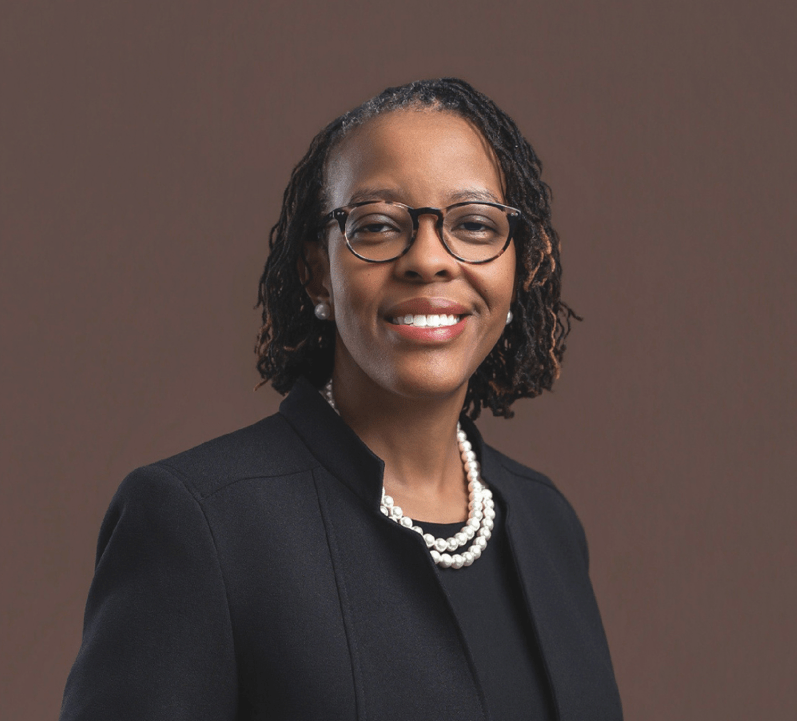
A Mosotho Clinical Associate Professor of Pediatrics, Prof Lineo Thahane, who has been appointed the founding Dean of the Lesotho Medical School, has reflected on what it means for patients and their caregivers to be treated by a doctor who speaks their language and understands their fears, concerns and everyday realities.
Recalling her early years as a pediatrician in Maseru during the height of Lesotho’s HIV epidemic in the early 2000s, Prof Thahane said she witnessed first-hand the reassurance that a Mosotho doctor could bring to families navigating a frightening and unfamiliar health system.
“As a young Pediatrician consulting in Maseru in the early 2000s, at the height of Lesotho’s battle with the HIV epidemic, I clearly remember what it meant to my patients’ caregivers to be cared for by a Mosotho doctor,” Prof Thahane reflected.
According to Prof Thahane, many of the caregivers were elderly and overwhelmed by the challenge of seeking treatment for critically ill children. Seeing a Mosotho doctor enter the consultation room often brought them a sense of relief and comfort.
“To them, encountering a Mosotho doctor meant having an immediate ally… someone who literally spoke their language and could clearly understand their fears, complaints, and daily challenges and, most critically, who could explain in their language the details of what was happening to their children and provide reassurance by being present and fully engaged,” Prof Thahane said.
Prof Thahane shared these reflections in a press statement announcing her appointment as the founding Dean of the newly established Lesotho Medical School by the Lesotho-Boston Health Alliance.
Her appointment follows a highly competitive recruitment process in which an international search committee advertised the Dean position across Africa and received 36 completed applications.
The committee shortlisted nine outstanding candidates for interviews before inviting four world-class finalists to Lesotho to deliver formal presentations and engage with key stakeholders.
“The Lesotho-Boston Health Alliance is proud to announce that Prof. Lineo K. Thahane has been named the founding Dean of the newly established Lesotho Medical School. Prof. Thahane is currently serving as Executive Director of the Baylor College of Medicine Children’s Foundation Lesotho, and will assume the position in September 2026,” reads a press statement circulated on 20 July 2026.
Who is Prof Thahane?
Prof. Thahane is a Mosotho professor of medicine who received her BA in Molecular Biology from Princeton University, her Doctor of Medicine degree from Washington University School of Medicine. She completed her specialty training in Pediatrics at the Children’s Hospital of Philadelphia in the United States of America.
In 2005, she returned to Lesotho with the Baylor College of Medicine Children’s Foundation Lesotho, and became its Associate Director in 2009, overseeing day to day clinical operations. In 2018, she was appointed Executive Director, assuming responsibility for the strategic leadership of all Baylor Foundation Lesotho activities, including service delivery across six clinical sites and support to Ministry of Health through donor projects implementation nationwide.
Prof. Thahane is Clinical Associate Professor of Pediatrics at Baylor College of Medicine and a Diplomate and Fellow of the American Board of Pediatrics. She is an experienced medical educator and scholar, publishing many peer-reviewed scientific articles in international journals describing her global health work in pediatric HIV/AIDS. Prof. Thahane is well-versed in the Lesotho health systems, and the policy and programming landscape in sub-Saharan Africa.
A crucial step towards the July 2027 intake
The Lesotho-Boston Health Alliance says the Lesotho Medical School will welcome its first cohort of students in July 2027. During the first two years, students will use classrooms and laboratories at the National Health Training College while undertaking clinical training at facilities including Queen ‘Mamohato Memorial Hospital and Maseru Regional Hospital.
Prof Thahane’s appointment marks a significant milestone in preparations for the inaugural intake. With key support staff already in place and the recruitment of academic staff underway, her leadership is expected to drive the establishment of the systems, programmes and institutional structures needed to ensure the medical school is fully operational by July 2027.
Lesotho’s second attempt
The new Lesotho Medical School represents the country’s second attempt to establish a sustainable undergraduate medical school. Lesotho’s first medical school, launched in 2014, collapsed before graduating a single class of doctors amid challenges related to funding, staffing and accreditation.
The first initiative was supported by the Lesotho government and development partners as part of efforts to reduce the country’s dependence on training doctors abroad.
In a May 2023 edition of the Lesotho Medical Journal, corresponding author Radiance Ogundipe described it as “heartwarming” to learn that Lesotho was making another attempt to establish a medical school.
“This is such a welcome development given the medical manpower situation in the country and the present cost of undergraduate medical training procured in countries outside Lesotho,” Ogundipe said.
Citing 2018 World Health Organisation (WHO) country statistics, Ogundipe noted that Lesotho had a doctor-to-population ratio of around five doctors per 10,000 people—less than half of the WHO-recommended ratio of 10 doctors per 10,000 people. He added that anecdotal evidence suggested many Basotho doctors trained abroad were practising outside the country.
Ogundipe cautioned that, to prevent a repeat of the challenges that derailed the first attempt, Lesotho needed to conduct a thorough assessment of the factors that contributed to its failure.
“It is important to involve all relevant stakeholders to determine the type of medical school and undergraduate training that will be acceptable and contextually relevant to Lesotho. The existing structures for medical education: the internship program and the FMSTP should be incorporated and built on, in defining the prototype medical school for Lesotho. The existing academic governing structure of the National University of Lesotho should be drawn on to provide needed administrative and governance support for the school,” he said.
