

A Warning Is Not Enough: Lesotho Moves to Define Who Acts and When
16 September 2026 by Limpho Sello
Lesotho is developing Standard Operating Procedures (SOPs) aimed at ensuring that weather and climate warnings do more than alert people to approaching hazards—they must also clearly guide institutions, communities and other stakeholders on what action to take and when.
The SOPs development is part of the Impact-Based Forecasting and Warning System (IBFWS) Initiative/ActionFirst Lesotho Co-Production Project. The process seeks to translate the results of earlier co-production activities into practical procedures for Action-Based Forecasting (ABF), with a strong focus on connecting forecasts to early action.
The proposed procedures are expected to clarify institutional responsibilities, strengthen the issuance and dissemination of warnings, link forecast thresholds to specific early actions, and establish coordination and feedback mechanisms stretching from national institutions to districts and communities.
The Activity 3: SOPs Drafting, Review and Endorsement workshop is being held in Mafeteng from September 14 to 18, 2026, with stakeholders reviewing and testing the proposed procedures before they are finalised and endorsed.
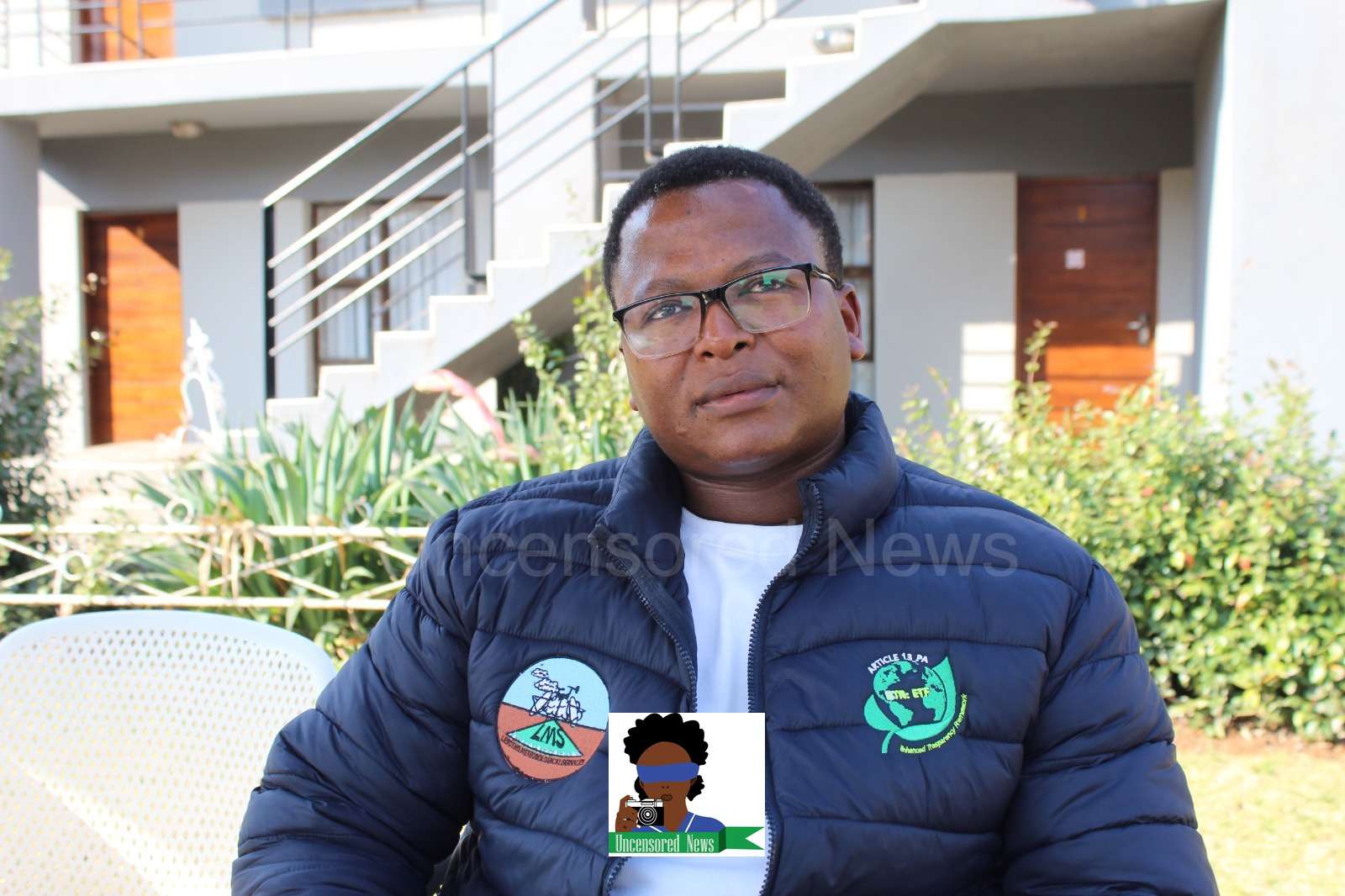
Speaking to Uncensored News on the sidelines of the workshop on 15 September 2026, Moahloli Ntele, Lesotho Meteorological Services (LMS) Head of Research and Innovation Development and the IBFWS National Coordinator, said the SOPs are needed to turn the country’s Impact-Based Forecasting work into clear procedures that institutions can practically follow.
“We need these SOPs to translate our Impact-Based Forecasting work into clear, practical procedures that institutions can follow,” Ntele said.
He explained that previous co-production activities helped stakeholders identify hazards, their potential impacts, thresholds and possible actions, as well as the different stakeholders involved in the impact- and action-based warning value chain.
According to Ntele, the current workshop is bringing these outputs together and turning them into agreed procedures covering warning issuance, dissemination, early action and coordination.
The SOPs, he said, will make it clear “who does what, when and how”, helping to ensure that warnings result in timely action instead of remaining information that people receive but do not know how to use.
Ntele stressed that the process is not about creating an entirely new early warning system from the beginning, but rather updating existing national early warning procedures to incorporate the lessons and outputs generated through the project.
The SOPs are also expected to provide a common operational framework for various institutions involved in forecasting, disaster management and community-level response.
They will define institutional roles, approval processes, warning dissemination channels, activation triggers and reporting responsibilities.
For example, LMS will lead the hydro-meteorological warning process, while the Disaster Management Authority (DMA) will coordinate disaster management actions. District and community structures will support the implementation of agreed actions.
Ntele said having these responsibilities clearly defined should help reduce duplication and ensure that institutions work towards the same warning and response objectives.
The SOPs development process is also being used to identify weaknesses in the existing forecasting and warning chain.
These include unclear warning thresholds, gaps in the internal review and approval of forecasts, delays in disseminating warnings and uncertainty over which institution or person is responsible for particular actions.
Participants are therefore using practical exercises to test the proposed procedures, identify bottlenecks and make necessary revisions before the SOPs are endorsed.
One of the issues being addressed is how existing warning thresholds can be reconciled with the new warning-level system, while also establishing clear procedures for reviewing forecasts and classifying warnings.
Ntele said an important consideration is ensuring that the SOPs do not become documents that simply sit on shelves after they are approved.
“We want the SOPs to be living operational documents, not documents that remain on a shelf,” he said.
To achieve this, the procedures will include district- and community-level responsibilities, trigger-to-action protocols, reporting mechanisms and implementation timelines.
The process will involve district disaster management structures, Village Disaster Management Teams, chiefs, councils and community-based organisations.
The stakeholders will agree on how warnings should be passed down to communities, who is responsible for activating specific actions and how information and feedback from communities should be communicated back to the DMA and LMS.
The SOPs will also include monitoring and review arrangements so that the procedures can be adjusted based on experience and lessons learned from actual events and simulations.
Ntele said the immediate objective is to finalise and endorse the SOP package during the Mafeteng workshop.
However, he cautioned against giving an unconfirmed implementation date, saying the workshop would also consider the effective date, roll-out sequence, training and resource requirements, as well as district- and community-level briefings.
Actual implementation will follow the agreed endorsement and roll-out arrangements once the necessary institutional approvals, training and operational preparations are in place.
“From here, we move towards finalising the SOPs, securing formal institutional endorsement and agreeing on the implementation timeline,” Ntele said.
He said the next phase would include briefing and training stakeholders, rolling out the procedures to districts and communities, and establishing monitoring and feedback mechanisms.
The system would also continue to be improved through lessons from real weather events, simulations and feedback from stakeholders.
For Ntele, the long-term objective is to strengthen a coordinated, impact-based and action-oriented early warning system that reaches communities and supports timely decision-making across Lesotho.
The importance of clearly defining these responsibilities was also highlighted by Mamonyaku Koloti, Director of Early Warning at the DMA, during her presentation to participants on 15 September 2026.
Koloti explained that the SOPs should essentially communicate how stakeholders are expected to prepare and respond.
“It clearly answers key operational questions: Where am I in the workflow? What am I required to do?” she said.
According to Koloti, the SOPs must clarify individual roles, where each stakeholder is positioned within the system, when protocols are activated and who has the authority to activate particular procedures.
She said this is important because an effective early warning system is not simply about producing a forecast. The information must reach the right people in a form that enables them to take appropriate action.
Koloti said the procedures would facilitate the dissemination of warnings that are timely, accessible, location-specific and action-oriented.
She noted that warnings are currently often communicated in general terms, such as forecasts of heavy rainfall.
Koloti said the workshop would continue step-by-step to establish impact-based forecasting protocols and define “who does what, when, how and with whom”
For stakeholders outside the meteorological and disaster management sectors, the value of the SOPs is particularly significant because weather-related hazards can have different consequences depending on the sector.
‘Makabelo Malibeng, from the Department of Livestock Services in the Ministry of Agriculture, Food Security and Nutrition, said the SOPs could help address several operational gaps within livestock services.
“Regarding these SOPs, as someone working in the Department of Livestock Services, I believe they will bridge many existing operational gaps,” she said.
She pointed to a concrete example: “Extreme heat or severe weather events like heatwaves and storms frequently trigger livestock diseases. Under our current setup, even when warnings are issued, our department lacks a structured process to anticipate which specific diseases may break out following a warning.”
Under the current system, she said, even when a warning is issued, there is not always a structured process for the department to anticipate which particular diseases could emerge following a specific weather event.
She described this as a major gap in the way early warning information is processed and communicated.
Malibeng said experts from different fields need to work together so that information does not stop at one institution or individual but moves through the system to field officers and farmers.
She also pointed to the challenges that can arise when several departments or units within a ministry have to respond to the same hazard without a standardised procedure.
Without an agreed SOPs, she said, there can be confusion, duplication of work and uncertainty over who should initiate a particular action.
“Adopting and adhering to these SOPs will eliminate guesswork and ensure our operations run smoothly, allowing critical information to reliably reach farmers on the ground,” Malibeng said.
