

“When Mafeteng Sees the Warning, It Already Knows What Comes Next” – Ramohlanka
22 September 2026 by Limpho Sello
For Morakabi Ramohlanka, a strong-wind warning is not simply a message on a weather forecast. In Mafeteng, such a warning can mean waiting for reports of damaged homes, destroyed property, affected crops and, in some cases, schools left damaged by the force of the weather.
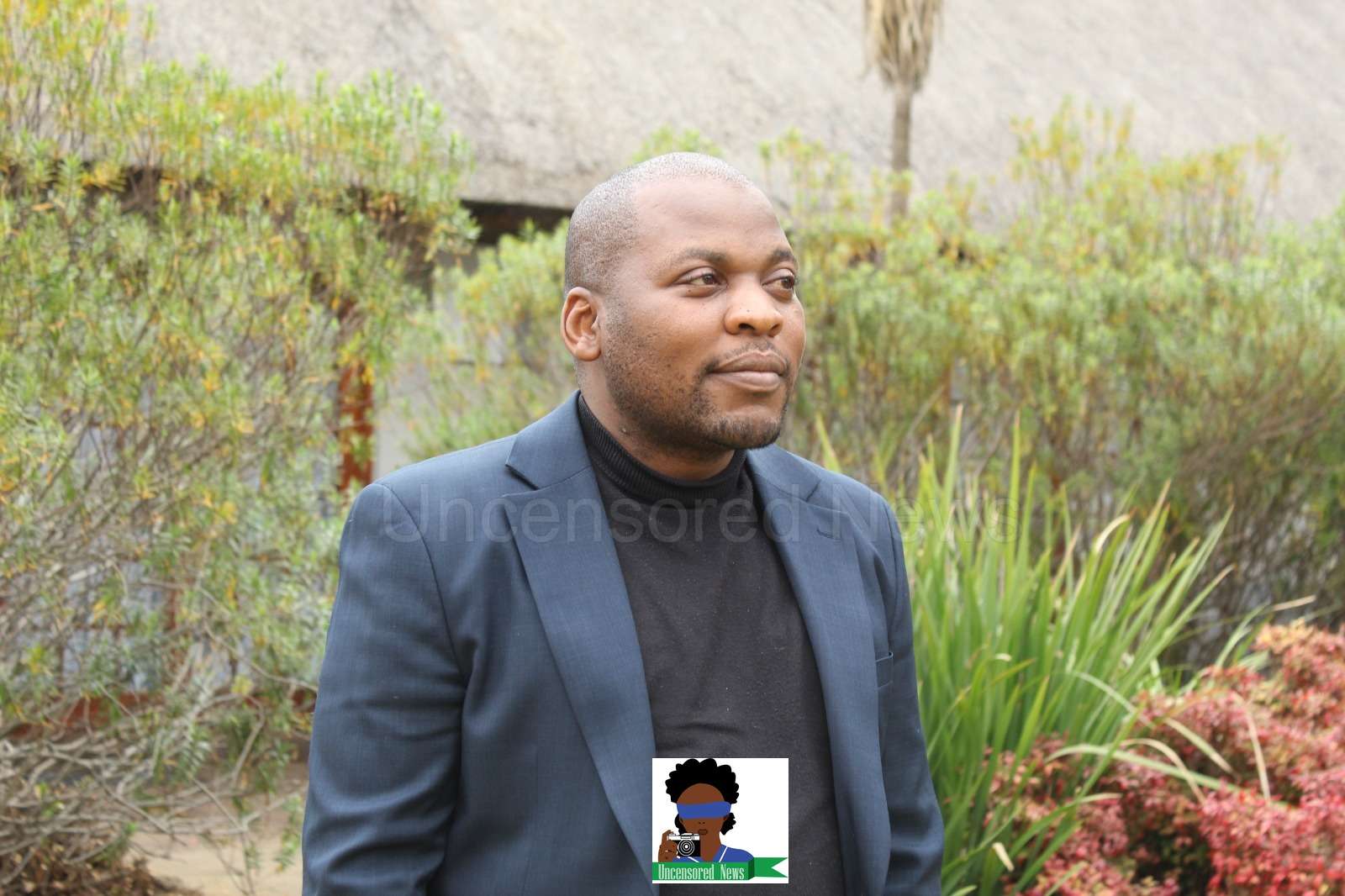
“Ha ho ba le lipula tse matla le lifefo re se re ntse re tseba hore re tla fumana litlaleho tsa matlo a fefohileng (when there are heavy rains and storms, we already know we are likely to receive reports of houses whose roofs or structures have been blown away by strong winds),” Ramohlanka explained. Ramohlanka is the District Disaster Manager for Mafeteng District.
This conversation emerged during a group discussion on the development of Standard Operating Procedures (SOPs) in Mafeteng on 17 September, 2026. The discussion was part of a weeklong workshop which ran from 14-18 September, 2026. The workshop, led by Lesotho Meteorological Services (LMS) in collaboration with the Disaster Management Authority (DMA), brought together relevant stakeholders to draft SOPs.
During the discussion, district disaster managers from Mafeteng and Botha-Bothe shared the hazards they commonly face in their respective zones. Botha-Bothe District Disaster Manager, Mojabeng Mohloki, said her district becomes particularly busy during winter because snow can block the ‘Moteng and Mahlasela routes. This requires her team to remain active with the District Disaster Management Teams (DDMTs) and Village Disaster Management Teams (VDMTs).
“We do early actions while anticipating the expected/ predicated hazard,” Mohloki said.
Uncensored News then took advantage of the Thursday discussion to ask Ramohlanka about the disaster situation in Mafeteng, his experience in managing hazards and how the district responds when warnings are received.
“I work as the District Disaster Manager for Mafeteng District. My primary responsibility is to coordinate disaster risk reduction, preparedness, response, recovery, and resilience building activities across the district,” Ramohlanka said.
He explained that his work involves working closely with local authorities, government ministries, development partners, community structures and emergency response agencies to ensure that disaster risks are identified and managed effectively.
A key part of his responsibility, he said, is ensuring that communities receive timely and actionable early warning information. Such information allows people to take preventive measures before a hazard develops into a disaster.
Mafeteng’s hazards are not a surprise
Based on his experience in disaster risk management, Ramohlanka said the most frequent hazards affecting Mafeteng are drought, strong winds and severe storms.
For him, the district’s experience with these hazards demonstrates why information about what weather is coming needs to be connected to action on the ground.
He pointed to the 2015/2016 El Niño drought as an example of the devastating effects drought can have on the district.
“The district was the most affected during the 2015/2016 El Niño drought and many households suffered significant livelihood losses and required food assistance,” he said.
Drought, according to Ramohlanka, can result in crop failure, reduced livestock productivity, food insecurity and water shortages.
The effects are not simply based on observations, he said, but are also reflected in the annual assessments carried out in the district.
“This is confirmed by the annual assessments we do, Vulnerability Assessment and Crop Assessment, showing low productivity level for the district,” Ramohlanka said, adding “but drought is not the only one part of Mafeteng’s hazard profile.”
He explained that strong winds and severe storms are another recurring threat, pointing to recent examples to show what they can do. During the past rainy season, from November 2025 to March 2026, Mafeteng experienced heavy rains accompanied by strong winds, resulting in 66 affected households.
“The strong winds and severe storms damaged residential structures, schools and public facilities.”
Two schools, Makena High School and one primary school in Thaba-Tšoeu, were blown away by strong winds. “These are the kinds of consequences that make an early warning important for a district disaster manager.”
He added: “Whenever LMS forecast strong winds across the country, I am definitely sure that DMA is going to receive a report on an affected household. The forecast, therefore, is not the end of the process. For Mafeteng, it can be the beginning of a chain of events that moves from LMS to DMA, from district structures to communities and ultimately to the people and property that could be affected.”
He further explained that the storms do not only damage buildings, they can also destroy crops and household assets, further affecting families that may already be vulnerable.
What happens after the warning?
When a hazard is forecasted, Ramohlanka said the district follows a coordinated disaster management approach.
“The process begins when the DMA’s Early Warning Department receives hazard forecasts and warnings from LMS,” Ramohlanka said.
He said the potential impacts and populations at risk are then assessed.
Adding that, after that, stakeholder coordination is convened through meetings of the DDMTs and relevant sectoral response mechanisms are then activated.
“Warnings are disseminated through VDMTs, local councils, chiefs, community leaders, radio stations and mobile communication channels.
“This is followed by rapid assessments, where teams conduct field assessments to determine the extent of the impacts and identify priority needs.
He added that the district then moves into response coordination, where emergency resources are mobilised and humanitarian assistance is coordinated.
“Where necessary, support for evacuation and temporary shelter is arranged. The process then continues into recovery and rehabilitation,” he said.
Ramohlanka said the work does not end after the immediate emergency has been addressed. The district also documents lessons learned so that the same experience can be used to improve its response when a similar hazard occurs in the future.
Preparing before Mafeteng is hit
To overcome the challenges presented by these hazards, Ramohlanka said Mafeteng has strengthened partnerships with government agencies and development partners.
The district has also conducted community awareness and preparedness programmes, developed contingency plans and response strategies, and utilised local leadership structures to improve communication.
Multi-sectoral coordination and resource sharing have also been encouraged, while risk-informed planning and preparedness activities are promoted before hazard seasons begin.
For Ramohlanka, participation in Impact-Based Forecasting (IBF) and Action-Based Forecasting trainings and workshops has also helped in overcoming some of the challenges.
He also adds: “This is where the development of SOPs becomes particularly important.”
“The experience of Mafeteng shows that knowing a strong wind or severe storm is coming is useful, but knowing what to do with that warning is equally important.”
Turning a warning into action
When he related his district to the Forecasting and Warning System (IBFWS) Initiative and how the SOPs being developed under the IBFWS in Lesotho are expected to significantly strengthen coordination among stakeholders, Ramohlanka said their main purpose is to ensure that warnings trigger clear, predetermined actions, rather than simply providing information about a possible hazard.
In practical terms, the system is intended to help answer the questions that arise when a warning is issued: Who must act? What must they do? When must they do it? And how should the response be coordinated?
Under the SOPs, clear roles and responsibilities will be determined.
The procedures will define “who does what, when, and how”across the warning and response chain.
This is expected to reduce confusion and duplication of effort when a hazard occurs.
The SOPs are also expected to improve communication and information flow from national institutions to districts and communities.
They will strengthen collaboration among LMS, DMA, district councils, agriculture, health, police, NGOs, community leaders and other stakeholders.
For a district such as Mafeteng, where Ramohlanka can already describe what happens when heavy rains and strong winds arrive, the value of connecting forecasts to predetermined action becomes easier to understand.
“The 66 households affected during the past rainy season, the two schools reported to have been blown away, the destruction of household assets and crops, and the livelihood losses experienced during the 2015/2016 El Niño drought are real examples of what hazards can mean for communities,” Ramohlanka said.
“IBFWS is therefore being developed in a context where the question is no longer only whether a hazard can be forecast.
“The challenge is to make sure that when the warning comes, the people and institutions responsible for protecting communities already know what they are expected to do.”
For Mafeteng, where Ramohlanka said they can already anticipate reports of blown-away houses when strong winds are forecasted, the development of SOPs is intended to make that response clearer, faster and better coordinated.
“The warning is received from the weather service. The risk is assessed. The message reaches the communities and the predetermined action begins,” Ramohlanka said.
“That is the shift from simply forecasting the weather to using the forecast to help protect people, property and livelihoods before the hazard becomes a disaster.”
